
Djuna Barnes Biography Quotes 16 Report mistakes
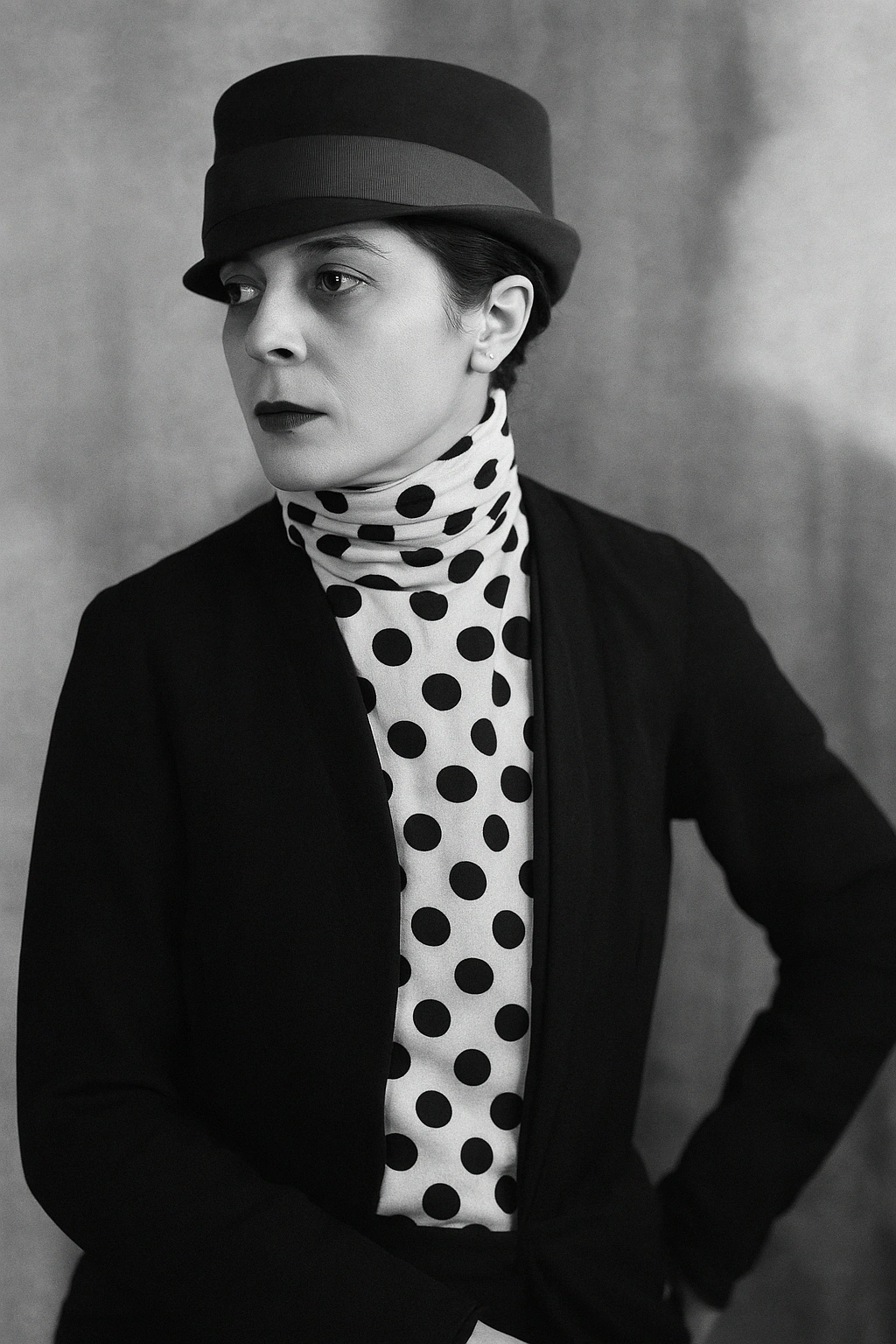
| 16 Quotes | |
| Occup. | Novelist |
| From | USA |
| Born | June 12, 1892 Storm King Mountain, Orange County, New York, NY, USA |
| Died | June 18, 1982 New York City, NY, USA |
| Aged | 90 years |
| Cite | |
Citation Formats
APA Style (7th ed.)
Djuna barnes biography, facts and quotes. (2026, February 11). FixQuotes. https://fixquotes.com/authors/djuna-barnes/
Chicago Style
"Djuna Barnes biography, facts and quotes." FixQuotes. February 11, 2026. https://fixquotes.com/authors/djuna-barnes/.
MLA Style (9th ed.)
"Djuna Barnes biography, facts and quotes." FixQuotes, 11 Feb. 2026, https://fixquotes.com/authors/djuna-barnes/. Accessed 6 Mar. 2026.
Early Life and Background
Djuna Barnes was born June 12, 1892, in Cornwall-on-Hudson, New York, into a household that treated art as doctrine and domestic stability as optional. Her father, Wald Barnes, promoted a quasi-utopian, pseudo-scientific bohemianism; her mother, Elizabeth Chappell Barnes, carried the practical burdens. The family circle included Wald's partner, Zadel Barnes, whose intellectual charisma and marital irregularity sharpened the young Barnes's sense that desire and authority rarely align cleanly.This early environment left Barnes with two lifelong reflexes: a suspicion of sentimentality and an eye for the ways "freedom" can mask coercion. Accounts of her adolescence include sexual violation and the humiliations of poverty, and whether every detail is recoverable or not, the emotional residue is unmistakable in her later work - the conviction that bodies remember what society prefers to misname. From the beginning she learned to observe people as if they were both loved and indictable, a double vision that became her signature.
Education and Formative Influences
Barnes had intermittent formal schooling and a largely self-driven education; she later attended classes at the Pratt Institute in Brooklyn, where drawing and design trained her to think in line, silhouette, and startling juxtaposition. The visual arts were not a detour but a foundation: her prose often behaves like charcoal - smudged, high-contrast, and decisive - and her early ambitions as an illustrator fed her ability to render character through gesture, costume, and the telling object. Modernist currents, the theater, and the city newspaper culture of New York gave her both a stage and a set of masks.Career, Major Works, and Turning Points
In the 1910s Barnes made her name in New York as a journalist and illustrator, writing for papers and magazines and developing the reportorial bravura later collected in The Book of Repulsive Women (1915) and Ryder (1928), a sprawling family chronicle that transmuted her own origins into stylized myth. A crucial turning came with her move into the expatriate modernist orbit of Paris in the 1920s, where she moved among writers and patrons and witnessed the social choreography of salons, bars, and artistic rivalries. Out of that world - and out of her devastating relationship with the sculptor Thelma Wood - came Nightwood (1936), her masterpiece, shepherded by T.S. Eliot and anchored by the monologues of Dr. Matthew O'Connor. Later, after years of precarious income and withdrawing from public life, she returned to New York and lived in relative seclusion; her late play The Antiphon (1958) continued the theme of the family as a court of judgment.Philosophy, Style, and Themes
Barnes wrote as if the sentence were a moral instrument: ornate, compressed, theatrical, and capable of sudden cruelty. Her characters speak in aphorism and confession, but the music is never merely decorative; it is the sound of people trying to outtalk what has already happened to them. She distrusted easy consolation and treated intimacy as a site of revelation and betrayal. “To love without criticism is to be betrayed”. In Barnes, criticism is not petty fault-finding but vigilance - the mind refusing to be anesthetized by devotion, because devotion can become another form of captivity.Her interior landscape is lit by nocturnal psychology: jealousy, longing, hunger for identity, and the violent comedy of social roles. She understood how class performance and bohemian myth can degrade as much as they liberate, and she repeatedly returned to servants, waiters, and outsiders as truth-tellers. “We are beginning to wonder whether a servant girl hasn't the best of it after all. She knows how the salad tastes without the dressing, and she knows how life's lived before it gets to the parlor door”. That line is Barnes's ethic in miniature - strip away the parlor, the rhetoric, the costume, and you find the real flavor: injury, appetite, endurance. And underneath her baroque wit lies an unblinking verdict on existence itself: “Life is painful, nasty and short... in my case it has only been painful and nasty”. Even there, the bitterness is a form of accuracy; she would rather wound the reader than flatter them with a lie.
Legacy and Influence
Barnes died June 18, 1982, in New York City, having become both legend and warning within American letters: proof that modernism could be simultaneously lyrical and merciless, and that queer experience could be rendered with mythic gravity without becoming propaganda or confession. Nightwood endures as a central text of modernist fiction and LGBTQ literature, admired for its dream-logic, its rhetorical daring, and its understanding of love as a force that both names and unnames the self. Her influence runs through later writers drawn to high style and psychological extremity, and her life - brilliant, difficult, increasingly solitary - continues to shape how readers interpret the costs of making art from private catastrophe.Our collection contains 16 quotes written by Djuna, under the main topics: Witty One-Liners - Wisdom - Art - Dark Humor - Mortality.
Other people related to Djuna: Berenice Abbott (Photographer), Margaret Anderson (Editor)
Frequently Asked Questions
- Djuna Barnes pronunciation: JOO-nuh BARNS (IPA: /ˈdʒuːnə/).
- Nightwood Djuna Barnes: Her 1936 modernist novel about expatriate life and queer love, praised by T. S. Eliot.
- Djuna Barnes art: She was also an illustrator, known for bold line drawings for magazines and her books.
- Djuna Barnes famous works: Nightwood; Ryder; Ladies Almanack; The Antiphon.
- Djuna Barnes race: White American.
- Djuna Barnes books: Nightwood; Ryder; Ladies Almanack; The Antiphon; The Book of Repulsive Women; Spillway.
- Was Djuna Barnes black: No. She was white.
- How old was Djuna Barnes? She became 90 years old
Source / external links