
Dmitry Medvedev Biography Quotes 10 Report mistakes
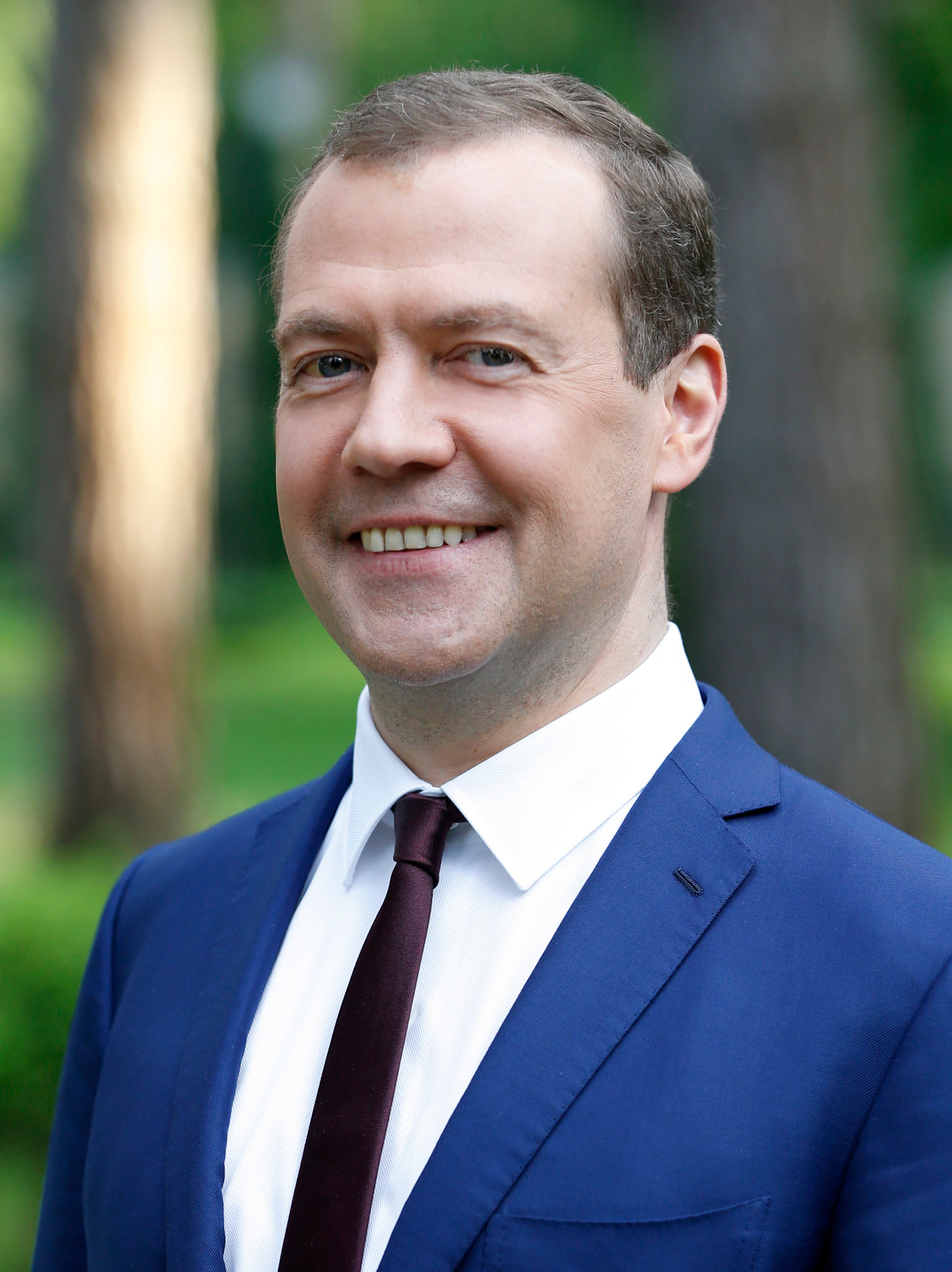
Attr: Government.ru, CC BY 4.0
| 10 Quotes | |
| Occup. | President |
| From | Russia |
| Born | September 14, 1965 Leningrad, Russia |
| Age | 60 years |
| Cite | |
Citation Formats
APA Style (7th ed.)
Dmitry medvedev biography, facts and quotes. (2026, March 2). FixQuotes. https://fixquotes.com/authors/dmitry-medvedev/
Chicago Style
"Dmitry Medvedev biography, facts and quotes." FixQuotes. March 2, 2026. https://fixquotes.com/authors/dmitry-medvedev/.
MLA Style (9th ed.)
"Dmitry Medvedev biography, facts and quotes." FixQuotes, 2 Mar. 2026, https://fixquotes.com/authors/dmitry-medvedev/. Accessed 26 Mar. 2026.
Early Life and Background
Dmitry Anatolyevich Medvedev was born on September 14, 1965, in Leningrad (now St. Petersburg), a city still marked by the memory of wartime siege and by the disciplined intellectual culture of late-Soviet life. He grew up in a professional, bookish household: his father taught engineering, and his mother trained as a philologist and worked in education. The family lived the restrained stability of the Brezhnev-era middle class, where advancement came through study, correct behavior, and institutional loyalty rather than public charisma.
That environment shaped Medvedev's early temperament: orderly, legalistic, and oriented toward systems. Unlike the generation that entered politics via party apparats or security services, he emerged from the urban intelligentsia and the university world. The era also taught him the limits of individual agency inside a centralized state - a lesson that later colored his preference for modernization through administration, law, and technology rather than through mass politics.
Education and Formative Influences
Medvedev graduated from Leningrad State University (LSU) in law in 1987 and completed postgraduate study, defending a candidate dissertation in 1990; he also taught civil and Roman law at LSU, developing a jurist's instinct for codified authority and contractual order. In the perestroika years he joined the reform-minded circle around Anatoly Sobchak, a law professor turned democratic politician, and in 1991 became a consultant to the Petrograd/Leningrad city administration's committee for external relations, where he worked alongside figures - most consequentially Vladimir Putin - who would later form the nucleus of Russia's federal power.
Career, Major Works, and Turning Points
During the 1990s Medvedev combined academic work with legal and corporate roles, including involvement with the Ilyushin aviation enterprise and the emerging property-and-contract economy of post-Soviet Russia. His decisive turn came with the Putin team's move to Moscow: he entered the presidential administration in 1999, rose through key staff positions, and in 2000 helped manage the new presidency's institutional consolidation. He chaired Gazprom's board (2000-2001; 2002-2008), a vantage point onto the fusion of state strategy and resource power. Named first deputy prime minister in 2005, he was positioned as a continuity candidate and won the 2008 presidential election; Putin became prime minister. Medvedev's presidency (2008-2012) straddled the global financial crisis, the 2008 war with Georgia, a "reset" attempt with the United States, and a domestic agenda framed as modernization and legal reform. In 2011 he and Putin announced a "castling" swap: Putin would return to the presidency and Medvedev would become prime minister (2012-2020), later moving to deputy chair of the Security Council (from 2020), where he adopted a notably harsher public rhetoric amid the 2022 full-scale war against Ukraine.
Philosophy, Style, and Themes
Medvedev's political self-portrait was that of a modernizing lawyer inside a powerful state: a technocrat who spoke the language of institutions, digital futures, and managed reform. His signature initiatives - the "Russia, Forward!" modernization message, the Skolkovo innovation center project, police reform that rebranded the militsiya as the politsiya, and periodic calls to improve courts and investment conditions - reflected an assumption that Russia's bottlenecks were administrative and legal as much as ideological. The subtext was psychological as well: a belief that rational design could tame a system built on informal power, and that progress could be engineered without destabilizing the regime's core.
The tension between liberal vocabulary and hard power ran through his rhetoric. “The essence of democracy is not in power, but in its limitations”. That sentence framed his inner ideal - constraint, procedure, predictability - yet it also exposed the dilemma of a leader operating in a political architecture defined by vertical control. His diagnosis of systemic decay could be blunt: “Corruption is a cancer that eats away at the foundations of our society, and we must do everything we can to fight it”. The metaphor suggests a mind that viewed corruption not merely as moral failure but as a pathological threat to state capacity and legitimacy. At the same time, his modernization creed leaned on technology as national salvation: “We need to focus on the development of innovation and high technology, as this is the key to the future success of our country”. In Medvedev's best moments, these themes converged into a coherent aspiration - a strong, rights-respecting state powered by law and innovation - even as Russia's political evolution increasingly tested the credibility of that synthesis.
Legacy and Influence
Medvedev remains a defining figure of post-Soviet "tandem" politics: the president who governed during Putin's prime ministership and then served as Putin's prime minister, embodying both the flexibility and the limits of succession inside a personalized system. His era left concrete traces - selective legal and policing reforms, a modernization discourse, and an early-2010s opening in tone toward the internet and civil society - but also reinforced the lesson that Russia's strategic direction was set by a narrower core than formal titles implied. His later transformation into a more confrontational security voice has reshaped how he is remembered: for supporters, as a loyal state man adapting to existential conflict; for critics, as proof that reformist language in Russia can function as a temporary style rather than a durable program.
Our collection contains 10 quotes written by Dmitry, under the main topics: Ethics & Morality - Justice - Learning - Peace - Human Rights.
Other people related to Dmitry: Anatoly Chubais (Politician), Georgi Purvanov (Statesman)
Source / external links