
Don Van Vliet Biography Quotes 27 Report mistakes
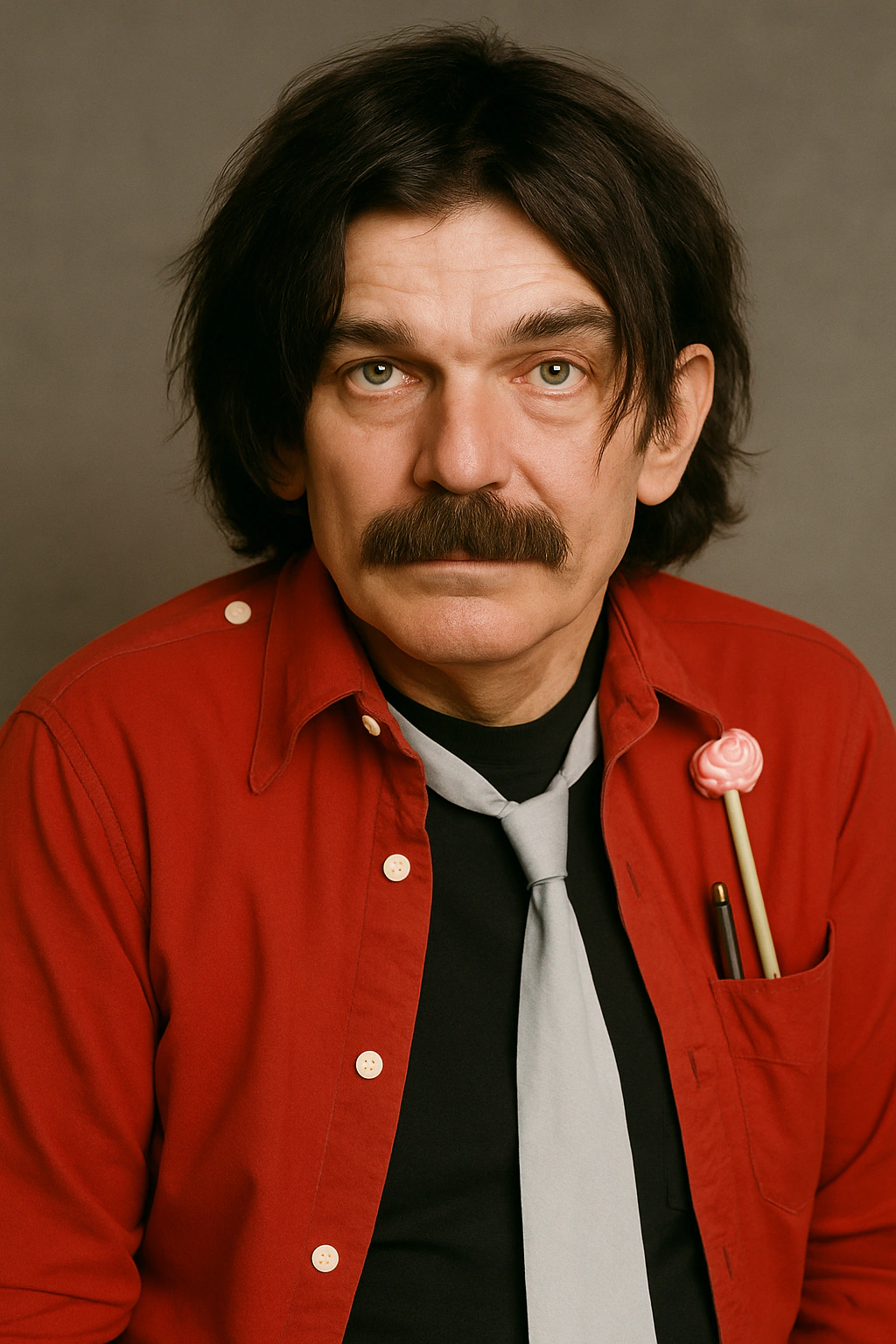
Attr: Gary Lucas
| 27 Quotes | |
| Born as | Don Glen Vliet |
| Known as | Captain Beefheart |
| Occup. | Artist |
| From | USA |
| Born | January 15, 1941 Glendale, California, United States |
| Died | December 17, 2010 Arcata, California, United States |
| Cause | Complications from multiple sclerosis |
| Aged | 69 years |
| Cite | |
Citation Formats
APA Style (7th ed.)
Don van vliet biography, facts and quotes. (2026, February 11). FixQuotes. https://fixquotes.com/authors/don-van-vliet/
Chicago Style
"Don Van Vliet biography, facts and quotes." FixQuotes. February 11, 2026. https://fixquotes.com/authors/don-van-vliet/.
MLA Style (9th ed.)
"Don Van Vliet biography, facts and quotes." FixQuotes, 11 Feb. 2026, https://fixquotes.com/authors/don-van-vliet/. Accessed 26 Mar. 2026.
Early Life and Background
Don Glen Vliet was born on January 15, 1941, in Glendale, California, and grew up largely in the Mojave Desert towns of Lancaster and Palmdale - postwar boomland where tract homes met wind, scrub, and aerospace mythology. The desert was not a backdrop so much as a pressure system: empty lots, freight trains, and dry horizons that made sound carry strangely and made solitude feel physical. That environment would become his private laboratory for rhythm and imagery, later audible in the way he treated music as weather rather than entertainment.
As a teenager he was already split between two impulses that never stopped arguing inside him - a raw tenderness toward living things and a confrontational refusal to be domesticated by institutions. Friends remembered a fierce, off-kilter humor and a gift for storytelling that could turn a mundane drive into surreal theater. The young Vliet also showed striking ability as a visual artist, sketching and sculpting with a seriousness that predated the persona of "Captain Beefheart". Long before fame, he was shaping a self that did not want permission.
Education and Formative Influences
Vliet did not follow a conventional academic path; his education was mostly self-directed and fiercely protective of idiosyncrasy. In the Antelope Valley he fell in with Frank Zappa, whose similarly desert-hardened imagination and taste for doo-wop, blues, and modern composition created a volatile lifelong friendship. Vliet absorbed Delta blues voices, free-jazz volatility, and the hard swing of R and B, but he also listened to the non-musical world - wind, engines, radio static - as if it were already an orchestra. That mix of deep vernacular tradition and avant-garde instinct set the template: honor the old sounds, then fracture them until they reveal new anatomy.
Career, Major Works, and Turning Points
In the mid-1960s he formed the Magic Band and adopted the name Captain Beefheart, cutting a jagged path through the Los Angeles underground as psychedelia peaked and commercial rock tightened its formulas. After the early statement "Safe as Milk" (1967), his reputation grew through increasingly uncompromising records: the stark, blues-deranged "Strictly Personal" (1968), the fractured sing-speak of "Lick My Decals Off, Baby" (1970), and the later, leaner comeback "Shiny Beast (Bat Chain Puller)" (1978) and "Doc at the Radar Station" (1980). The central turning point was "Trout Mask Replica" (1969), produced by Zappa - a double album of polyrhythmic collisions and surreal lyric shards, notorious for its demanding rehearsal regimen and for the way it made rock musicians confront time itself as an unstable substance. By the early 1980s Vliet increasingly shifted toward painting, and after "Ice Cream for Crow" (1982) he effectively withdrew from the music industry, devoting his final decades to visual art until his death on December 17, 2010.
Philosophy, Style, and Themes
Vliet's inner life reads as a long argument with "training" - not because he lacked discipline, but because he distrusted the kind that smooths away surprise. He spoke in parables that doubled as self-diagnosis: “I'd rather play a tune on a horn, but I've always felt that I didn't want to train myself. Because when you get a train, you've got to have an engine and a caboose. I think it's better to train the caboose. You train yourself, you strain yourself”. The joke is also a manifesto: his art keeps the engine from dictating the track, forcing musicians and listeners to follow the caboose - the afterthought, the wobble, the human error that proves something is alive.
His style fused Delta blues with Cubist montage: sliding tempos, guitar lines that clang like bent metal, and a vocal delivery that could be a growl, a sermon, or a cartoon. He was obsessed with the physics of sound and the instability of nature, insisting that authenticity meant embracing change rather than polishing it: “The wind is a very difficult sound to get. It's always changing”. Even his cosmic fatalism had a childlike shrug that masked a hard-earned stoicism: “The stars are matter, we're matter, but it doesn't matter”. That sentence carries both despair and liberation - if meaning is not guaranteed, then the artist must manufacture wonder by brute invention, by making language and rhythm behave in ways they were not designed to behave.
Legacy and Influence
Vliet's influence is less a lineage than a permission slip for misfits: post-punk, no wave, industrial, and experimental rock repeatedly borrowed his jagged ensemble feel, his anti-virtuosic virtuosity, and his insistence that the blues could be a laboratory for the future. Artists from the punk and art-rock worlds to avant-jazz and noise circles cited "Trout Mask Replica" as a door that, once opened, could not be closed - proof that popular music could be as structurally radical as modern art while still sweating, joking, and biting. In his later painting career he reinforced the same lesson in another medium: the point is not polish but presence, a stubbornly individual mark that refuses to be trained into obedience.
Our collection contains 27 quotes written by Don, under the main topics: Witty One-Liners - Art - Dark Humor - Puns & Wordplay - Music.
Other people related to Don: Gary Lucas (American), Cliff Martinez (Musician)
Frequently Asked Questions
- Captain Beefheart cause of death: Complications of multiple sclerosis
- Jan Van Vliet: Don Van Vliet’s wife (m. 1970–2010)
- Don Van Vliet children: None
- Don Van Vliet Art: Abstract expressionist paintings exhibited since the 1980s
- Janet Van Vliet: Also known as Jan Van Vliet; Don Van Vliet’s wife
- Don Van Vliet wife: Jan (Janet) Van Vliet
- How old was Don Van Vliet? He became 69 years old
Source / external links