
Donald Johanson Biography Quotes 19 Report mistakes
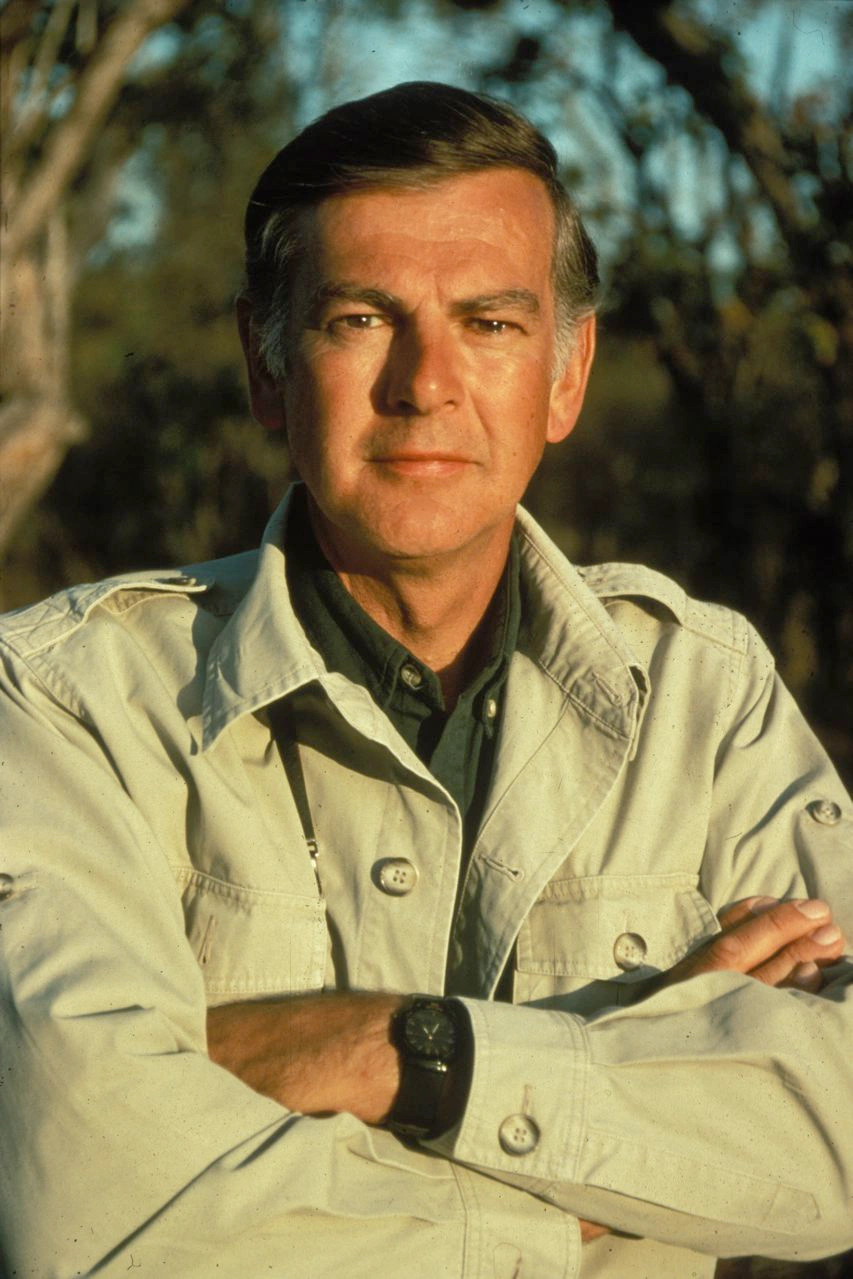
Attr: Gerbil from Wikipedia DE
| 19 Quotes | |
| Born as | Donald Carl Johanson |
| Known as | Donald C. Johanson |
| Occup. | Scientist |
| From | USA |
| Born | June 28, 1943 Chicago, Illinois, United States |
| Age | 82 years |
| Cite | |
Citation Formats
APA Style (7th ed.)
Donald johanson biography, facts and quotes. (2026, February 15). FixQuotes. https://fixquotes.com/authors/donald-johanson/
Chicago Style
"Donald Johanson biography, facts and quotes." FixQuotes. February 15, 2026. https://fixquotes.com/authors/donald-johanson/.
MLA Style (9th ed.)
"Donald Johanson biography, facts and quotes." FixQuotes, 15 Feb. 2026, https://fixquotes.com/authors/donald-johanson/. Accessed 5 Mar. 2026.
Early Life and Background
Donald Carl Johanson was born on June 28, 1943, in Chicago, Illinois, and grew up in a postwar America newly confident in science as a public good. The era of polio vaccines, Cold War research funding, and televised space dreams made scientific authority feel both attainable and urgent. Johanson came of age when questions about human beginnings were being reshaped by new dating techniques and expanding African fieldwork, yet public narratives still leaned on older, Eurocentric origin stories. That tension - between what people wanted prehistory to be and what evidence could actually support - would become a recurring pressure in his life.From early on he was drawn less to settled explanations than to the emotional charge of deep time: the notion that ordinary landscapes could hide long-buried, world-changing fragments. That sensibility fit the temperament of a field scientist: patient, competitive, and willing to be alone with uncertainty for long stretches. It also positioned him for the distinctly human side of paleoanthropology - a discipline where reputations can pivot on a few bones, and where personal conviction often travels alongside meticulous measurement.
Education and Formative Influences
Johanson studied anthropology at the University of Illinois at Urbana-Champaign, where he gained practical excavation experience and learned the discipline of stratigraphy, context, and careful recovery under imperfect conditions. Graduate study took him to the University of Chicago, a major hub for evolutionary and African prehistory scholarship, and he completed his PhD in anthropology there in 1974. By the early 1970s he was already moving toward East Africa, then the proving ground for human-origins work, as international teams expanded surveys in Ethiopia, Kenya, and Tanzania and as debates sharpened over how to define species from fragmentary fossils.Career, Major Works, and Turning Points
Johanson's defining breakthrough came in Ethiopia's Afar Triangle, a harsh, eroded landscape that exposes ancient sediments like pages of a geologic book. Working at Hadar with an international team, he discovered in November 1974 the partial skeleton later nicknamed "Lucy" (AL 288-1), an Australopithecus afarensis female dated to about 3.2 million years ago - extraordinary because it preserved multiple associated body parts rather than a single diagnostic fragment. In 1978 he and colleagues formally named A. afarensis, and Johanson became one of the best-known public faces of paleoanthropology, amplified by the coauthored bestseller Lucy: The Beginnings of Humankind (1981). In later decades he helped found and lead the Institute of Human Origins (established in 1981 in Berkeley and later affiliated with Arizona State University), building an institutional base for field research, training, and public education while continuing to work amid a field famous for sharp disputes over interpretation and credit.Philosophy, Style, and Themes
Johanson's inner engine was a restlessness with received answers and a desire to push into areas where method and imagination meet. He framed his curiosity as a deliberate choice to live with uncertainty: “And what I wanted to do was, I wanted to explore problems and areas where we didn't have answers. In fact, where we didn't even know the right questions to ask”. That approach helps explain both his field style - extensive surveying, a willingness to take risks on underexplored localities, and a relentless focus on comparative anatomy - and his public style, which often emphasized big-picture stakes. For him, fossils were not trophies but leverage: each find could reorder family trees, undermine comfortable narratives, and force new questions about what counts as "human".At the same time, Johanson's career reveals the psychological cost of a discipline where evidence is scarce and prestige high. The act of naming a species is both scientific claim and personal responsibility, and he spoke of the moment he concluded Lucy represented a distinct ancestor as a pivot in his self-conception: “When I realized, in 1978, that Lucy did represent a new species of human ancestor, and that I had an opportunity to name this new species, I realized this was a revolutionary step in understanding human origins”. He also acknowledged the defensive culture that can form around such claims: “Scientists are very afraid of being proven wrong”. Those lines illuminate a lifelong theme in his work: the uneasy balance between humility before fragmentary data and the boldness required to propose a coherent evolutionary story - and to defend it against rivals, revisions, and the next fossil that might change everything.
Legacy and Influence
Johanson's enduring influence rests on how Lucy and A. afarensis helped anchor bipedalism deep in the past and made early hominin evolution intelligible to a broad public without draining it of scientific seriousness. He strengthened the institutional ecosystem of human-origins research through the Institute of Human Origins, supported field projects and young scholars, and helped normalize the idea that Africa is central to understanding human ancestry. In the culture at large, he turned a technical discovery into a shared reference point, making deep prehistory feel personal - while also embodying the field's hard truth: a few bones can change the story, but they can also change the people who stake their lives on interpreting them.Our collection contains 19 quotes written by Donald, under the main topics: Learning - Science - Success - Student - Father.
Frequently Asked Questions
- What is Donald Johanson famous for: Donald Johanson is famous for co-discovering the hominin fossil "Lucy" and for his contributions to paleoanthropology and human evolution research.
- Donald Johanson wife Robin: There is no well-documented, authoritative public source confirming a wife named Robin for Donald Johanson.
- Donald Johanson children: There is no widely cited, reliable public information about Donald Johanson’s children.
- Donald Johanson first wife: Public sources focus mainly on his scientific work and do not clearly document the name or details of a first wife.
- Donald Johanson Lucy: Donald Johanson is best known for co-discovering the famous Australopithecus afarensis fossil "Lucy" in Ethiopia in 1974.
- How old is Donald Johanson? He is 82 years old
Source / external links