
Donald Judd Biography Quotes 29 Report mistakes
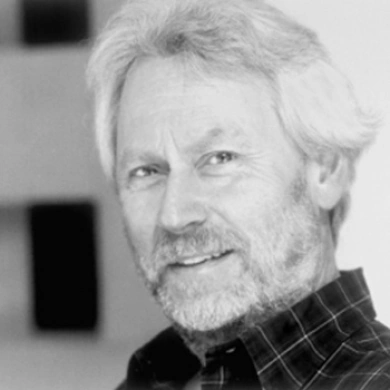
| 29 Quotes | |
| Occup. | Artist |
| From | USA |
| Born | June 3, 1928 |
| Died | February 12, 1994 |
| Aged | 65 years |
| Cite | |
Citation Formats
APA Style (7th ed.)
Donald judd biography, facts and quotes. (2026, February 11). FixQuotes. https://fixquotes.com/authors/donald-judd/
Chicago Style
"Donald Judd biography, facts and quotes." FixQuotes. February 11, 2026. https://fixquotes.com/authors/donald-judd/.
MLA Style (9th ed.)
"Donald Judd biography, facts and quotes." FixQuotes, 11 Feb. 2026, https://fixquotes.com/authors/donald-judd/. Accessed 24 Mar. 2026.
Early Life and Background
Donald Clarence Judd was born on June 3, 1928, in Excelsior Springs, Missouri, and grew up amid the practical textures of the American Midwest during the Depression and wartime years. His father worked as an engineer and his mother as a teacher - a household shaped by competence, steadiness, and an expectation that things should function. That early environment mattered less as subject matter than as temperament: Judd would later distrust melodrama and cultivate a plainspoken insistence that an object, well made, can carry its own authority.After his parents divorced, he moved frequently with his mother and brother, eventually reaching the East Coast. The dislocations of moving - new streets, new interiors, the constant negotiation with ordinary space - helped seed a lifelong attention to how things sit in a room and how a room changes the viewer. Even before Minimalism had a name, Judd was forming a sensibility that preferred clarity to confession and treated space as a medium rather than a backdrop.
Education and Formative Influences
Judd studied philosophy at the College of William and Mary (1946-47) and then at Columbia University, where he completed a B.S. in 1953, absorbing rigorous habits of reading and argument that later surfaced in his criticism. He also trained at the Art Students League in New York, an experience he summed up matter-of-factly: “And then we moved to New Jersey and I went to the Art Students League”. The League gave him craft discipline, but the city gave him urgency: postwar New York was dominated by Abstract Expressionism, and Judd learned both from its ambition and from the pressure it exerted on anyone seeking a different path.Career, Major Works, and Turning Points
In the late 1950s and early 1960s Judd supported himself as an art critic, writing influential reviews for Arts Magazine (and elsewhere) while making paintings that increasingly felt to him like compromises. By 1962-65 he pivoted decisively into three-dimensional work - boxes, progressions, stacks, and floor pieces - often fabricated in industrial materials such as galvanized iron, aluminum, Plexiglas, and later copper and anodized aluminum, with color deployed as an actual surface rather than illusion. His 1965 essay "Specific Objects" became a manifesto in all but name, arguing for work that was neither painting nor sculpture in the inherited sense but a new category grounded in literal space. As his reputation consolidated in the late 1960s, he fought for permanent, stable installation conditions, eventually buying buildings in New York and, beginning in the 1970s, establishing a parallel life in Marfa, Texas, where he could control scale, light, and placement. In 1986 he founded the Chinati Foundation, and he spent his final years (until his death on February 12, 1994) defending the idea that the integrity of an artwork includes the integrity of its setting.Philosophy, Style, and Themes
Judd is often described as austere, but his austerity was ethical rather than chilly - a refusal to let decoration, symbolism, or painterly performance stand in for structure. He rejected the romance of touch as the privileged sign of authenticity: “Well, I am not interested in the kind of expression that you have when you paint a painting with brush strokes. It's all right, but it's already done and I want to do something new”. The psychological charge here is competitive and impatient, but also protective - by stripping away inherited rhetoric, he could build a language less vulnerable to sentimentality and less dependent on biography.His so-called simplicity was, in practice, a demand for exactitude: proportion, interval, repetition, and the viewer's movement become the drama. When critics called the work "too simple", Judd heard a complaint about missing familiar cues rather than a true encounter with what remained: “Usually when someone says a thing is too simple, they're saying that certain familiar things aren't there, and they're seeing a couple maybe that are left, which they count as a couple, that's all”. Beneath the bluntness lies a theorist's diagnosis of perception - people count signs instead of attending to relationships. At the same time, he resisted art that floated above lived reality; his objects are not portraits of Texas or Manhattan, but they require an ordinary world to press against: “But I think you have to - whatever the environment looks like, it does enter into people's art work one way or another; it's very remote or it isn't. It's remote in my work but it has to have a certain degree of ordinariness”. That "ordinariness" is a quiet confession: Judd wanted work that could endure the everyday without theatrical reinforcement.
Legacy and Influence
Judd helped redefine postwar art by making permanence, fabrication, and installation central rather than secondary - influencing Minimalism, Conceptual practices, design, and architecture, and shaping how museums think about site and display. His insistence on precision and on the inseparability of object and environment anticipated later installation art and the discourse of institutional critique, even as he remained suspicious of jargon and protective of standards. Through Chinati and the Judd Foundation, his buildings, furniture, writing, and serial objects continue to argue that clarity can be a moral stance and that seeing carefully is not a retreat from life but a disciplined way of inhabiting it.Our collection contains 29 quotes written by Donald, under the main topics: Art - Writing - Work Ethic - Failure.
Other people related to Donald: Dan Flavin (Sculptor), Barnett Newman (Artist), Richard Serra (Sculptor)
Source / external links