
Donald Wills Douglas Biography Quotes 3 Report mistakes
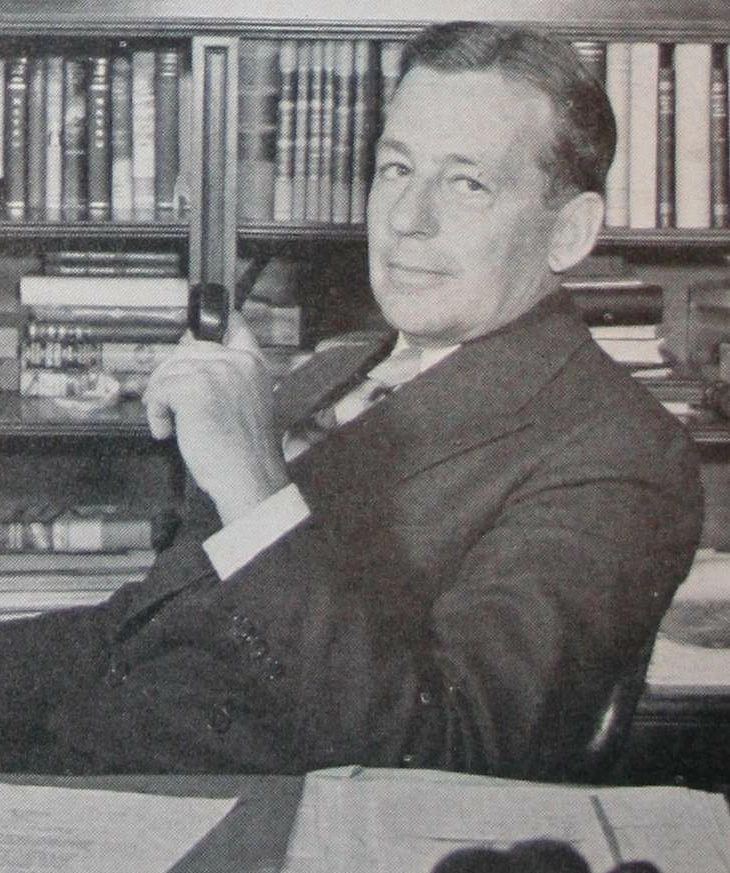
| 3 Quotes | |
| Born as | Donald Wills Douglas, Sr. |
| Occup. | Aviator |
| From | USA |
| Born | April 6, 1892 Brooklyn, New York |
| Died | February 1, 1981 Palm Springs, California |
| Aged | 88 years |
| Cite | |
Citation Formats
APA Style (7th ed.)
Donald wills douglas biography, facts and quotes. (2026, February 11). FixQuotes. https://fixquotes.com/authors/donald-wills-douglas/
Chicago Style
"Donald Wills Douglas biography, facts and quotes." FixQuotes. February 11, 2026. https://fixquotes.com/authors/donald-wills-douglas/.
MLA Style (9th ed.)
"Donald Wills Douglas biography, facts and quotes." FixQuotes, 11 Feb. 2026, https://fixquotes.com/authors/donald-wills-douglas/. Accessed 15 Mar. 2026.
Early Life and Background
Donald Wills Douglas Sr. was born on April 6, 1892, in Brooklyn, New York, into a country intoxicated with invention and newly confident in engineering. His early years coincided with the last, loud phase of the Gilded Age and the first quiet anxieties of modern industrial life - a world where steel bridges and electric lights were rewriting what ordinary people believed possible. For a mechanically minded boy, New York was less a skyline than a syllabus: ferries, rail yards, shipyards, and the emerging culture of technical professionalism.The family later moved west, and Douglas grew up in Los Angeles at the moment Southern California began marketing itself as the geography of the future - citrus, oil, motion pictures, and, soon, airplanes. That blend of boosterism and hard work shaped his inner temperament: cautious in method, ambitious in aim, and unusually sensitive to the reputational stakes of failure. Even before aviation became a mass spectacle, he absorbed its moral pressure - that a miscalculation was not merely a mistake but a life lost.
Education and Formative Influences
Douglas studied mechanical engineering at the Massachusetts Institute of Technology, where he learned to treat structures as arguments that must prove themselves under stress, then completed graduate work in aeronautics. In the 1910s, aviation was still half craft and half theory; MIT and the new discipline of aeronautical engineering offered him a language of loads, margins, and testable assumptions. This was also the era when the airplane shifted from daredevil novelty to state interest, and Douglas came of age professionally as governments and firms began to demand aircraft that were not just flyable, but repeatable, maintainable, and safe.Career, Major Works, and Turning Points
After early work in aviation design, Douglas joined the new Aircraft Division of the Glenn L. Martin Company during World War I and quickly became its chief engineer. In 1921 he founded the Douglas Company in Santa Monica, California, and the next year won the U.S. Navy contract that produced the DT torpedo plane - a turning point that established him as a manufacturer as well as a designer. His name became synonymous with the aircraft that defined American air transport: the DC series, above all the DC-3 (first flown 1935), whose reliability and economics helped make passenger air travel a practical industry and became a workhorse of World War II as the C-47. Under his leadership, Douglas Aircraft expanded into bombers and transports central to the U.S. war effort, then into the tense, accelerated race of Cold War aerospace. The postwar years brought both triumph and strain: jet competition, production challenges, and shifting markets that culminated after his retirement with the 1967 merger into McDonnell Douglas - a corporate afterlife that testified to the scale he had built.Philosophy, Style, and Themes
Douglas approached aircraft as moral machines: designed under the shadow of gravity, accountable to the people inside. His most revealing maxim was blunt empathy: “When you design it, think how you would feel if you had to fly it! Safety first!” That sentence reads like a private discipline made public - a way of forcing imagination to serve engineering, and of resisting the era's temptation to treat pilots and passengers as mere variables. In Douglas's inner life, confidence was earned through redundancy, testing, and an almost parental protectiveness toward the user.Yet he was not a small-scope conservative. His ambition came wrapped in a demanding optimism that linked vision to execution: “Dream no small dream; it lacks magic. Dream large. Then make the dream real”. The pairing is telling - magic, then work - a psychological rhythm visible in his career: audacious programs followed by relentless standardization, production discipline, and incremental improvement. Even his famous quip about lightness carried an ethic of restraint: “When the weight of the paper equals the weight of the airplane, only then you can go flying”. Beneath the joke is the engineer's suspicion of excess - paperwork, ornament, and overdesign - and a belief that flight is purchased by removing what does not serve lift, safety, or purpose.
Legacy and Influence
Douglas died on February 1, 1981, after living through aviation's entire transformation from fragile experiment to global infrastructure. His enduring influence is both technical and cultural: the DC-3 became a template for dependable transport, while his insistence on safety, usability, and disciplined manufacturing helped professionalize an industry that could not afford romantic failure. In an American century that repeatedly asked machines to carry national dreams, Douglas embodied the rare builder who insisted that dreams must survive contact with weather, fatigue, and human error - and then organized factories, teams, and standards to make that survival routine.Our collection contains 3 quotes written by Donald, under the main topics: Motivational - Technology - Engineer.
Source / external links