
Donella Meadows Biography Quotes 20 Report mistakes
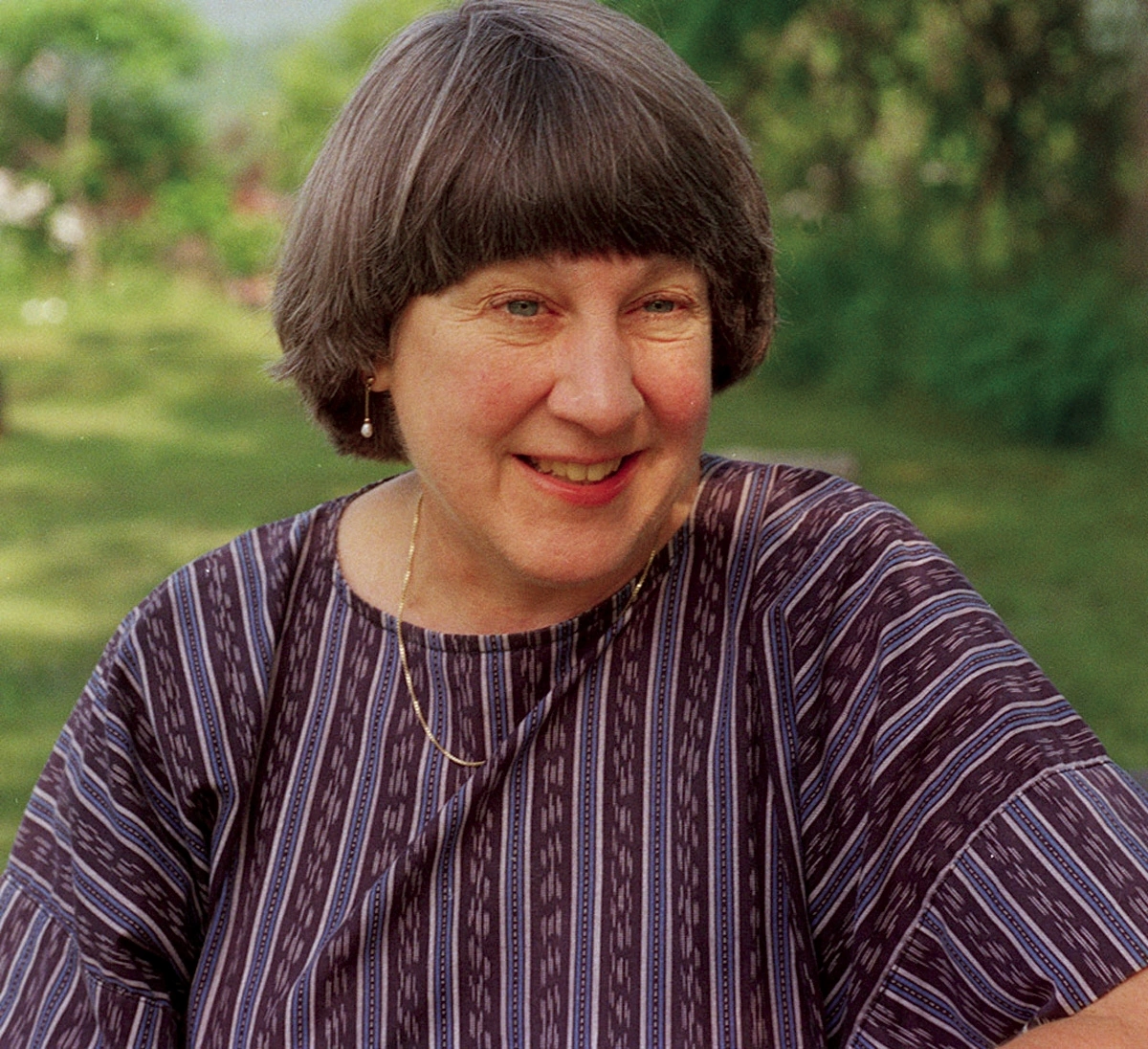
| 20 Quotes | |
| Born as | Donella H. Meadows |
| Occup. | Environmentalist |
| From | USA |
| Born | March 14, 1941 Elgin, Illinois, USA |
| Died | February 20, 2001 Hanover, New Hampshire |
| Aged | 59 years |
| Cite | |
Citation Formats
APA Style (7th ed.)
Donella meadows biography, facts and quotes. (2026, February 11). FixQuotes. https://fixquotes.com/authors/donella-meadows/
Chicago Style
"Donella Meadows biography, facts and quotes." FixQuotes. February 11, 2026. https://fixquotes.com/authors/donella-meadows/.
MLA Style (9th ed.)
"Donella Meadows biography, facts and quotes." FixQuotes, 11 Feb. 2026, https://fixquotes.com/authors/donella-meadows/. Accessed 5 Mar. 2026.
Early Life and Background
Donella H. Meadows was born on March 14, 1941, in Elgin, Illinois, and came of age in a United States intoxicated by postwar growth and the promise of technology. The landscapes of the Midwest - farms, small towns, and the practical ethics of making do - formed an early contrast with the rapidly expanding systems of production and consumption that would later become the objects of her analysis. Her temperament, as friends and readers came to recognize, mixed a scientist's patience with a moralist's insistence that consequences matter.She died on February 20, 2001, in New Hampshire, having become one of the late 20th century's clearest public thinkers about ecological limits. In the decades between, she helped translate abstract systems ideas into a language that policymakers, activists, and ordinary citizens could grasp, and she did so while living not as a detached academic but as someone trying to align daily life with planetary constraints.
Education and Formative Influences
Meadows studied chemistry at Carleton College (BA, 1963), then biophysics at Harvard University (PhD, 1968), training that gave her a feel for feedback, nonlinear behavior, and the discipline of measurement. Those tools met the era's defining anxieties: nuclear risk, pollution, and the dawning realization that exponential growth behaves like a force of nature. A Fulbright year in Europe and her later work at MIT placed her in a transatlantic conversation about modernization and its costs, while the emerging environmental movement supplied urgency and a public audience.Career, Major Works, and Turning Points
At MIT, Meadows joined Jay W. Forrester's systems dynamics group and became lead author of The Limits to Growth (1972), commissioned by the Club of Rome and built from the World3 model with Dennis Meadows, Jorgen Randers, and William W. Behrens III; it argued that unchecked population and industrial expansion would collide with finite resources and pollution sinks. The book made her famous and controversial at once - praised as prophetic, attacked as anti-progress - and it forced her to become both analyst and communicator, repeatedly clarifying that the model's point was not prediction-by-date but insight into structure, delay, and leverage. In later years she taught at Dartmouth, wrote widely for newspapers and public forums, and settled at the Sustainability Institute in Hartland, Vermont, where she connected modeling to practical work on community resilience, indicators, and policy design; her late essays, gathered posthumously, and her influential list of "Leverage Points" distilled decades of thinking into tools that traveled far beyond academia.Philosophy, Style, and Themes
Meadows' inner life, as it appears through her writing, is defined by an unusual combination of sobriety and tenderness: she stared hard at bad news yet resisted despair as a form of self-indulgence. She treated systems as moral arenas - not because equations contain ethics, but because feedback makes hidden harms unavoidable and because delay punishes denial. Her public voice could be blunt about politics and atmospheric physics, insisting that accountability cannot be negotiated away: “You may be able to fool the voters, but not the atmosphere”. That sentence captures her psychological core - a distrust of soothing narratives and a conviction that reality has a nonpartisan veto.Her style favored clear definitions, small illustrative models, and the repeated reminder that the deepest causes of crisis are often structural rather than personal: incentives, information flows, and goals embedded in institutions. Yet she never let structure become an excuse. When she wrote, “Scientists worldwide agree that the reduction needed to stabilize the climate is actually more like 80 percent”. , she was not merely citing a target; she was revealing her insistence on proportional response and her impatience with half-measures that pretend to be virtue. And when she admitted, “Once again I stopped listening to the news this week”. , it read less like withdrawal than like self-preservation - a deliberate guarding of attention so she could keep thinking, gardening, teaching, and doing the long work that short news cycles corrode. Across her essays runs a steady theme: change is possible, but it requires shifting the goals of the system - from throughput and conquest to sufficiency, learning, and care.
Legacy and Influence
Meadows' influence endures because she gave environmentalism a rigorous grammar: feedback loops, overshoot, resilience, and leverage - concepts now central to climate policy, ecological economics, and sustainability science. The Limits to Growth remains a reference point in debates about growth, energy transition, and planetary boundaries, and her later writings continue to train readers to ask better questions: What is the system trying to do? Where are the delays? Who controls the information? Her legacy is also personal and practical - a model of intellectual courage that refuses both technocratic arrogance and fatalism, insisting that clear-eyed diagnosis, humane values, and strategic intervention can still bend trajectories in a finite world.Our collection contains 20 quotes written by Donella, under the main topics: Wisdom - Justice - Sarcastic - Nature - Learning.
Donella Meadows Famous Works
- 2008 Thinking in Systems: A Primer (Book)
- 2008 The Systems Thinking Playbook (Book)
- 1992 Beyond the Limits (Book)
- 1991 The Global Citizen (Book)
- 1972 The Limits to Growth (Book)
Source / external links