
Donna Brazile Biography Quotes 11 Report mistakes
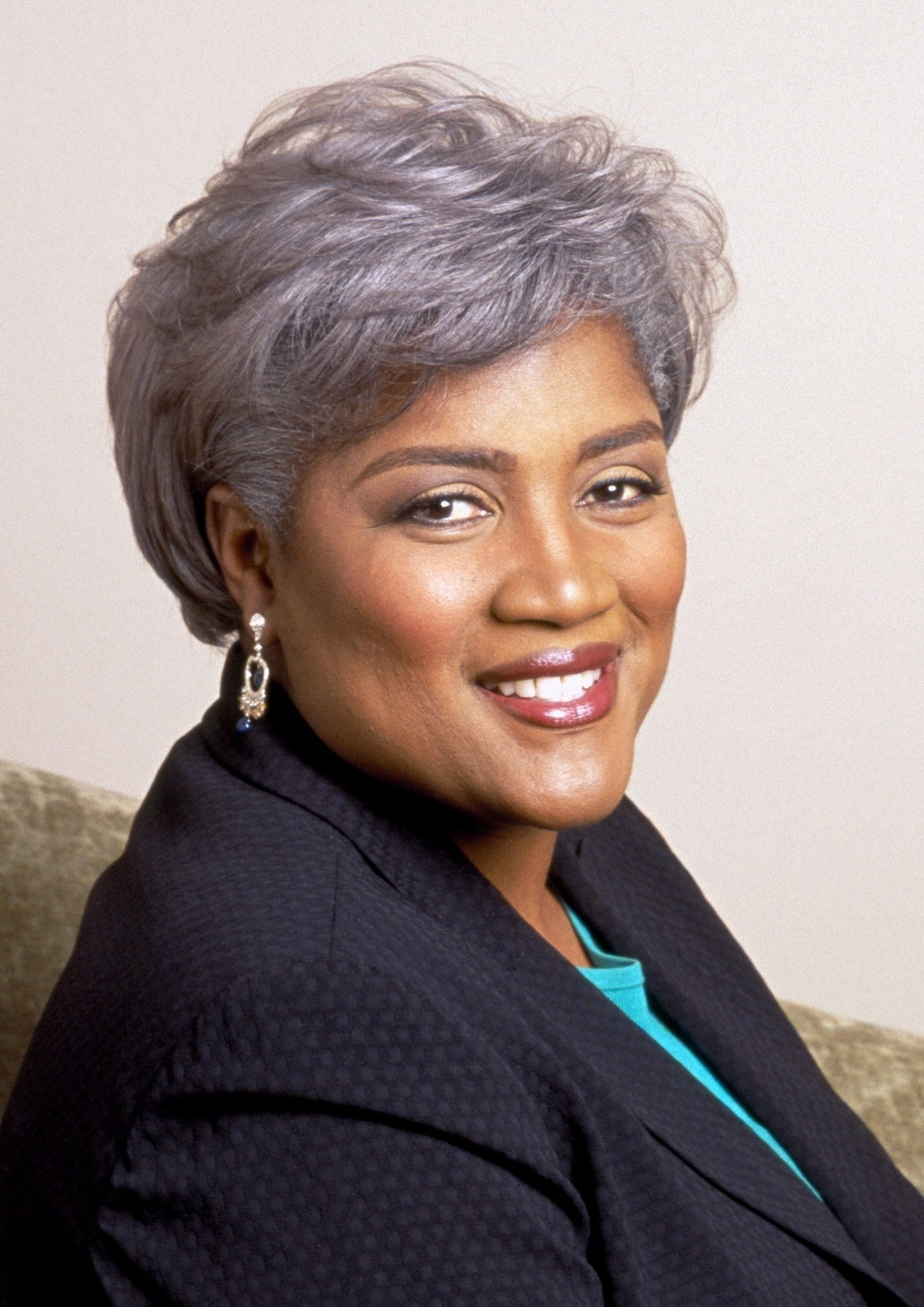
| 11 Quotes | |
| Occup. | Politician |
| From | USA |
| Born | December 15, 1959 |
| Age | 66 years |
| Cite | |
Citation Formats
APA Style (7th ed.)
Donna brazile biography, facts and quotes. (2026, February 17). FixQuotes. https://fixquotes.com/authors/donna-brazile/
Chicago Style
"Donna Brazile biography, facts and quotes." FixQuotes. February 17, 2026. https://fixquotes.com/authors/donna-brazile/.
MLA Style (9th ed.)
"Donna Brazile biography, facts and quotes." FixQuotes, 17 Feb. 2026, https://fixquotes.com/authors/donna-brazile/. Accessed 28 Mar. 2026.
Early Life and Background
Donna Lease Brazile was born on December 15, 1959, in New Orleans, Louisiana, the daughter of working-class Creole parents and one of nine children. She grew up in the citys Seventh Ward in an era when civil rights victories were still fragile in daily life, and when politics in Louisiana could be intimate, theatrical, and hard-edged at the same time. The household was rooted in Catholic faith and the discipline of shift work, and Brazile learned early how communities survive: by leaning on kin, church, and neighbors when institutions feel distant.
Her earliest political memory is famously local and practical: as a child she took part in a school mock election and cast a ballot for John F. Kennedy, then questioned why Black people could not vote as freely in practice as the lesson suggested. That dissonance between civic ideals and civic reality became a lifelong engine. It also shaped an inner stance that blends toughness with moral urgency - a conviction that politics is not abstract power but the machinery that decides who gets heard, counted, and helped.
Education and Formative Influences
Brazile attended Louisiana State University, where campus activism and the aftershocks of the Vietnam and Watergate years sharpened her sense that procedure is destiny - the rules of participation determine who wins before speeches even begin. She moved through student leadership into Democratic Party work, absorbing the traditions of Southern Black organizing alongside the technical craft of modern campaigns: voter files, turnout operations, and message discipline, all filtered through the lived knowledge that access to the ballot in the South had been contested within living memory.
Career, Major Works, and Turning Points
By the 1980s and 1990s Brazile had become a fixture in national Democratic politics, working on presidential campaigns and serving in party infrastructure, then rising to historic prominence as campaign manager for Al Gores 2000 presidential run - the first Black woman to manage a major-party presidential campaign. The disputed Florida recount and the Supreme Court decision in Bush v. Gore turned her into a public explainer of democratic process, not just a campaign tactician. In the years that followed she built a parallel career as a strategist, commentator, and author, including Cooking with Grease: Stirring the Pots in American Politics, and later the more self-critical, insider account Hacks, while holding senior party roles such as interim chair of the Democratic National Committee in 2016 - a period defined by intraparty distrust, the demands of a new media ecosystem, and the shock of Donald Trumps victory.
Philosophy, Style, and Themes
Braziles politics begins with the premise that democracy is learned behavior, not inherited instinct. She argues that the electorate is made, not found, insisting that “Civic education and civic responsibility should be taught in elementary school”. Psychologically, this is less a policy plank than a confession of origin: a child who encountered the gap between textbook democracy and street-level exclusion grew into an adult determined to build the habits that keep citizens from being managed by elites. Her approach treats voting as a civil skill like reading - something that must be practiced, protected, and passed on.
Her strategic style is blunt about power and the speed with which narratives harden. “If you're not out front defining your vision, your opponent will spend gobs of money to define it for you”. That sentence captures a mind trained by campaigns where message is oxygen and hesitation is fatal. Yet it also reveals a deeper anxiety: that people - especially marginalized voters - will be spoken for unless they speak first and loudly. The same moral intensity drives her election-reform critique, including the claim that “We're like a Third World country when it comes to some of our election practices”. The provocation is deliberate: she frames dysfunctional administration, long lines, and uneven standards as a national humiliation, because she views legitimacy as a public good that can be squandered by bureaucratic neglect as surely as by overt suppression.
Legacy and Influence
Braziles enduring influence lies in making the backstage visible - translating the mechanics of turnout, rules, and party governance into a moral argument about belonging. She helped normalize Black female leadership at the highest levels of campaign management and party stewardship, and she brought a organizers sensibility to television punditry and insider writing, insisting that procedure matters because it determines whose lives politics can reach. In an era of polarized media and contested elections, her career stands as a case study in the uneasy marriage of idealism and hardball: faith in participation, tempered by an unblinking awareness that democracy only works when someone is willing to fight for the small print.
Our collection contains 11 quotes written by Donna, under the main topics: Motivational - Justice - Equality - Faith - Servant Leadership.
Source / external links