
Doug Larson Biography Quotes 32 Report mistakes
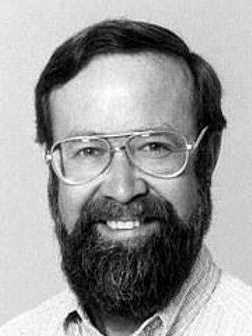
Attr: OGN Daily
| 32 Quotes | |
| Born as | Douglas Lincoln Larson |
| Occup. | Cartoonist |
| From | USA |
| Born | February 10, 1926 New York City, New York, USA |
| Died | April 1, 2017 |
| Aged | 91 years |
| Cite | |
Citation Formats
APA Style (7th ed.)
Doug larson biography, facts and quotes. (2026, February 11). FixQuotes. https://fixquotes.com/authors/doug-larson/
Chicago Style
"Doug Larson biography, facts and quotes." FixQuotes. February 11, 2026. https://fixquotes.com/authors/doug-larson/.
MLA Style (9th ed.)
"Doug Larson biography, facts and quotes." FixQuotes, 11 Feb. 2026, https://fixquotes.com/authors/doug-larson/. Accessed 6 Mar. 2026.
Early Life and Background
Douglas Lincoln Larson was born on February 10, 1926, in the United States, into a generation shaped early by scarcity and later by global war. Coming of age during the long shadow of the Great Depression and the mobilization of the 1940s, he absorbed the everyday language of rationing, work rules, and household ingenuity - the lived texture that would later become the raw material for his compact, observant humor.Larson built a public identity not around celebrity but around the durable American tradition of the working cartoonist and aphorist: someone whose job is to notice what people do when they think no one is watching. He wrote with the ear of a commuter and the timing of a panel gag, turning domestic friction, office hierarchies, aging bodies, and moral vanity into sentences that felt like they had always been in circulation. That stance - a wry insider who refused grandiosity - helped his humor travel widely while keeping its roots in ordinary life.
Education and Formative Influences
Specific details of Larson's schooling are not reliably documented in the public record, but the contours of his craft suggest an education assembled as much from newspapers, popular magazines, and the rhythms of postwar middle-class conversation as from any formal program. Mid-century American cartooning prized compression - the ability to distill a scene into a single look and a single line - and Larson learned to treat the punch line as an act of editing. He worked in the long wake of writers like Mark Twain and the magazine humorists of the 1940s-1960s, when a clean, quotable sentence could move faster than a full essay and when the cartoonist's persona was expected to be sharp without being cruel.Career, Major Works, and Turning Points
Larson became best known as a cartoonist whose one-liners and observations circulated broadly in quote columns, calendars, office posters, and syndicated humor channels, reaching audiences who might never have known his full biography but recognized his voice immediately. His professional turning point was not a single headline-making work so much as a long accumulation of publishable, repeatable lines - jokes engineered to survive reprinting, to fit beside a drawing, and to feel at home in workplace break rooms as well as family kitchens. Over decades he honed a mode of American comedy that treated institutions (marriage, management, memory, manners) as permanent targets and human self-deception as the central gag, staying productive into the later stages of life until his death on April 1, 2017.Philosophy, Style, and Themes
Larson's philosophy was moral without preaching: he distrusted self-importance, preferred humility to heroics, and used laughter as a social corrective. He understood that conversation is often a competition disguised as community, so he framed wisdom as restraint rather than performance: “Wisdom is the reward you get for a lifetime of listening when you'd have preferred to talk”. The line reveals a psychology attentive to impulse control - the hard-earned ability to watch oneself speaking, to feel the itch to dominate a room, and to choose silence anyway. For Larson, maturity was less about becoming profound than about becoming less noisy.His style depended on the snap of paradox and the exposure of hidden motives. He treated error as inevitable but vanity as optional, insisting that character shows up not in perfection but in accountability: “To err is human; to admit it, superhuman”. That "superhuman" is classic Larson - a comic exaggeration that also functions as diagnosis, hinting that the ego resists confession more fiercely than it resists wrongdoing. Beneath the jokes sits a steady theme: memory is unreliable, and moral certainty is often a convenient editing of one's past. Hence his suspicion of moral amnesia: “A lot of people mistake a short memory for a clear conscience”. In three beats he sketches a whole inner drama - the relief of forgetting, the self-justification that follows, and the social damage that arrives when forgetting is mistaken for innocence.
Legacy and Influence
Larson's legacy is the kind that hides in plain sight: a portfolio of quotable insights that continue to circulate precisely because they fit the pace of modern life, where a sentence must land quickly to be remembered. His work helped keep alive a distinctly American comic tradition in which the cartoonist doubles as a secular counselor, offering not therapy but recognition - the sense that your office, your marriage, your pride, and your aging knees are not private humiliations but shared human material. By turning everyday self-deception into portable wisdom, Douglas Lincoln Larson left behind a body of humor that still trains readers to laugh first, then look inward.Our collection contains 32 quotes written by Doug, under the main topics: Witty One-Liners - Motivational - Ethics & Morality - Wisdom - Puns & Wordplay.
Source / external links