
Douglas Reed Biography Quotes 2 Report mistakes
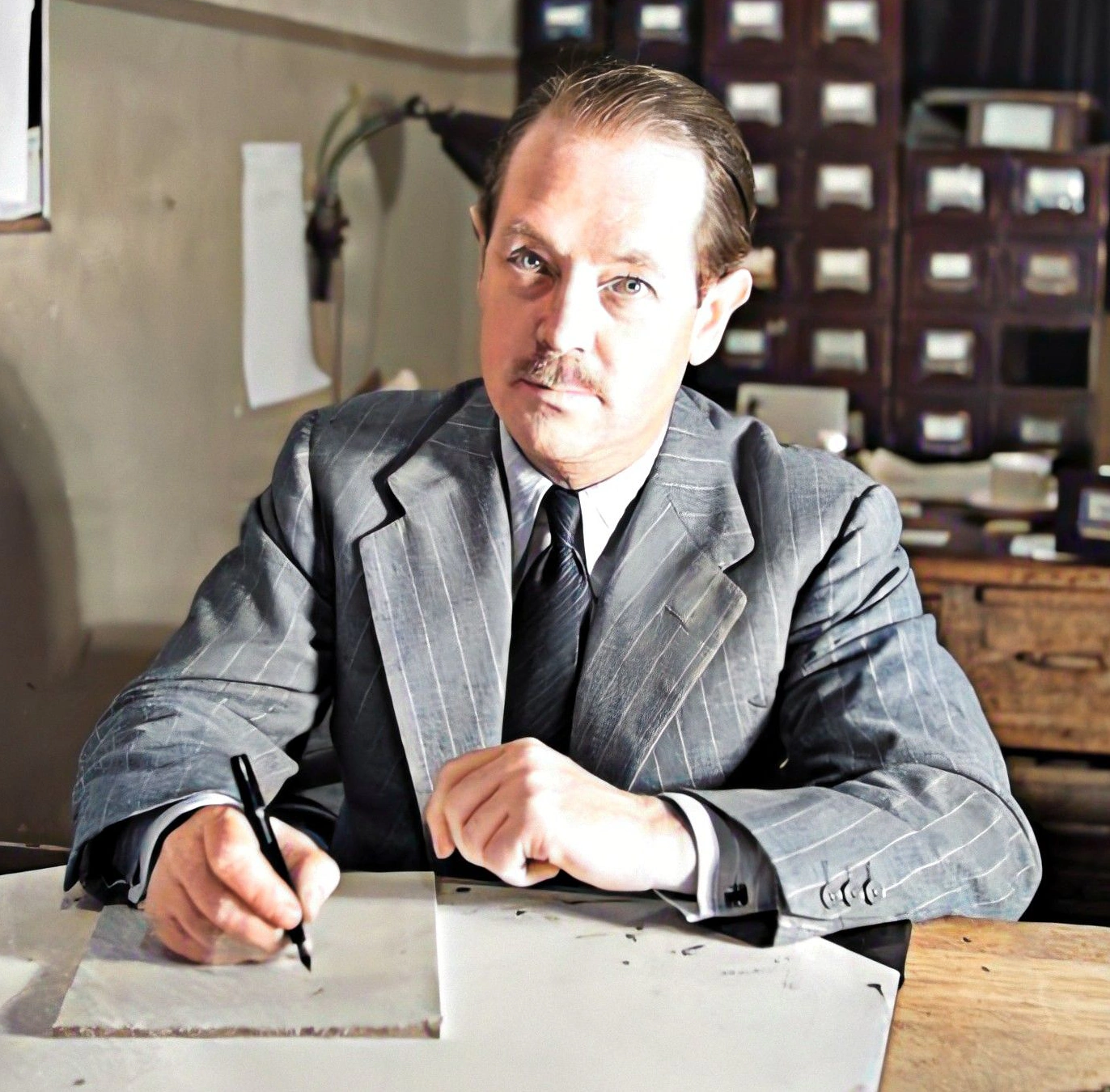
| 2 Quotes | |
| Born as | Douglas Valentine Reed |
| Occup. | Journalist |
| From | United Kingdom |
| Spouse | Gladys Mary Reed |
| Born | November 17, 1895 Taunton, Somerset, United Kingdom |
| Died | November 17, 1976 Budapest, Hungary |
| Cause | Natural Causes |
| Aged | 81 years |
| Cite | |
Citation Formats
APA Style (7th ed.)
Douglas reed biography, facts and quotes. (2026, February 11). FixQuotes. https://fixquotes.com/authors/douglas-reed/
Chicago Style
"Douglas Reed biography, facts and quotes." FixQuotes. February 11, 2026. https://fixquotes.com/authors/douglas-reed/.
MLA Style (9th ed.)
"Douglas Reed biography, facts and quotes." FixQuotes, 11 Feb. 2026, https://fixquotes.com/authors/douglas-reed/. Accessed 25 Mar. 2026.
Early Life and Background
Douglas Valentine Reed was born on November 17, 1895, in Britain at the hinge of two centuries, when the prestige of empire coexisted with anxieties about mass politics, industrial unrest, and continental rivalries. He came of age as the Edwardian order frayed and the First World War remade the moral vocabulary of public life. Those early decades mattered to Reed not only as chronology but as temperament: he developed a lifelong habit of reading events as symptoms of hidden forces, and of measuring politics against an older ideal of civic duty, thrift, and plain speech.The war and its aftermath formed the atmosphere in which his sensibilities hardened. Reed belonged to the generation that watched pre-1914 certainties dissolve into casualty lists, paper money, propaganda, and revolutions, then watched peace deliver not stability but new resentments and ideological crusades. In later life he would return again and again to the idea that modernity had loosened the anchors of tradition and responsibility, and that journalism, once a craft of witness, was increasingly pressed into service as an instrument of persuasion.
Education and Formative Influences
Reed emerged into professional life through the world of newspapers rather than the academy, shaped by the practical education of the press: deadlines, foreign cables, and the competitive hunt for the decisive detail that made a complicated story legible to general readers. The interwar press in Britain - large-circulation, highly politicized, and increasingly international in scope - trained him to write quickly and with confidence, and also accustomed him to the backstage proximity between editors, proprietors, and policymakers that could blur the line between observation and advocacy.Career, Major Works, and Turning Points
By the 1930s and through the Second World War Reed became known as a British journalist and commentator, part of a generation of correspondents and leader writers attempting to interpret a Europe of collapsing monarchies, totalitarian movements, and rapid diplomatic reversals for readers at home. His reputation was built on his ability to translate geopolitical dramas into moral narratives - who was acting from fear, who from ambition, who from ideology - and to emphasize patterns across decades rather than the sensational crisis of the day. Over time, however, his insistence on grand explanatory frames and his increasingly polemical tone pushed him toward controversy: admirers saw a stubborn independent mind; critics saw a writer drifting from reporting toward conspiracy-minded interpretation, especially when he described the manipulation of publics by organized interests and the frailty of liberal institutions under pressure.Philosophy, Style, and Themes
Reed wrote as a moral diagnostician of modern politics. His sentences often carried a Victorian clarity - vivid, emblematic, and designed to make readers see a whole social order in one scene. He could evoke economic dislocation through a single remembered image of subsistence and dignity: “He thinks with regret of the great days when he could at harvest time at least go down into Hungary and work on the big estates and bring back, as his wage, a side of bacon for the winter. That was wealth, to him”. The point was never only poverty; it was Reed's conviction that political upheaval begins when ordinary people lose the small securities that once made life intelligible.His interpretive habit was to cast history as a contest of symbols as much as armies or parliaments, and his imagery often leaned on religious or civilizational contrasts. “It looked like a pagan banner planted on a Christian rampart”. That kind of line reveals the inner engine of his work: he experienced events as profanations and reversals, and he wrote to restore what he believed had been inverted - the primacy of conscience over expediency, of cultural inheritance over ideological novelty. Psychologically, this gave his journalism its force and its risk: the same sensibility that made him attentive to the spiritual stakes of politics also predisposed him to see deliberate design where contingency and muddle might suffice.
Legacy and Influence
Reed remains a contentious figure in the British journalistic tradition - a writer whose career illustrates both the power and the peril of interpretive reporting in an age of propaganda and mass persuasion. His work endures less as a repository of settled facts than as a case study in how a journalist, shaped by war and interwar turbulence, can become consumed by the search for underlying causes, turning reportage into an argument about civilization itself. For readers drawn to strong narrative explanations of modern history, he offers a bracing, sometimes troubling example of the commentator as moral historian; for critics, he stands as a warning about how ideological certainty can harden into a lens that narrows as it intensifies.Our collection contains 2 quotes written by Douglas, under the main topics: War - Nostalgia.
Douglas Reed Famous Works
- 1978 The Controversy of Zion (Book)
- 1951 Far and Wide (Book)
- 1939 Disgrace Abounding (Book)
- 1938 Insanity Fair (Book)
Source / external links