
Douglas William Jerrold Biography Quotes 14 Report mistakes
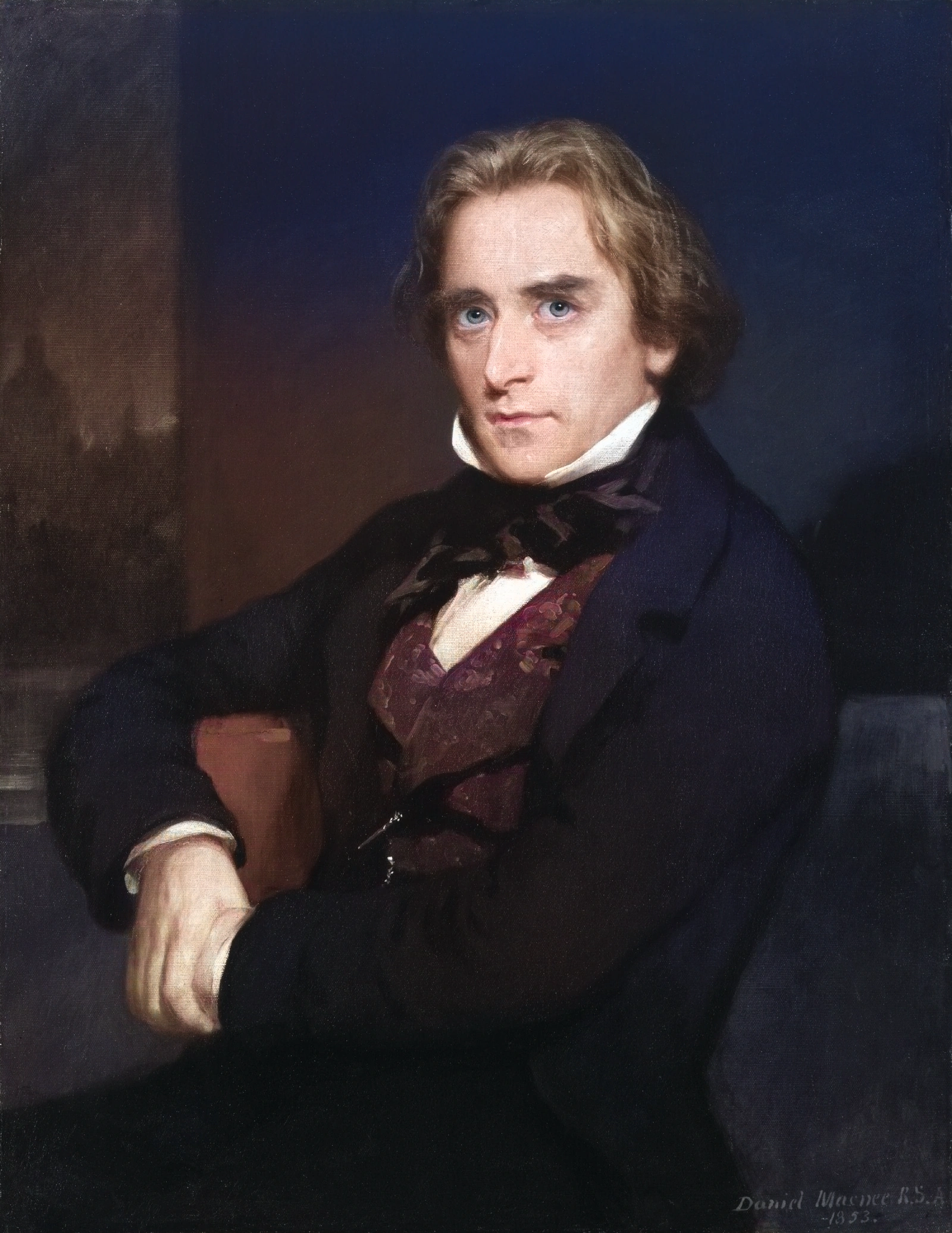
Attr: Daniel Macnee, Public domain
| 14 Quotes | |
| Occup. | Dramatist |
| From | England |
| Born | January 3, 1803 |
| Died | June 8, 1857 London, England |
| Aged | 54 years |
| Cite | |
Citation Formats
APA Style (7th ed.)
Douglas william jerrold biography, facts and quotes. (2026, February 11). FixQuotes. https://fixquotes.com/authors/douglas-william-jerrold/
Chicago Style
"Douglas William Jerrold biography, facts and quotes." FixQuotes. February 11, 2026. https://fixquotes.com/authors/douglas-william-jerrold/.
MLA Style (9th ed.)
"Douglas William Jerrold biography, facts and quotes." FixQuotes, 11 Feb. 2026, https://fixquotes.com/authors/douglas-william-jerrold/. Accessed 27 Mar. 2026.
Early Life and Background
Douglas William Jerrold was born on January 3, 1803, in London into the rough-and-ready world of the minor theater. His father, Samuel Jerrold, worked as an actor and theatrical manager, and the boy grew up backstage among playbills, comic turns, and the hard arithmetic of benefit nights. That early intimacy with performance gave him both an ear for dialogue and a lifelong sympathy for working people whose lives were governed by wages, landlords, and employers more than by abstract principle.At about ten he was sent to sea, a formative dislocation that sharpened his sense of discipline and the price of authority. He served as a midshipman in the Royal Navy during the last phase of the Napoleonic Wars, absorbing the smells of tar and gunpowder and the rigid hierarchy of the quarterdeck. When he returned to London, his experience of the service - proud, coercive, and precarious - lingered as a moral yardstick in his later satire: he distrusted cant, loved courage, and recoiled from institutions that demanded obedience without justice.
Education and Formative Influences
Jerrold had little formal schooling beyond what a theatrical household and naval life allowed, so his education was practical and literary at once: rehearsal rooms, newspapers, coffeehouses, and the London streets. The early nineteenth century metropolis, swollen by war demobilization and industrial change, was his real tutor, while the stage trained him to think in scenes, entrances, and reversals. He admired the brisk moral energy of English satire and the emotional directness of melodrama, learning to fuse laughter with indignation - a blend that would make him both popular and controversial in the age of Reform and Chartism.Career, Major Works, and Turning Points
In the 1820s Jerrold turned decisively to writing for the theater, quickly proving a natural dramatist with a journalist's reflex for topical feeling. He wrote and adapted numerous plays, but his reputation consolidated with nautical and patriotic drama such as Black-Eyed Susan; or, All in the Downs (1829), whose sentiment for the sailor and suspicion of official cruelty struck a chord in a Britain negotiating postwar identity. As his fame grew, he became a major voice in periodical culture, contributing to Punch from its early years and helping define its combative, humane comic tone. The turning point was his shift from the playhouse alone to the broader public forum of weekly satire and serialized social commentary, where his gifts for epigram, character, and moral pressure could meet a rapidly politicizing readership.Philosophy, Style, and Themes
Jerrold's writing is driven by a paradox: he is at once a man of domestic feeling and a public scold. He mistrusted distant utopias and performed affection as a moral argument, insisting that social reform begins with the intimate and the local. “Happiness grows at our own firesides, and is not to be picked in strangers' gardens”. That line is not mere coziness; it reveals his psychological need for a stable hearth against the volatility he had known at sea and in the precarious theater economy. Yet the hearth in Jerrold is never an excuse for complacency - it is a standard by which the state is judged, because a society that breaks homes breaks character.His style is theatrical: compact scenes, strong contrasts, and a punchline that lands like a gavel. He specialized in the exposure of hypocrisy, often implying that respectable rhetoric is a mask for appetite and power. “Religion's in the heart, not in the knees”. Here Jerrold's moral imagination shows its impatience with performative virtue; he wanted belief to be legible in conduct, not ceremony. The same fighting temperament appears in his political aphorisms, where he insists on moral seriousness even while wielding comedy as a weapon: “We love peace, but not peace at any price”. The sentence captures his temperament - conciliatory in aim, uncompromising in dignity - and helps explain why his humor often carries the heat of argument rather than the coolness of amusement.
Legacy and Influence
Jerrold died on June 8, 1857, leaving a legacy that straddles stage and page: he helped keep melodrama morally alert, proved that popular comedy could bear political weight, and shaped the early voice of Punch at a moment when satire became a national conversation. Later Victorian writers and journalists learned from his ability to turn social observation into memorable, quotable judgment, and his best work still reads like a live performance - fast, opinionated, tender toward the vulnerable, and allergic to pious fraud. In an era anxious about class conflict and rapid change, Jerrold offered a model of engaged wit: laughter as an instrument of conscience.Our collection contains 14 quotes written by Douglas, under the main topics: Witty One-Liners - Truth - Love - Kindness - Faith.
Other people related to Douglas: Douglas Jerrold (Playwright)
Source / external links