
Drew Brees Biography Quotes 29 Report mistakes
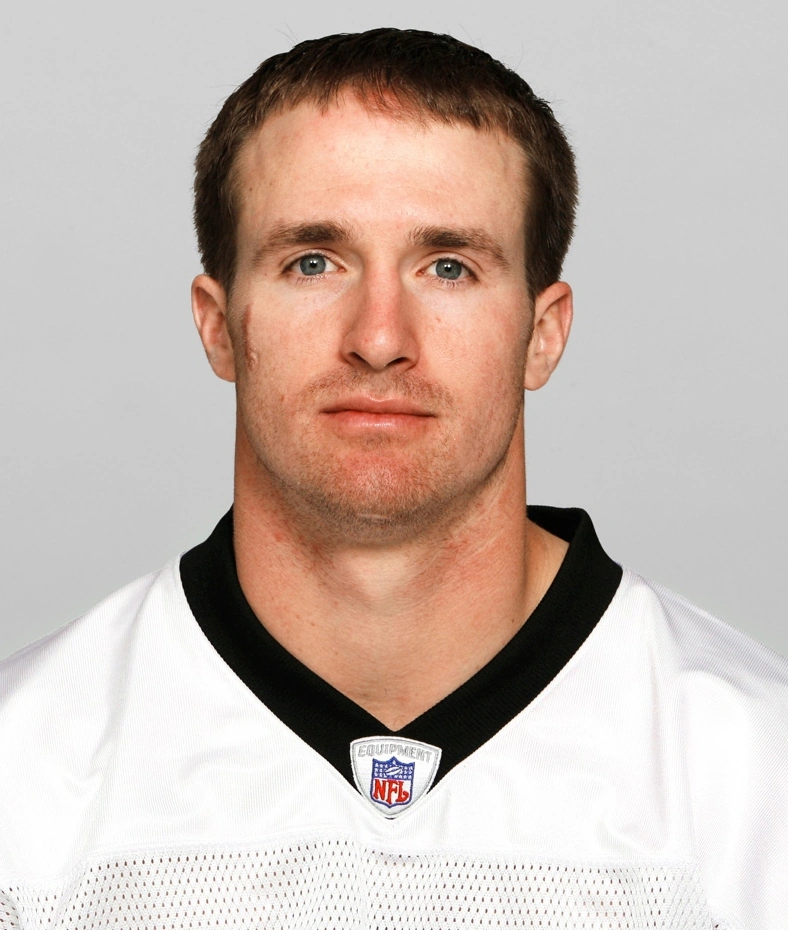
| 29 Quotes | |
| Occup. | Athlete |
| From | USA |
| Born | January 15, 1979 |
| Age | 47 years |
| Cite | |
Citation Formats
APA Style (7th ed.)
Drew brees biography, facts and quotes. (2026, February 11). FixQuotes. https://fixquotes.com/authors/drew-brees/
Chicago Style
"Drew Brees biography, facts and quotes." FixQuotes. February 11, 2026. https://fixquotes.com/authors/drew-brees/.
MLA Style (9th ed.)
"Drew Brees biography, facts and quotes." FixQuotes, 11 Feb. 2026, https://fixquotes.com/authors/drew-brees/. Accessed 26 Mar. 2026.
Early Life and Background
Drew Christopher Brees was born on January 15, 1979, in Austin, Texas, into a family where achievement and scrutiny traveled together. His father, Eugene Wilson "Chip" Brees II, was a prominent trial lawyer and a former standout basketball player at Texas A&M; his mother, Mina Ruth Akins, had been an athlete as well. When his parents divorced during his adolescence, Brees learned early how to build steadiness inside disruption - a private discipline that later showed up as composure in late-game chaos.He grew up in a football culture that prized size and pedigree, yet his own physical profile made him an unlikely prototype. At Westlake High School in Austin, he started at quarterback and helped turn the program into a state-level force, setting passing records while leading with timing and precision rather than intimidation. Those years formed his central paradox: outwardly measured and team-first, inwardly intensely competitive, storing doubts as fuel and turning slights into structured motivation.
Education and Formative Influences
Brees attended Purdue University, where Joe Tiller's spread offense and quarterback-friendly system sharpened him into an elite passer. He became the Big Ten's centerpiece, winning the Maxwell Award in 2000 and leading Purdue to the Rose Bowl (played January 2001) against Washington. The college stage gave him a laboratory for craft - footwork, reads, anticipation - and taught him that leadership could be taught like mechanics: by repetition, accountability, and making the difficult throw on time even when the body type did not match old scouting myths.Career, Major Works, and Turning Points
Drafted by the San Diego Chargers in 2001, Brees endured early benchings and a constant sense that his job could vanish, then broke through with a Pro Bowl season in 2004 before the franchise drafted Philip Rivers. The turning point arrived in 2005, when a severe shoulder injury (a torn labrum and rotator cuff damage) made his future uncertain; in 2006 he signed with the New Orleans Saints, joining coach Sean Payton in a city still raw after Hurricane Katrina. There he became the defining quarterback of a generation, setting NFL passing marks (including surpassing Dan Marino's single-season yards in 2011) and winning Super Bowl XLIV after the 2009 season, earning Super Bowl MVP. In later years he remained productive while adapting his game, then retired after the 2020 season as the NFL's all-time leader in multiple passing categories at the time, with 13 Pro Bowls and a reputation for obsessive preparation.Philosophy, Style, and Themes
Brees' game was a thesis on mastery: he compensated for conventional limitations with anticipation, pocket movement, and surgical accuracy on short and intermediate routes that became an offensive identity. He rejected the idea that quarterbacking is measured in inches, insisting, “I don't believe that you can be too short as a quarterback. It's not about height”. Psychologically, that line is not defiance for its own sake - it is a reframing device, a way of relocating control from the body to the will and the mind, where he could win through preparation. His film study and practice routines, often described by teammates as relentless, mirrored a deeper need to make randomness manageable: if success could be engineered, then fear could be contained.His leadership philosophy fused competitiveness with service, treating performance as a civic act. “I obviously take a lot of pride in what I do on the football field, because that has the ability to influence a lot of people. That puts smiles on people's faces. That gives people a pep in their step on Monday morning when they go back to work”. In New Orleans especially, winning became symbolic restoration, and Brees internalized that responsibility as a form of purpose rather than burden. He also carried a survivor's gratitude for the moments when careers could have ended, later reflecting, “It has been an interesting road, but I wouldn't trade any of it for the world, because I feel like all of those instances in my life I felt molded me and strengthened me and made me who I am”. The psychology underneath is clear: adversity was not merely endured - it was alchemized into identity, and identity became a compass in a profession built to replace you.
Legacy and Influence
Brees' legacy is split between record books and something harder to quantify: the proof that an "undersized" quarterback could dominate through cognition, accuracy, and leadership architecture. He helped legitimize the modern, rhythm-based passing game and influenced how teams evaluate traits like processing speed and decision-making over silhouette. In New Orleans he became a post-Katrina civic figure through visibility, philanthropy, and the daily ritual of competence, while his longevity and professionalism set a template for quarterback stewardship in the salary-cap era. Even after retirement, his imprint remains in the way the position is taught - less as raw power, more as an applied craft of timing, poise, and responsibility.Our collection contains 29 quotes written by Drew, under the main topics: Motivational - Leadership - Victory - Sports - Resilience.
Source / external links