
Duke of Wellington Biography Quotes 23 Report mistakes
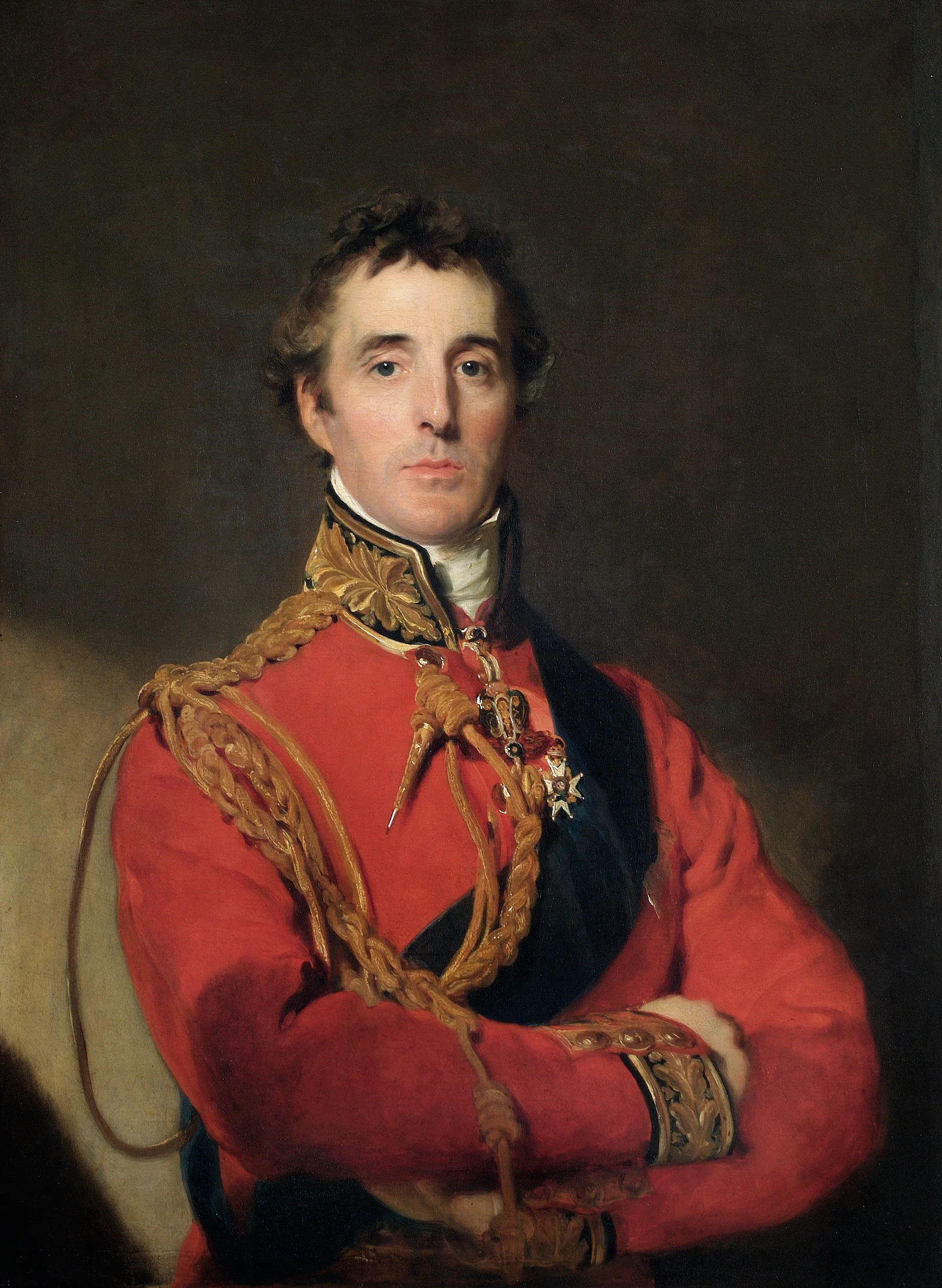
| 23 Quotes | |
| Born as | Arthur Wellesley |
| Known as | 1st Duke of Wellington |
| Occup. | Royalty |
| From | United Kingdom |
| Spouse | Katherine Pakenham |
| Born | May 1, 1769 Dublin, Ireland |
| Died | September 14, 1852 Walmer Castle, Kent, England |
| Cause | Natural Causes |
| Aged | 83 years |
| Cite | |
Citation Formats
APA Style (7th ed.)
Duke of wellington biography, facts and quotes. (2026, February 1). FixQuotes. https://fixquotes.com/authors/duke-of-wellington/
Chicago Style
"Duke of Wellington biography, facts and quotes." FixQuotes. February 1, 2026. https://fixquotes.com/authors/duke-of-wellington/.
MLA Style (9th ed.)
"Duke of Wellington biography, facts and quotes." FixQuotes, 1 Feb. 2026, https://fixquotes.com/authors/duke-of-wellington/. Accessed 5 Mar. 2026.
Early Life and Background
Arthur Wesley (he later preferred the older spelling Wellesley) was born on 1 May 1769 into Ireland's Anglo-Irish Protestant Ascendancy, a world of land, patronage, and anxious legitimacy. He grew up between Dublin and the family seat at Dangan Castle, County Meath, the third son of Garret Wesley, 1st Earl of Mornington, a musician-turned-peer whose ambitions outpaced his finances. When the earl died in 1781, the household tightened, and Arthur - quiet, self-contained, and not yet marked for distinction - absorbed early the lesson that rank without discipline could be a form of fragility.The texture of his youth was shaped by the political weather of the late Georgian Atlantic: Irish unrest, debates over Catholic relief, and a British imperial system that offered younger sons a career in uniform. He was not initially the family's brightest hope; his mother, Anne Hill, was famously severe, and Wellington later carried an adult reserve that read like emotional armor. That reserve was partly temperament and partly strategy - a way to survive the scrutiny of class and the chaos of war without displaying need.
Education and Formative Influences
Wellesley was educated at Eton and then in Brussels before formal military training at the Royal Academy at Angers in France, where he studied riding, fortification, and the practical mathematics of command. Eton gave him social confidence and networks; Angers gave him technique. More formative still was early service in Ireland, where he learned administration in the unglamorous routines of garrison life, and politics as aide to his brother Richard, later Marquess Wellesley. The combination produced a commander who trusted preparation over inspiration and who treated logistics, discipline, and clear orders as moral duties.Career, Major Works, and Turning Points
Commissioned in 1787, he rose slowly until India made him: victories at Assaye and Argaum (1803) and his hard-won governance of Seringapatam revealed a talent for using limited means precisely. Sent to the Iberian Peninsula in 1808, he became the central British field commander of the Peninsular War, winning at Talavera, Buacaco, Salamanca, Vitoria, and through the defensive engineering of the Lines of Torres Vedras, a masterclass in turning geography into force. In 1814 he entered diplomacy as ambassador to France and a key figure at the Congress of Vienna. Then came 18 June 1815: at Waterloo, supported by the Prussians under Blucher, he held a thin ridge against Napoleon and ended the Hundred Days. He was made Duke of Wellington, later served twice as prime minister (1828-1830, briefly in 1834), pushed through Catholic Emancipation in 1829 against much of his own party, opposed the 1832 Reform Act, and spent his last years as a revered - and contested - symbol of order until his death on 14 September 1852.Philosophy, Style, and Themes
Wellington's inner life was governed by duty, restraint, and an almost stoic suspicion of triumphalism. He understood battle as a moral injury even when necessary, insisting that “Nothing except a battle lost can be half so melancholy as a battle won”. The line is not sentimentality but diagnosis: victory exposed the cost of command - bodies on the field, homes broken, and the knowledge that a general is accountable for all of it. This grief-inflected realism shaped his operational style: avoid unnecessary risks, conserve the army, and treat time and terrain as weapons as decisive as artillery.His leadership was equally defined by clarity, impatience with dithering, and cold-eyed appraisal of men and institutions. He could admire an enemy without romanticizing him: “I used to say of Napoleon that his presence on the field made the difference of forty thousand men”. That recognition was practical, not flattering - a warning that morale and perception are combat multipliers. In politics he carried the same temperament: decisive, blunt, and often brittle under public intrusion, crystallized in the famously defiant “Publish and be damned”. Behind the brusqueness was a consistent creed: authority must act, not posture; order is fragile; and leadership is the art of absorbing pressure without transmitting panic.
Legacy and Influence
Wellington endures as both tactician and statesman: the commander who professionalized Britain's approach to coalition war, elevated staff work and supply to strategic principles, and demonstrated how defensive preparation could enable decisive offense. Yet his political afterlife is more ambiguous - hero of stability to admirers, emblem of reaction to critics - especially given his resistance to parliamentary reform even as he engineered Catholic Emancipation to avert civil conflict. His name remains attached to a model of leadership that prizes steadiness over charisma, and to an ethic of command in which victory is never pure celebration but a burden carried in public so the cost is not forgotten.Our collection contains 23 quotes written by Duke, under the main topics: Witty One-Liners - Wisdom - Justice - Leadership - Learning.
Other people related to Duke: J.B. Priestley (Writer), Henry John Temple (Statesman), William Hamilton Maxwell (Novelist), Philip Guedalla (Historian), Wellington Mara (Businessman)
Source / external links