
Dwight D. Eisenhower Biography Quotes 81 Report mistakes
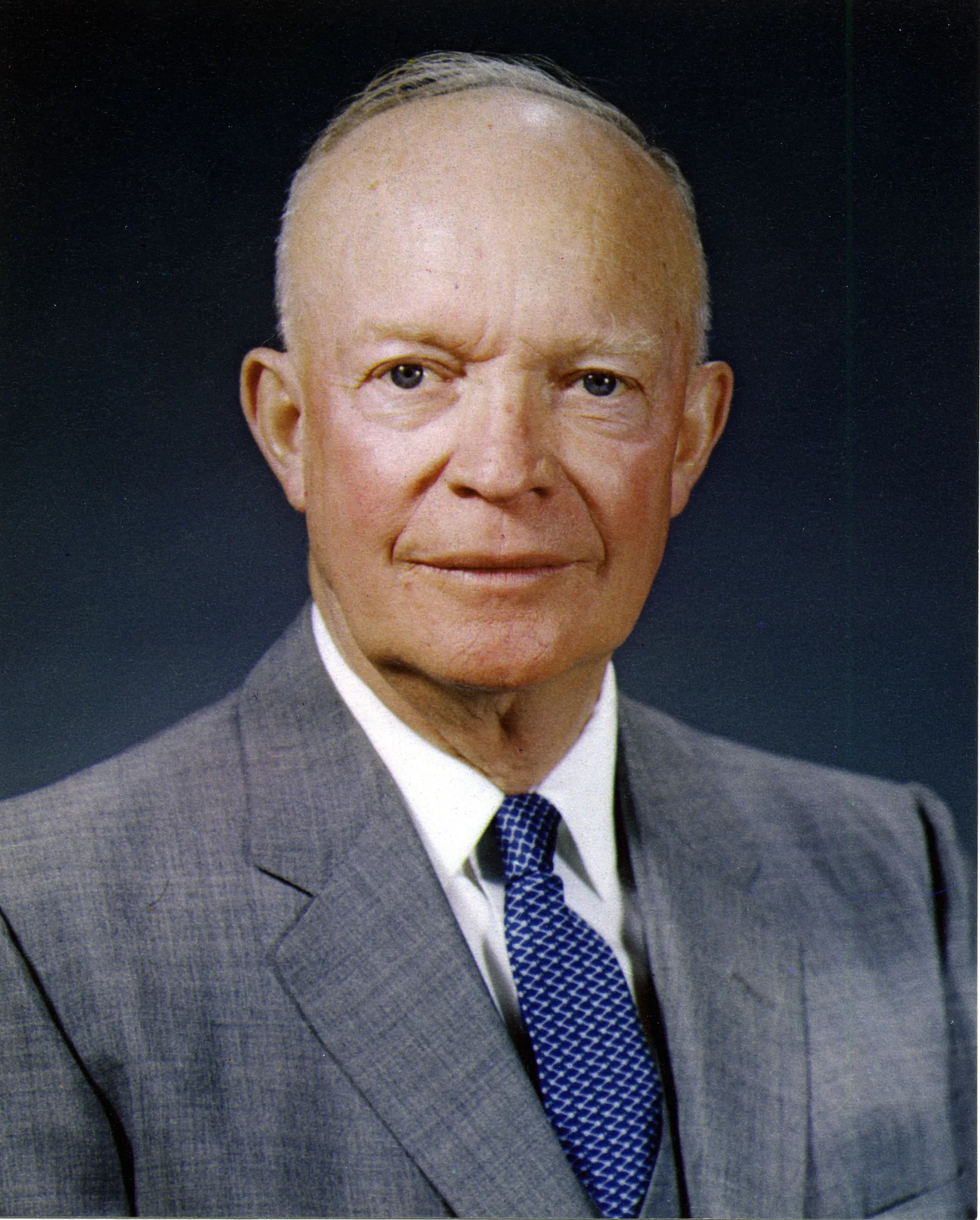
| 81 Quotes | |
| Born as | Dwight David Eisenhower |
| Occup. | President |
| From | USA |
| Born | October 14, 1890 Denison, Texas, USA |
| Died | March 28, 1969 Washington D.C., USA |
| Cause | Cardiac Arrest |
| Aged | 78 years |
| Cite | |
Citation Formats
APA Style (7th ed.)
Dwight d. eisenhower biography, facts and quotes. (2026, February 3). FixQuotes. https://fixquotes.com/authors/dwight-d-eisenhower/
Chicago Style
"Dwight D. Eisenhower biography, facts and quotes." FixQuotes. February 3, 2026. https://fixquotes.com/authors/dwight-d-eisenhower/.
MLA Style (9th ed.)
"Dwight D. Eisenhower biography, facts and quotes." FixQuotes, 3 Feb. 2026, https://fixquotes.com/authors/dwight-d-eisenhower/. Accessed 5 Mar. 2026.
Early Life and Background
Dwight David Eisenhower was born on October 14, 1890, in Denison, Texas, the third of seven sons in a family shaped by thrift, Protestant discipline, and the rhythms of small-town America. His parents, David Jacob Eisenhower and Ida Elizabeth Stover, soon moved the household to Abilene, Kansas, where the boys worked hard, argued hard, and learned early that status came from competence more than talk.Abilene gave Eisenhower a frontier-inflected sense of fairness and self-command, but also a lifelong suspicion of cant. He grew up reading history and devouring stories of war and leadership, while playing football with a fearlessness that hinted at the competitor beneath the calm. The family was not wealthy, and the future president absorbed a practical, accounts-balanced view of life that would later color his approach to budgets, alliances, and the limits of power.
Education and Formative Influences
Eisenhower entered the US Military Academy at West Point in 1911 and graduated in 1915, the class later nicknamed "the class the stars fell on" for its many future generals. He was a gifted organizer rather than a natural theorist, learning as much from the academy's systems as from its textbooks: how rules create habits, how peer pressure enforces standards, and how responsibility flows through chains of command. A severe knee injury ended his football ambitions and redirected his competitive drive into staff work, where he began to hone the quiet arts of persuasion, timing, and coalition-building.Career, Major Works, and Turning Points
Commissioned into the Army, Eisenhower missed combat in World War I but emerged as an exceptional trainer and planner, later serving under mentors such as Fox Conner and working with Douglas MacArthur in the interwar years - experiences that taught him both the grandeur and the pettiness of high command. In World War II he became Supreme Commander of the Allied Expeditionary Force, orchestrating Operation Torch in North Africa, the hard-won coalition in the Mediterranean, and the 1944 Normandy landings, where his gift was less tactical brilliance than strategic coordination across rival egos and nations. After the war he served as Army Chief of Staff, president of Columbia University, and NATO's first Supreme Allied Commander before winning the US presidency in 1952 and serving two terms (1953-1961). As president he ended the Korean War, managed Cold War crises from Suez to Hungary to Taiwan, sent federal troops to enforce school desegregation in Little Rock, oversaw the Interstate Highway System, and warned against the "military-industrial complex" in his 1961 farewell - a capstone to a life spent balancing security with restraint.Philosophy, Style, and Themes
Eisenhower's inner life was a study in controlled intensity. Publicly he projected genial steadiness, but privately he carried the burdens of command, including family tragedy: the death of his first son, Doud Dwight ("Icky"), in 1921, a wound that never fully closed and deepened his empathy for ordinary grief. His leadership style favored patience, delegation, and the management of process - not because he lacked conviction, but because he believed durable decisions require a structure that can survive personalities. “Plans are nothing; planning is everything”. In war and in the Oval Office, he trusted preparation as a moral discipline: an antidote to panic, vanity, and improvisation masquerading as courage.His themes were responsibility, proportion, and the dignity of institutions. He thought large, then simplified, and his seemingly folksy aphorisms often concealed a strategist's mind: “If a problem cannot be solved, enlarge it”. This was not escapism but scale-shifting - looking for the wider frame where interests align and bargains become possible, whether among Allies in 1944 or among competing factions in Washington. Eisenhower also feared a republic seduced by fear into permanent mobilization. “We will bankrupt ourselves in the vain search for absolute security”. The sentence reveals a psychological realism: he had seen how emergencies justify excess, how bureaucracies accrete, and how a nation can trade balance for illusion, losing freedom by trying to insure itself against every risk.
Legacy and Influence
Eisenhower died on March 28, 1969, in Washington, DC, after years of heart illness, leaving a legacy that spans the hinge between World War II and the Cold War republic. As a general he became the archetype of coalition command, proving that democratic nations could coordinate power without surrendering politics to uniforms; as president he modeled a restrained, managerial conservatism that sought prosperity, racial order under law, and Cold War steadiness without constant war. His influence endures in NATO's institutional DNA, in the strategic logic of alliance maintenance, in the physical map of the Interstate highways, and in a still-cited warning that security policy must answer not only to threats abroad but to constitutional balance and economic limits at home.Our collection contains 81 quotes written by Dwight, under the main topics: Witty One-Liners - Motivational - Ethics & Morality - Wisdom - Justice.
Other people related to Dwight: Adlai E. Stevenson (Politician), Richard M. Nixon (President), John Foster Dulles (Diplomat), Ezra Taft Benson (Leader), Stephen Ambrose (Historian), Yousuf Karsh (Photographer), Sam Rayburn (Politician), B. Carroll Reece (Politician), Erwin Rommel (Soldier), Edward P. Morgan (Journalist)
Dwight D. Eisenhower Famous Works
- 1967 At Ease: Stories I Tell to Friends (Book)
- 1965 The White House Years: Waging Peace, 1956-1961 (Book)
- 1963 The White House Years: Mandate for Change, 1953-1956 (Book)
- 1948 Crusade in Europe (Book)