
Dwight L. Moody Biography Quotes 25 Report mistakes
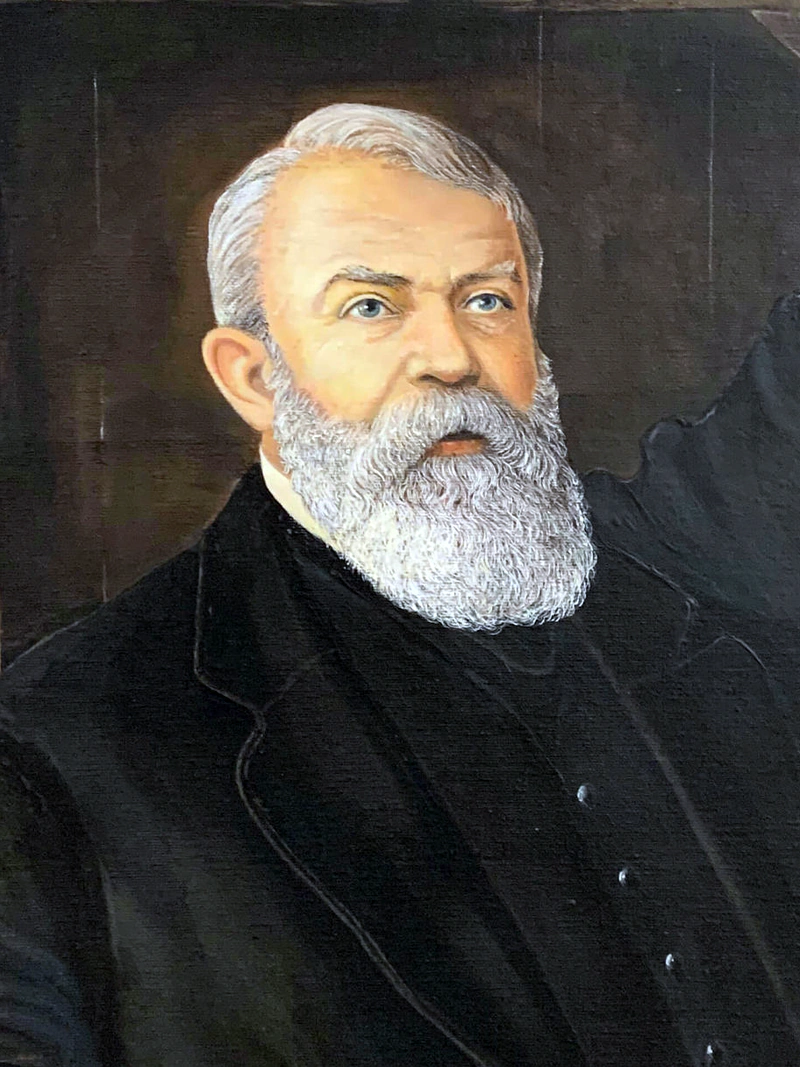
Attr: Christian Hall of Fame
| 25 Quotes | |
| Born as | Dwight Lyman Moody |
| Occup. | Clergyman |
| From | USA |
| Born | February 5, 1837 Northfield, Massachusetts, United States |
| Died | December 22, 1899 Northfield, Massachusetts, United States |
| Aged | 62 years |
| Cite | |
Citation Formats
APA Style (7th ed.)
Dwight l. moody biography, facts and quotes. (2026, February 11). FixQuotes. https://fixquotes.com/authors/dwight-l-moody/
Chicago Style
"Dwight L. Moody biography, facts and quotes." FixQuotes. February 11, 2026. https://fixquotes.com/authors/dwight-l-moody/.
MLA Style (9th ed.)
"Dwight L. Moody biography, facts and quotes." FixQuotes, 11 Feb. 2026, https://fixquotes.com/authors/dwight-l-moody/. Accessed 13 Feb. 2026.
Early Life and Background
Dwight Lyman Moody was born on February 5, 1837, in Northfield, Massachusetts, the sixth of nine children in a hard-pressed New England farm family. His father, Edwin Moody, died when Dwight was four, leaving his mother, Betsey (Holton) Moody, to hold the household together through debt, grueling labor, and the thin margins of rural survival. That early experience of insecurity and responsibility never left him; it sharpened his suspicion of empty respectability and made him fluent in the fears of ordinary people trying to keep food on the table and faith in the heart.New England in Moody's childhood was a region of revivals and reform, but also of market upheaval and social displacement. In that world, the line between moral aspiration and material anxiety was narrow. Moody grew up amid the afterglow of the Second Great Awakening and the rise of voluntary societies that tried to discipline behavior and widen compassion. He carried into adulthood a practical, entrepreneurial energy - learned as much from scarcity as from sermons - and an instinct to turn private conviction into public action.
Education and Formative Influences
Moody had limited formal schooling and was no polished intellectual; his later success came partly from refusing to pretend otherwise. As a teenager he left Northfield for Boston to work in his uncle's shoe business, where a condition of employment required him to attend church. In 1855 he was converted at Mount Vernon Congregational Church under the gentle persistence of Sunday school teacher Edward Kimball, an encounter that became his template for evangelism: personal, direct, and aimed at the conscience rather than the class. By 1856 he had moved to Chicago as a salesman, absorbing the tempo of a boom city, the volatility of its laboring poor, and the power of organization.Career, Major Works, and Turning Points
In Chicago Moody threw himself into Sunday school work, founding what became the North Market Mission (later the Moody Church), and during the Civil War he served with the U.S. Christian Commission, preaching and supplying Union troops. The Great Chicago Fire of 1871 destroyed his church and home, but it also clarified his vocation, pushing him toward a broader platform. With singer Ira D. Sankey he toured Britain (1873-1875) and then American cities, becoming the era's most influential revivalist and a leading spokesman for evangelical cooperation across denominations. He built institutions meant to outlast the crowd: the Moody Bible Institute in Chicago (1886), the Northfield School for Girls (1879) and Mount Hermon School for Boys (1881) in Massachusetts, and annual Northfield conferences that trained workers and shaped late-19th-century evangelical culture. He died in Northfield on December 22, 1899, after years of relentless travel that left his heart worn down.Philosophy, Style, and Themes
Moody's inner life was governed by urgency - the sense that time, character, and eternity pressed on the present. He distrusted religious self-improvement that treated salvation as a project of willpower, warning that "No man can resolve himself into Heaven". That line exposes both his theology and his psychology: a man who had known instability was drawn to grace as the only firm ground, and he preached conversion as rescue, not self-congratulation. Yet his urgency was not abstract. In his meetings and institutions he framed faith as a force that reordered habits - how one worked, spent, spoke, and served.His style was plainspoken, story-driven, and intensely practical, shaped by the marketplace and the mission rather than the academy. He believed character preached louder than rhetoric, insisting, "A good example is far better than a good precept". He also demanded visible integrity from leaders and converts, capturing his ethic in the blunt image, "God doesn't seek for golden vessels, and does not ask for silver ones, but He must have clean ones". This was Moody at his most revealing: he did not romanticize virtue, he operationalized it. Cleanliness meant moral credibility, and credibility was the bridge between the gospel and a skeptical modern city. Beneath the confidence of the platform was a craftsman's anxiety about hypocrisy - the fear that public religion could become theatrical - which drove him toward discipline, accountability, and constant work.
Legacy and Influence
Moody helped define modern evangelicalism's mass-meeting techniques, interdenominational cooperation, and emphasis on lay mobilization, while his schools and conferences professionalized the training of Bible teachers, missionaries, and urban workers. He was not a systematic theologian, but he became a master builder of religious infrastructure, linking revival fervor to durable institutions that shaped 20th-century fundamentalism and evangelicalism alike. His enduring influence lies in the combination of immediacy and organization: an evangelist who could move a crowd, then channel that energy into education, philanthropy, and disciplined discipleship - leaving a model of faith as something preached, practiced, and structurally supported long after the last hymn ended.Our collection contains 25 quotes written by Dwight, under the main topics: Leadership - Faith - God - Legacy & Remembrance - Honesty & Integrity.
Other people related to Dwight: Henry Drummond (Writer)
Frequently Asked Questions
- Dwight L Moody denomination: He was an evangelical Protestant and worked closely with Congregationalists and other Protestants. Although not tied to a single denomination, he is often associated with Congregational roots and interdenominational evangelism.
- Paul Dwight Moody: Paul Dwight Moody was one of his sons. He later became involved in the work connected with the Moody organizations in Northfield, Massachusetts.
- Dwight L Moody beliefs: He preached evangelical Protestant Christianity focused on personal conversion, the authority of the Bible, and salvation through faith in Jesus Christ. His ministry also emphasized prayer, evangelism, and revival meetings.
- Dwight l Moody pronunciation: His name is commonly pronounced “dwite” for Dwight and “MOO-dee” for Moody. The middle initial “L.” is usually said as the letter “el.”
- D.L. Moody cause of death: He died on December 22, 1899, in Northfield, Massachusetts, after a period of heart trouble. Many biographies describe his condition as heart failure.
- How old was Dwight L. Moody? He became 62 years old
Source / external links