
Dziga Vertov Biography Quotes 1 Report mistakes
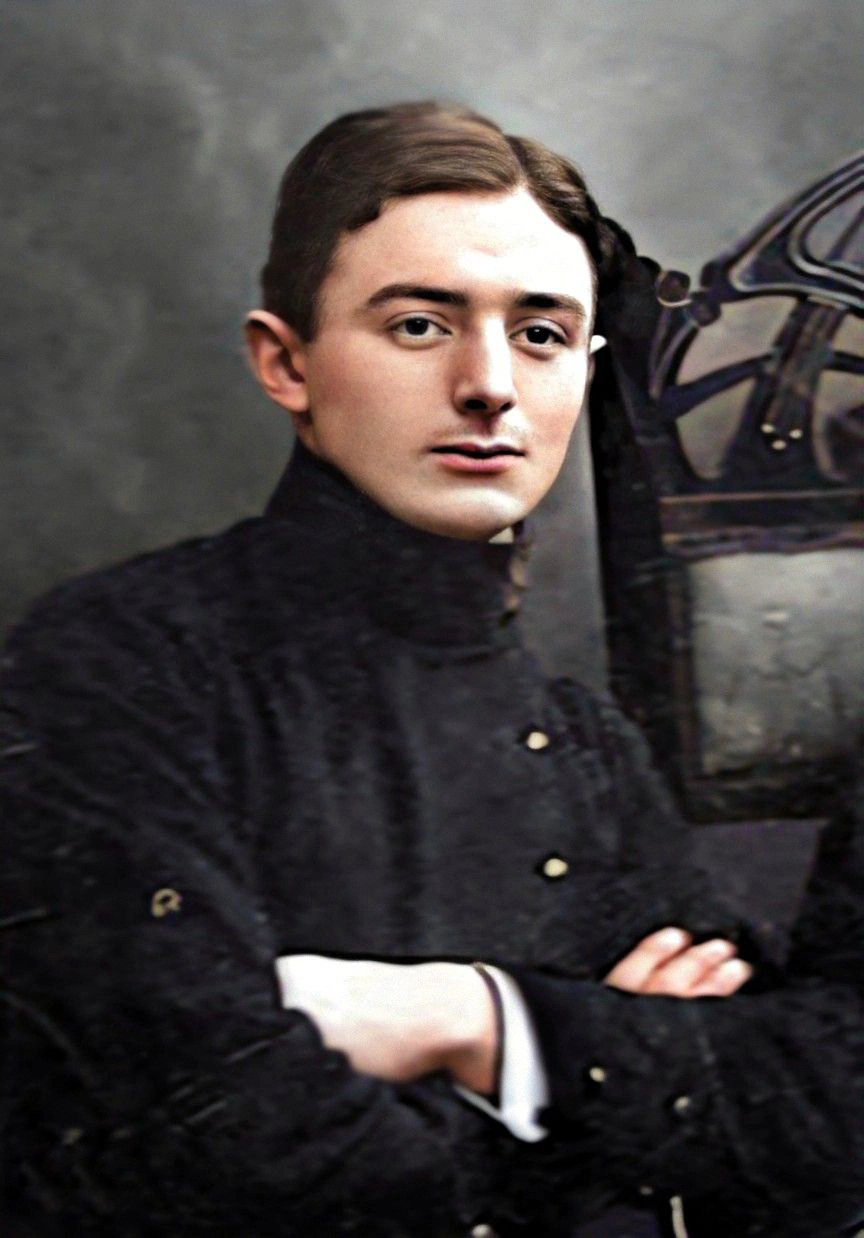
| 1 Quotes | |
| Born as | David Abelevich Kaufman |
| Occup. | Director |
| From | Russia |
| Spouse | Elizaveta Svilova |
| Born | January 2, 1896 Bialystok, Russian Empire |
| Died | February 12, 1954 Moscow, Soviet Union |
| Cause | Heart attack |
| Aged | 58 years |
| Cite | |
Citation Formats
APA Style (7th ed.)
Dziga vertov biography, facts and quotes. (2026, February 11). FixQuotes. https://fixquotes.com/authors/dziga-vertov/
Chicago Style
"Dziga Vertov biography, facts and quotes." FixQuotes. February 11, 2026. https://fixquotes.com/authors/dziga-vertov/.
MLA Style (9th ed.)
"Dziga Vertov biography, facts and quotes." FixQuotes, 11 Feb. 2026, https://fixquotes.com/authors/dziga-vertov/. Accessed 26 Mar. 2026.
Early Life and Background
Denis Arkadevich Kaufman, later known as Dziga Vertov, was born David Abelevich Kaufman on January 2, 1896, in Bialystok in the Grodno Governorate of the Russian Empire (now in Poland), into a Jewish family shaped by the volatile borderland culture of the late imperial Pale. He came of age as modern industry, mass politics, and new media began to rewire everyday perception - forces that would later become both his subject and his method.World War I and the revolutions of 1917 turned biography into history at high speed. Like many young intellectuals, he was pulled into the orbit of Bolshevik institutions that urgently needed images to legitimize a new order. The adoption of the name "Vertov" (from Russian "to spin") signaled a self-invention aligned with motion, machinery, and the centrifugal energy of the era.
Education and Formative Influences
Before cinema became his language, Kaufman gravitated toward sound, rhythm, and the scientific aura of modernity: he studied music and experimented with writing and montage-like thinking, then worked in Moscow after the Revolution, where the state built new cultural organs for agitation and education. The crucible was the newsreel: in 1918-1919 he joined the Kino-Nedelya project, assembling footage from the front and the streets, learning how the cut could transform raw actuality into political meaning without resorting to staged fiction.Career, Major Works, and Turning Points
Vertov became the leading theorist-practitioner of Soviet nonfiction cinema, rejecting acted drama in favor of "life caught unawares" and constructing films as arguments made from reality itself. In the early 1920s he launched the Kinoks (Cinema-Eye) group and the Kino-Pravda newsreel series, sharpening a polemical stance against narrative cinema even as Soviet film culture debated art versus propaganda. His major works defined the possibilities of documentary modernism: "Kino-Eye" (1924) advanced the method; "A Sixth Part of the World" (1926) mapped the Soviet Union as an economic and ethnographic system; "The Eleventh Year" (1928) hymned industrialization; and "Man with a Movie Camera" (1929), shot by his brother Mikhail Kaufman and edited by his wife and closest collaborator Elizaveta Svilova, fused city symphony, self-reflexive filmmaking, and virtuoso montage into a single day of Soviet life. With the 1930s turn toward Socialist Realism and centralized studio control, Vertov made sound-era documentaries such as "Enthusiasm: Symphony of the Donbass" (1931) and later wartime newsreels, but his experimental latitude narrowed; he died in Moscow on February 12, 1954, after years of reduced prominence in the industry he had helped invent.Philosophy, Style, and Themes
Vertov's inner life reads as a disciplined romance with the machine: not a cold surrender to technology, but an attempt to moralize perception in an age of mass deception. His most famous credo is not simply a slogan but a psychological self-portrait of divided identity, where the human author tries to transcend subjective limits by fusing with apparatus: “I am eye. I am a mechanical eye. I, a machine, am showing you a world, the likes of which only I can see”. The insistence on the camera as a superior organ betrays both impatience with theatrical illusion and a utopian longing for purified seeing - an ethics of attention suited to revolutionary times.Formally, his films convert labor, transit, and urban routine into a grammar of motion: accelerated cutting, graphic matches, split screens, freeze frames, superimpositions, and rhythmic repetition that make the city feel like a living engine. Yet the bravura is never merely decorative; it is a theory of social reality. By revealing the camera at work - the operator, the editor, the audience - "Man with a Movie Camera" turns cinema into an honest craft rather than a dream factory, insisting that truth is manufactured through selection and arrangement. In that sense Vertov's themes circle back to a single preoccupation: how a collective can learn to see itself, and how images can train citizens to recognize systems - factories, markets, traffic, bodies - as interlocking processes rather than isolated stories.
Legacy and Influence
Vertov became one of the 20th century's foundational figures in documentary, avant-garde montage, and media theory: a director whose films remain textbooks in movement, structure, and self-reflexivity. His methods anticipated direct cinema's hunger for actuality while diverging from its pretense of neutrality; he showed that nonfiction is built, not found. Across decades, from postwar European modernism to the French New Wave, from experimental video art to contemporary essay films and network-age remix culture, his central proposition endures: the camera can be a tool of liberation or manipulation, and the difference lies in how rigorously the filmmaker exposes the act of seeing.Our collection contains 1 quotes written by Dziga, under the main topics: Movie.
Source / external links