
E. E. Cummings Biography Quotes 29 Report mistakes
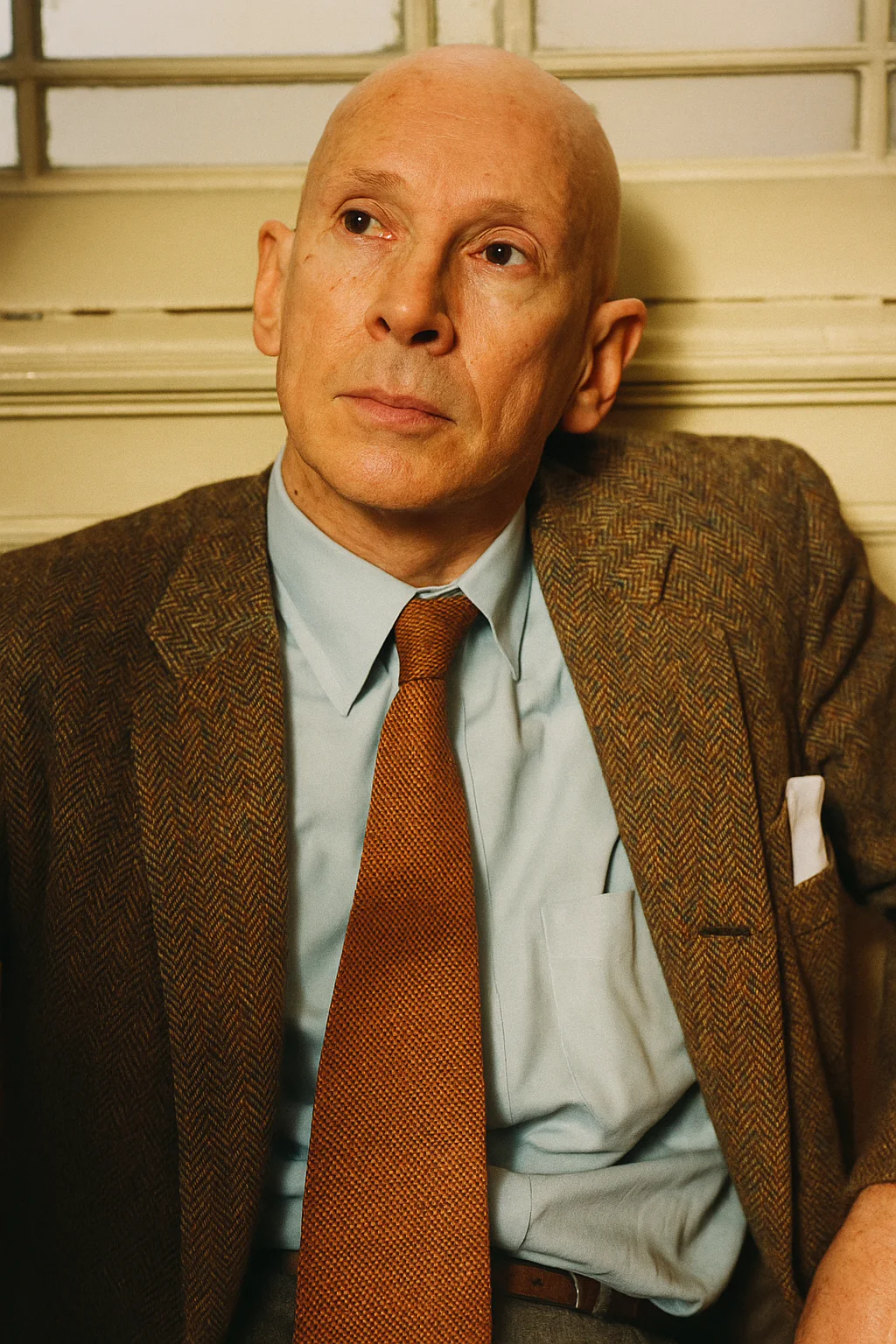
| 29 Quotes | |
| Born as | Edward Estlin Cummings |
| Occup. | Poet |
| From | USA |
| Born | October 14, 1894 Cambridge, Massachusetts, USA |
| Died | September 3, 1962 North Conway, New Hampshire, USA |
| Aged | 67 years |
| Cite | |
Citation Formats
APA Style (7th ed.)
E. e. cummings biography, facts and quotes. (2026, February 1). FixQuotes. https://fixquotes.com/authors/e-e-cummings/
Chicago Style
"E. E. Cummings biography, facts and quotes." FixQuotes. February 1, 2026. https://fixquotes.com/authors/e-e-cummings/.
MLA Style (9th ed.)
"E. E. Cummings biography, facts and quotes." FixQuotes, 1 Feb. 2026, https://fixquotes.com/authors/e-e-cummings/. Accessed 12 Feb. 2026.
Early Life and Background
Edward Estlin Cummings was born on October 14, 1894, in Cambridge, Massachusetts, into a household where public duty and private imagination coexisted. His father, Edward Cummings, was a Harvard professor who became a Unitarian minister; his mother, Rebecca Haswell Clarke, encouraged early literary play and kept the home musically and verbally alive. Cambridge at the turn of the century - a town of lecture halls, churches, and new American confidence - gave him both a disciplined civic frame and the sense that language could be remade.From childhood he wrote poems, drew incessantly, and absorbed the visual rhythms of print itself - letterforms, spacing, the look of a line. That double allegiance to word and image never left him. As the United States moved from Progressive Era reform to the shock of World War I, Cummings developed a contrarian temperament: skeptical of mass opinion, allergic to piety, and intensely protective of individual sensation, especially love and laughter.
Education and Formative Influences
Cummings entered Harvard College in 1911, graduating in 1915 and completing an M.A. in 1916, and he found there both tradition and rebellion: Shakespeare and the metaphysicals alongside the ferment of early modernism. He edited the Harvard Monthly, moved among peers such as John Dos Passos, and studied with influential teachers including George Santayana, whose cool skepticism and attention to consciousness sharpened Cummings's own inward focus. Harvard also confirmed his sense that the page was a field for composition, not merely a container for meaning - an idea reinforced by contemporary painting and avant-garde typography he encountered as modernist art began to circulate in American intellectual life.Career, Major Works, and Turning Points
In 1917 Cummings went to France as an ambulance driver with the Norton-Harjes Ambulance Corps; suspected of disloyalty for his irreverent remarks and letters, he was imprisoned for months in a detention camp at La Ferte-Mace. The experience became The Enormous Room (1922), a memoir that mixes satire, compassion, and a hard-earned distrust of bureaucratic language. His first major poetry book, Tulips and Chimneys (1923), announced a new American lyric voice, soon followed by collections such as & (1925), Is 5 (1926), and Vital Signs (1931). He traveled to the Soviet Union in 1931 and published Eimi (1933), a jagged, skeptical travel book; later decades brought lectures (i: six nonlectures, 1953) and continued lyric production. He also exhibited paintings and drawings, insisting on the continuity between his visual art and his poems' spatial scores.Philosophy, Style, and Themes
Cummings's inner life turns on a stubborn, almost devotional individualism. The war taught him how easily institutions flatten persons into categories, and his art became a countermeasure: a defense of unrepeatable feeling against slogans, status, and the deadening noise of the crowd. His most characteristic stance is neither naive nor merely playful; it is a chosen innocence, fought for. "To be nobody but yourself in a world which is doing its best, night and day, to make you everybody else means to fight the hardest battle which any human being can fight; and never stop fighting". That sentence reads like his private manifesto - a psychology of resistance - and it helps explain why so many poems sound like acts of self-preservation.Formally, he remade English lyric by treating syntax as sculpture: nouns and verbs split apart, parentheses as whispers, lower-case "i" as humility and provocation, and the white space as meaningful silence. Yet the technique serves a simple faith in aliveness. "I imagine that yes is the only living thing". In his best love poems - intimate, erotic, astonished - affirmation is not sentiment but survival, as if the right "yes" could outshout the century's mechanized despair. Even his humor is ethical, a way of keeping the senses awake: "The most wasted of all days is one without laughter". Laughter, for Cummings, is not escape; it is a refusal to let cruelty, pomposity, or despair claim the final word.
Legacy and Influence
Cummings died on September 3, 1962, in North Conway, New Hampshire, leaving a body of work that permanently widened what American poetry could look like and sound like. His innovations in typography and fractured grammar helped normalize free verse experimentation, while his insistence on lyric intimacy influenced generations of poets who wanted emotional directness without conventional diction. Popular culture sometimes turned him into a symbol of quirky romance, but the deeper legacy is tougher: a modernist who answered war, ideology, and social conformity with the hard labor of saying "yes" in a language remade to fit the truth of a single, unrepeatable voice.Our collection contains 29 quotes written by E. Cummings, under the main topics: Witty One-Liners - Wisdom - Love - Mortality - Sarcastic.
Frequently Asked Questions
- Ee cummings paintings: He was also a painter, creating expressive portraits, nudes, and landscapes in oils and watercolors, exhibited in U.S. galleries.
- Ee cummings i carry your heart: A beloved love poem, i carry your heart with me(i carry it in), frequently read at weddings.
- How did E.E. Cummings die: He died of a stroke in North Conway, New Hampshire, on September 3, 1962.
- E.E. Cummings' most famous poem: Often cited: i carry your heart with me(i carry it in).
- E.E. Cummings books: The Enormous Room; Tulips and Chimneys; No Thanks; 1 × 1 (One Times One); Collected Poems; 95 Poems; Eimi.
- what is e.e. cummings known for: Innovative, visually playful poetry, unconventional punctuation, lowercase, and syntax, centered on love, nature, and individuality; also a painter.
- Ee cummings poems: somewhere i have never travelled, gladly beyond; maggie and milly and molly and may; next to of course god america i; l(a; my father moved through dooms of love.
- E.E. Cummings - famous poems: i carry your heart with me(i carry it in); anyone lived in a pretty how town; in Just-; since feeling is first; Buffalo Bill's; somewhere i have never travelled, gladly beyond.
- How old was E. E. Cummings? He became 67 years old
E. E. Cummings Famous Works
- 1958 95 Poems (Collection)
- 1953 i: six nonlectures (Essay)
- 1940 anyone lived in a pretty how town (Poetry)
- 1935 No Thanks (Collection)
- 1933 EIMI (Non-fiction)
- 1926 is 5 (Poetry)
- 1925 XLI Poems (Collection)
- 1923 Tulips & Chimneys (Poetry)
- 1922 The Enormous Room (Novel)
Source / external links