
E. F. Schumacher Biography Quotes 11 Report mistakes
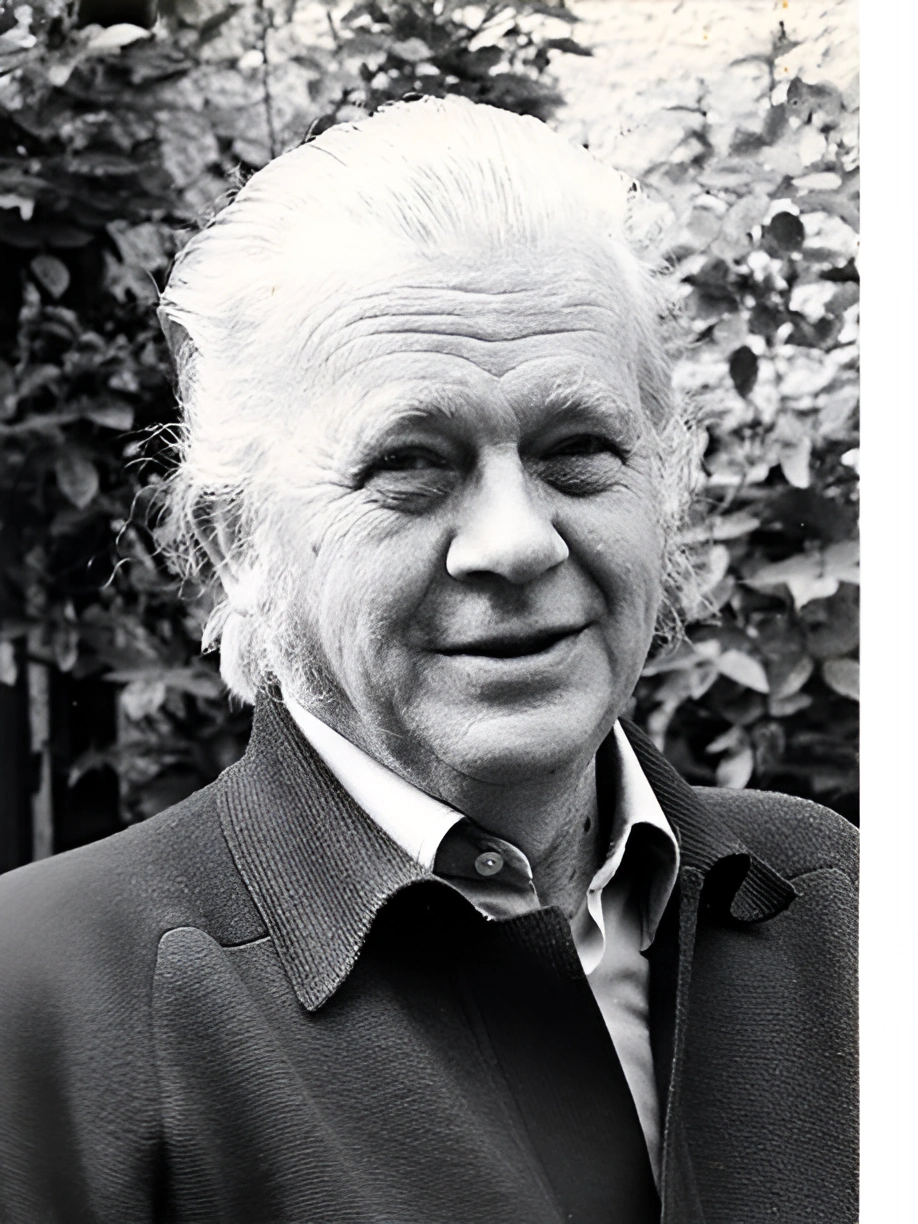
| 11 Quotes | |
| Born as | Ernst Friedrich Schumacher |
| Occup. | Economist |
| From | England |
| Born | August 16, 1911 Bonn, Germany |
| Died | September 4, 1977 |
| Aged | 66 years |
| Cite | |
Citation Formats
APA Style (7th ed.)
E. f. schumacher biography, facts and quotes. (2026, February 11). FixQuotes. https://fixquotes.com/authors/e-f-schumacher/
Chicago Style
"E. F. Schumacher biography, facts and quotes." FixQuotes. February 11, 2026. https://fixquotes.com/authors/e-f-schumacher/.
MLA Style (9th ed.)
"E. F. Schumacher biography, facts and quotes." FixQuotes, 11 Feb. 2026, https://fixquotes.com/authors/e-f-schumacher/. Accessed 28 Mar. 2026.
Early Life and Background
Ernst Friedrich Schumacher was born on 1911-08-16 in Bonn, Germany, into a cultivated middle-class household shaped by the aftershocks of World War I and the fragile politics of the Weimar years. Coming of age amid inflation, unemployment, and ideological extremism, he absorbed early the lesson that economic life is never merely technical - it is moral, social, and psychological, capable of dignity or cruelty depending on the ends it serves.As a young man he left Germany and made England his adopted home, a choice that proved decisive as the Nazi regime consolidated power. The experience of displacement, and later the reality of total war, sharpened his lifelong suspicion of systems that claim inevitability - whether political or economic - and his instinct to ask what human scale and human meaning get crushed when abstractions dominate. He became English by residence and vocation, yet retained an outsider's eye for British prosperity and its blind spots.
Education and Formative Influences
Schumacher studied economics and related disciplines in Britain, notably at Oxford, and was deeply influenced by debates then remaking economic thought: Keynesian planning, statistical management, and the promise that expert administration could master scarcity. The interwar period also exposed him to continental philosophy and to Christian and later Buddhist ethical ideas that questioned the worship of growth and the reduction of value to price. These crosscurrents formed a mind both technically literate and spiritually restless, determined to test economic doctrines against lived consequences.Career, Major Works, and Turning Points
During and after World War II, Schumacher worked in economic analysis and public service and eventually became a leading adviser at Britain's National Coal Board, where he confronted the gritty realities of energy, labor, and industrial organization rather than textbook models. Travel and consultancy in the Global South - including influential work on appropriate technology - convinced him that importing capital-intensive methods often deepened dependency and unemployment. His reputation crystallized with the publication of "Small Is Beautiful: A Study of Economics As If People Mattered" (1973), followed by "A Guide for the Perplexed" (1977), works that made him one of the 20th century's most visible critics of growth-at-any-cost economics and a pivotal voice in early environmental thought.Philosophy, Style, and Themes
Schumacher's central psychological preoccupation was limits: not as deprivation, but as the condition for sanity and freedom. He saw modern economics as a brilliant tool that had mistaken itself for a total worldview, training societies to treat nature, attention, and even persons as inputs. “Infinite growth of material consumption in a finite world is an impossibility”. For him, that was not a slogan but a diagnosis of denial - the refusal to accept finitude, mortality, and ecological boundary as facts that should discipline desire. He argued that when wealth becomes the primary yardstick, it quietly abolishes restraint and turns ingenuity into a method for postponing consequences.His prose fused engineer-like clarity with a moralist's insistence that means reshape ends. He admired technical skill yet feared its autonomous momentum: “The system of nature, of which man is a part, tends to be self-balancing, self-adjusting, self-cleansing. Not so with technology”. This contrast anchored his advocacy of "intermediate" or appropriate technology - tools designed for local skills, renewable resources, and meaningful work - and his critique of gigantism in corporations and states. At the same time, he warned that economic appetite, useful as motive power, becomes tyrannical when enthroned: “If, however, economic ambitions are good servants, they are bad masters”. The inner drama running through his work is a fight against idolatries of scale, speed, and quantification, and for a re-humanized economics that measures success by health, community, and stewardship.
Legacy and Influence
Schumacher died on 1977-09-04, but his influence widened as energy crises, deindustrialization, and climate science made his themes harder to dismiss. "Small Is Beautiful" became a foundational text for ecological economics, the degrowth conversation, and sustainable development critiques, while his practical legacy lives in the appropriate technology movement and institutions such as the Schumacher College and the Schumacher Center for a New Economics. In an era still tempted by frictionless growth narratives, his enduring contribution is a vocabulary for ethical realism: an economics that treats limits as intelligible, work as a source of dignity, and technology as something to be governed rather than worshiped.Our collection contains 11 quotes written by F. Schumacher, under the main topics: Wisdom - Learning - Work Ethic - Confidence - Entrepreneur.