
E. M. Forster Biography Quotes 70 Report mistakes
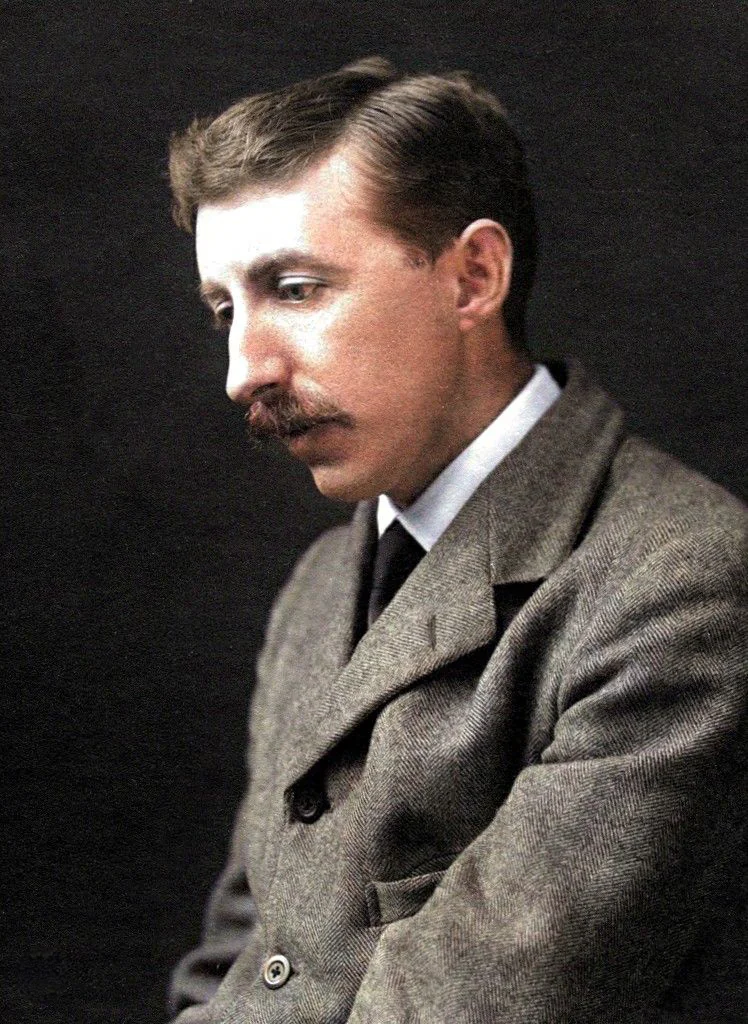
| 70 Quotes | |
| Occup. | Novelist |
| From | England |
| Born | January 1, 1879 |
| Died | June 7, 1970 |
| Aged | 91 years |
| Cite | |
Citation Formats
APA Style (7th ed.)
E. m. forster biography, facts and quotes. (2026, February 11). FixQuotes. https://fixquotes.com/authors/e-m-forster/
Chicago Style
"E. M. Forster biography, facts and quotes." FixQuotes. February 11, 2026. https://fixquotes.com/authors/e-m-forster/.
MLA Style (9th ed.)
"E. M. Forster biography, facts and quotes." FixQuotes, 11 Feb. 2026, https://fixquotes.com/authors/e-m-forster/. Accessed 26 Mar. 2026.
Early Life and Background
Edward Morgan Forster was born on January 1, 1879, in Marylebone, London, into the professional middle class whose manners and blind spots would become his most precise subject. His father, an architect, died of tuberculosis when Forster was very young, leaving him to be raised by his mother, Lily, in a household shaped by security, caution, and the quiet intensity of a close dyad. The emotional weather of that pairing - devoted, sheltering, and sometimes stifling - later reappeared in his fiction as the tug-of-war between comfort and candor, propriety and truth.A decisive material fact arrived early: a substantial inheritance from his great-aunt Marianne Thornton, linked to the Clapham Sect. It gave him independence, but also tightened his awareness of how money can soften life while hardening social boundaries. Late-Victorian and Edwardian England offered him both a ready-made stage of class rituals and an encroaching modernity - suburbs, railways, new politics - against which private feeling struggled to speak plainly. Forster grew into an adult who watched England from within and at an angle, affectionate toward its decencies yet impatient with its evasions.
Education and Formative Influences
Forster was educated at Tonbridge School, which he disliked for its coercive public-school ethos, and then at King's College, Cambridge, where he found intellectual air and lasting friendship in the liberal, anti-authoritarian circles later associated with the Bloomsbury Group; he also joined the Cambridge Apostles. Cambridge trained his ear for conversation and moral nuance, and it sharpened his distrust of slogans. Early travel, especially to Italy and Greece, added a counterpoint to English restraint: a Mediterranean permission for sensuousness and spontaneity that fed his lifelong contrast between "muddle" and "clarity", between cramped rooms and open landscapes.Career, Major Works, and Turning Points
He began as an essayist and reviewer, then published the novels that secured his place: Where Angels Fear to Tread (1905), The Longest Journey (1907), A Room with a View (1908), and Howards End (1910), each anatomizing the English middle class with a tenderness that never becomes indulgence. A long visit to India in 1912-1913, and later service with the Red Cross in Alexandria during World War I, widened his sense of empire, race, and the fragility of liberal intentions; these experiences culminated in A Passage to India (1924), his last completed novel and the one that most directly tests whether personal decency can survive historical power. After 1924 he largely turned from novel-writing to criticism, broadcasting, biography, and essays, publishing Aspects of the Novel (1927) and later, posthumously, Maurice (written 1913-1914; published 1971), the love story he could not safely release in his lifetime. His private life included intimate relationships with working-class men, most enduringly with Bob Buckingham; the need for discretion, and the moral pressure it created, deepened his preoccupation with sincerity and the costs of social "normality".Philosophy, Style, and Themes
Forster's moral center was personal loyalty set against abstractions - nation, class, empire, even "culture" when it becomes a weapon. He framed this as an ethic of connection rather than doctrine, famously insisting, “If I had to choose between betraying my country and betraying my friend, I hope I should have the guts to betray my country”. The line is not a cheap provocation but a psychological self-portrait: a man suspicious of collective fervor because it licenses cruelty, and a novelist convinced that salvation, when it comes at all, arrives through particular people, not grand causes. That conviction sits beneath Howards End's plea to "only connect" and also beneath A Passage to India's bleak recognition that history can make connection nearly impossible.His style fuses Edwardian comedy of manners with sudden apertures into the metaphysical: rooms open onto vistas, picnics tilt into revelation, polite talk exposes private terror. He mistrusted the English habit of treating impulse as indecent, writing, “England has always been disinclined to accept human nature”. That diagnosis helps explain the recurring Forster plot: repressed characters meet a freer atmosphere - Italy, the countryside, the colonial "outside" - and discover both liberation and danger. Yet his humanism never collapses into naive cheerfulness; he saw how planning can strangle aliveness and how the self can armor itself against surprise. “Those who prepared for all the emergencies of life beforehand may equip themselves at the expense of joy”. Behind the aphorism is Forster's own tension: protected by money and prudence, he spent decades negotiating between safety and the risk required by truth, especially sexual truth.
Legacy and Influence
Forster died on June 7, 1970, in Coventry, England, having become a public moral voice without ever surrendering his private complexity. His novels remain foundational for the modern English canon because they make social structures visible while keeping faith with individual interiority; he taught generations of writers how to stage ethics as drama rather than sermon. A Passage to India endures as one of the most penetrating fictions of the Raj, and Maurice, arriving after decriminalization debates had begun to shift, helped furnish a usable past for gay literature in English. More broadly, Forster's lasting influence is his insistence that civilization is measured not by its institutions but by its capacity for honest feeling - and that the smallest act of connection can be a form of resistance.Our collection contains 70 quotes written by M. Forster, under the main topics: Witty One-Liners - Ethics & Morality - Truth - Wisdom - Art.
Other people related to M. Forster: Leonard Woolf (Author), Lionel Trilling (Critic), Edward Carpenter (Activist), Ismail Merchant (Producer), Ahmed Ali (Writer), Storm Jameson (Writer)
E. M. Forster Famous Works
- 1971 Maurice (Novel)
- 1924 A Passage to India (Novel)
- 1910 Howards End (Novel)
- 1908 A Room with a View (Novel)
- 1907 The Longest Journey (Novel)
- 1905 Where Angels Fear to Tread (Novel)
Source / external links