
E. T. Bell Biography Quotes 13 Report mistakes
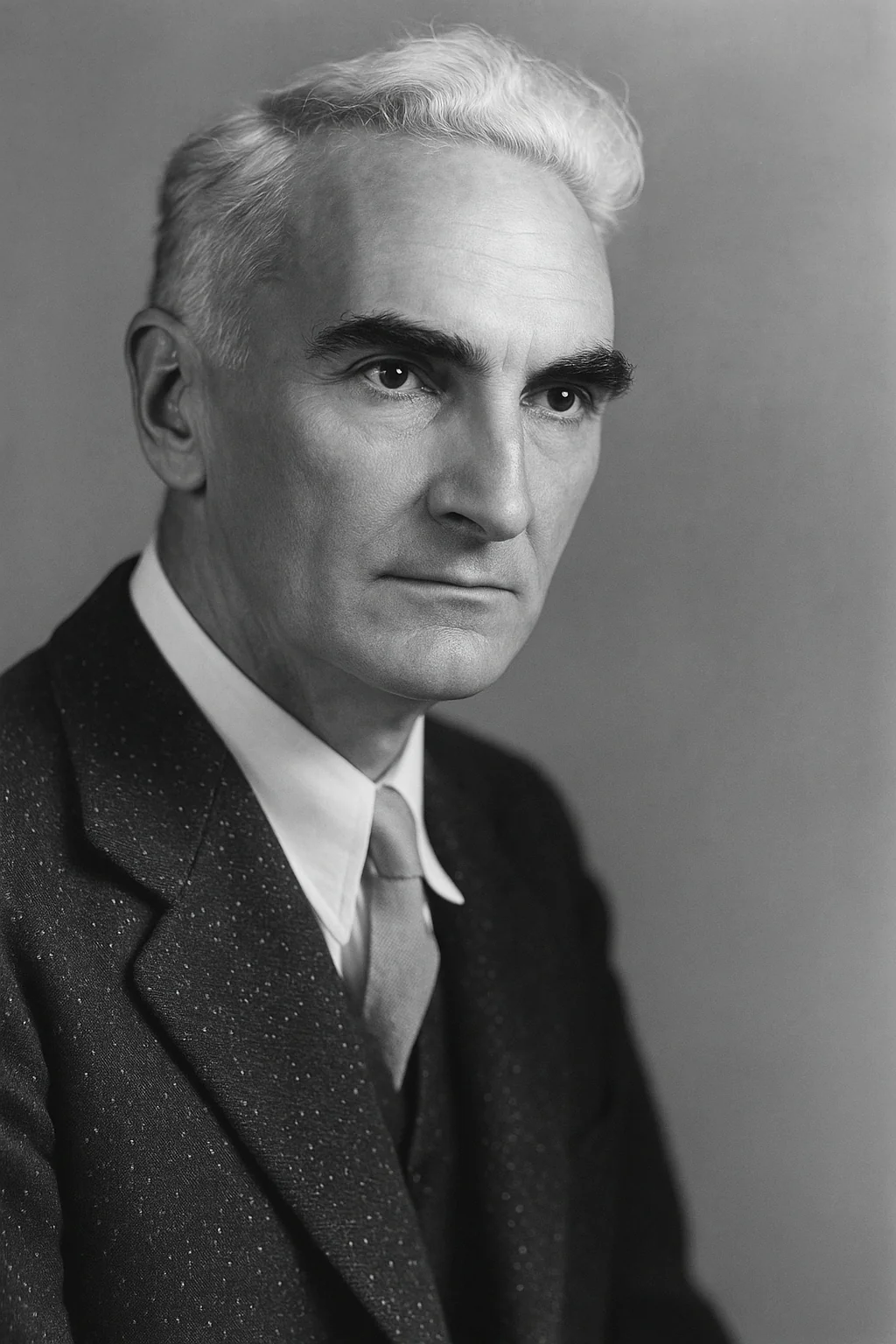
| 13 Quotes | |
| Born as | Eric Temple Bell |
| Known as | John Taine |
| Occup. | Mathematician |
| From | Scotland |
| Born | February 7, 1883 Peterhead, Aberdeenshire, Scotland |
| Died | December 21, 1960 Watsonville, California, USA |
| Aged | 77 years |
| Cite | |
Citation Formats
APA Style (7th ed.)
E. t. bell biography, facts and quotes. (2026, February 2). FixQuotes. https://fixquotes.com/authors/e-t-bell/
Chicago Style
"E. T. Bell biography, facts and quotes." FixQuotes. February 2, 2026. https://fixquotes.com/authors/e-t-bell/.
MLA Style (9th ed.)
"E. T. Bell biography, facts and quotes." FixQuotes, 2 Feb. 2026, https://fixquotes.com/authors/e-t-bell/. Accessed 6 Mar. 2026.
Early Life and Background
Eric Temple Bell was born on 1883-02-07 in Peterhead, Aberdeenshire, Scotland, a fishing and granite town at the edge of the North Sea whose austerity and hard weather suited neither romance nor complacency. His father died when Bell was young, and the family structure that remained was defined by motion and necessity rather than rooted continuity - a pattern that would reappear in Bell's own habit of remaking himself across oceans and genres, from pure mathematics to popular biography under a pseudonym.In the 1890s his mother took him to the United States, part of the larger Scottish and British migration that fed industrial cities and new universities. Bell grew up in California in an era when American higher education was professionalizing quickly and when mathematics, newly international in its journals and conferences, could be pursued seriously even at a geographic remove from Europe. The immigrant experience left him with two enduring traits: a sharpened sense that intellectual identity is constructed, and a skeptical impatience with inherited authority - whether social, institutional, or methodological.
Education and Formative Influences
Bell studied at Stanford University, completing his first degree in 1904 and later returning for graduate work, earning a PhD in 1912; between those milestones he also spent time at the University of Washington. He came of age mathematically during the ascendance of rigorous analysis and the consolidation of modern algebra and number theory, reading across the European tradition while also absorbing the American emphasis on research as a profession. The result was a temperament pulled between two loyalties: to proof as an exacting craft, and to ideas as a human drama worth narrating.Career, Major Works, and Turning Points
After early appointments at the University of Washington, Bell moved in 1926 to the California Institute of Technology, where he spent the remainder of his academic career as professor of mathematics, helping to build Caltech's research culture during its explosive interwar expansion. His technical work centered on number theory and algebraic structures; his name remains attached to Bell polynomials and to the Bell numbers that organize set partitions, tools that later became foundational in combinatorics and in the algebra of formal power series. Alongside this research life, he wrote prolifically for broader audiences, most famously Men of Mathematics (1937), a vivid, influential, and controversial series of portraits that shaped how generations imagined mathematicians - as driven, solitary, often tormented creators - even when Bell's storytelling bent the documentary record.Philosophy, Style, and Themes
Bell's inner life shows a persistent distrust of intellectual complacency and a preference for assumptions made explicit. His mathematical writing, even when formal, is animated by the sense that a proof is not merely a chain of deductions but a discipline of attention and honesty. “Euclid taught me that without assumptions there is no proof. Therefore, in any argument, examine the assumptions”. That sentence is more than a classroom maxim - it is a psychological self-description: Bell approached both mathematics and biography as arenas where hidden premises must be dragged into the light, whether those premises were axioms, cultural myths about genius, or the comforting legend that history moves smoothly forward.He also insisted that mathematics lives on the edge of its own unfinished business, where failure becomes fuel. “The mistakes and unresolved difficulties of the past in mathematics have always been the opportunities of its future”. This forward-leaning view helps explain the duality of Men of Mathematics: he idolized creative leaps, yet he dramatized them as responses to obstruction, rivalry, and error. At the same time he distrusted the tyranny of trend, both in scholarship and in public taste - “Fashion as King is sometimes a very stupid ruler”. - and that contrarian streak made him an independent stylist, sometimes brilliant, sometimes reckless, always resistant to the flattening neutrality of textbook prose.
Legacy and Influence
Bell died on 1960-12-21 in Watsonville, California, leaving behind two legacies that do not fully reconcile: a serious body of research that continues to echo through combinatorics and algebra, and a powerful literary mythology of mathematics that influenced educators, writers, and future mathematicians. Bell polynomials and Bell numbers survived the changing fashions he mocked because they are genuinely useful abstractions; Men of Mathematics survived because it speaks to the inner drama of thinking, even as later historians corrected its embellishments and biases. In the long view, Bell stands as a creator of tools and of narratives - a mathematician who helped expand what could be computed and what could be imagined about the people who compute it.Our collection contains 13 quotes written by T. Bell, under the main topics: Witty One-Liners - Sarcastic - Reason & Logic - Science - Knowledge.
E. T. Bell Famous Works
- 1937 Men of Mathematics (Biography)
Source / external links