
Earl Nightingale Biography Quotes 35 Report mistakes
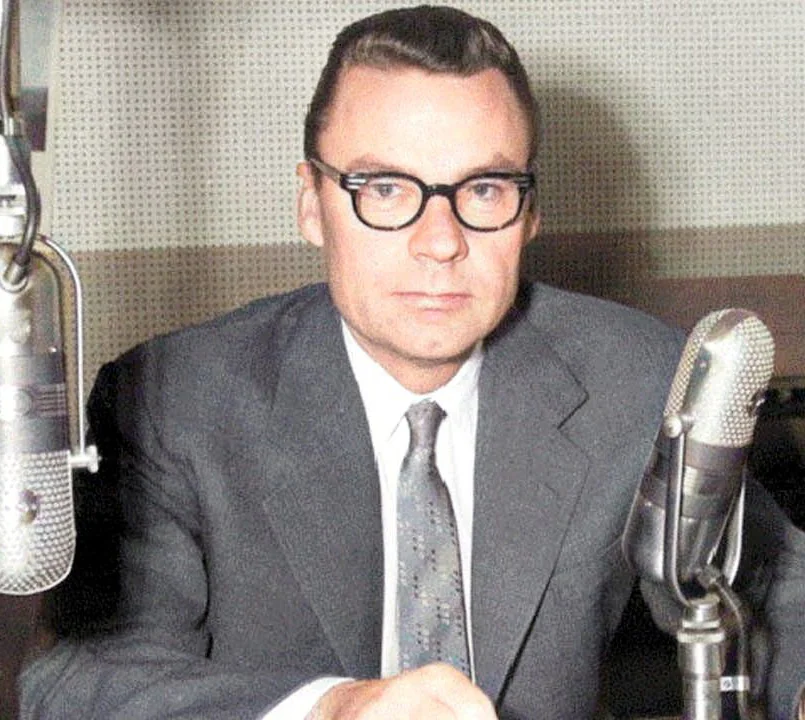
| 35 Quotes | |
| Born as | Earl Nightingale V |
| Known as | The Dean of Personal Development |
| Occup. | Writer |
| From | USA |
| Spouse | Donna Reed |
| Born | March 12, 1921 Los Angeles, California, USA |
| Died | March 25, 1989 Scottsdale, Arizona, U.S. |
| Cause | Heart Attack |
| Aged | 68 years |
| Cite | |
Citation Formats
APA Style (7th ed.)
Earl nightingale biography, facts and quotes. (2026, February 11). FixQuotes. https://fixquotes.com/authors/earl-nightingale/
Chicago Style
"Earl Nightingale biography, facts and quotes." FixQuotes. February 11, 2026. https://fixquotes.com/authors/earl-nightingale/.
MLA Style (9th ed.)
"Earl Nightingale biography, facts and quotes." FixQuotes, 11 Feb. 2026, https://fixquotes.com/authors/earl-nightingale/. Accessed 5 Mar. 2026.
Early Life and Background
Earl Nightingale V was born on March 12, 1921, in Los Angeles, California, into a fast-modernizing America where radio voices, cinema, and mass advertising were rewriting what "success" sounded like. He came of age during the long shadow of the Great Depression, when ambition often had to be translated into discipline and patience, and when the gap between hope and circumstance could feel like a permanent condition. Those early years left him with a lifelong sensitivity to the inner weather of ordinary people - the quiet anxiety about money, status, and direction that rarely appears in public speech but shapes private decisions.The Second World War then supplied the pressure-cooker that would define his sense of responsibility and his later emphasis on purpose. Nightingale served in the U.S. Marine Corps and survived the sinking of the troopship SS Hugh L. Scott in 1942, an event that gave him firsthand knowledge of how quickly plans and identities can be stripped away. The experience did not turn him toward cynicism; instead it intensified his preoccupation with what remains when circumstances collapse - attitude, intention, and the ability to choose a next step.
Education and Formative Influences
After the war, Nightingale entered the world of broadcasting rather than academia, but his education was real, self-directed, and relentless: he read widely in philosophy, religion, psychology, and the success literature then circulating in mid-century America, including the influence of Napoleon Hill and the New Thought tradition. Working in radio also schooled him in economy of language - how cadence and clarity can make abstract ideas feel actionable - and it placed him inside the emerging postwar culture of aspiration, where veterans, suburbanization, and corporate life created new appetites for guidance on motivation, leadership, and personal meaning.Career, Major Works, and Turning Points
Nightingale became a popular radio personality in Chicago and built a reputation as a narrator of possibility who could speak to salespeople, managers, and restless strivers without condescension. His decisive turning point came in 1956 with the audio program "The Strangest Secret", which argued that people become what they think about and framed goal-setting as a moral and practical duty; it became one of the first spoken-word recordings to achieve major commercial success and helped legitimize motivational audio as a modern genre. He later co-founded Nightingale-Conant, a company that packaged self-improvement ideas into tapes and programs, turning his voice into a durable medium and a business model that would shape the personal development industry for decades.Philosophy, Style, and Themes
Nightingale wrote and spoke as a craftsman of inner order. His style was plain, sermon-adjacent, and rhythmically persuasive, built for repetition and private replay, with a steady insistence that thoughts are not decorations but tools. He treated the mind as a workshop: “Your world is a living expression of how you are using and have used your mind”. In that sentence is his psychology - the conviction that most suffering is intensified by drift, and that self-respect begins when a person stops outsourcing authorship of their days.His central theme was direction: desire becomes power only when given a target and a timetable. “People with goals succeed because they know where they're going”. Yet he was not naive about time and fear; he spoke to procrastination as a disguised form of self-protection, an attempt to avoid the verdict of failure by never fully starting. “Don't let the fear of the time it will take to accomplish something stand in the way of your doing it. The time will pass anyway; we might just as well put that passing time to the best possible use”. The repeated emphasis on planning, persistence, and daily action was less about hustle than about restoring agency - turning vague longing into chosen practice.
Legacy and Influence
Nightingale died on March 25, 1989, but his influence persists in the architecture of modern self-help: the audio course, the motivational keynote cadence, and the mainstream assumption that mindset and goal clarity are economic forces. His work helped normalize the idea that personal development is not merely private therapy but a kind of civic competence for a competitive society, and Nightingale-Conant became a distribution engine for later teachers and authors. For admirers and critics alike, his enduring contribution is the same: he made the inner life sound practical, insisting that a person can be coached not only in skills, but in the daily act of choosing what to think about - and therefore, who to become.Our collection contains 35 quotes written by Earl, under the main topics: Motivational - Wisdom - Writing - Live in the Moment - Work Ethic.
Other people related to Earl: Michael LeBoeuf (Businessman), David Joseph Schwartz (Businessman), Claude M. Bristol (Writer)
Frequently Asked Questions
- Earl Nightingale 30 day challenge: The 30 day challenge focuses on setting a clear goal, developing a plan to achieve it, and committing to it for 30 days to develop a new habit.
- What did Earl Nightingale die from? Heart failure
- Was Earl Nightingale religious? He had spiritual beliefs, but no specific religion is mentioned.
- Who was Earl Nightingale mentor? Napoleon Hill and Think and Grow Rich
- Who was Earl Nightingale wife? Dorothy Nightingale
- What was Earl Nightingale net worth? $10 million (approx.)
- How old was Earl Nightingale? He became 68 years old
Earl Nightingale Famous Works
- 1960 Lead the Field (Book)
- 1956 The Strangest Secret (Book)
Source / external links