
Earl Wilson Biography Quotes 30 Report mistakes
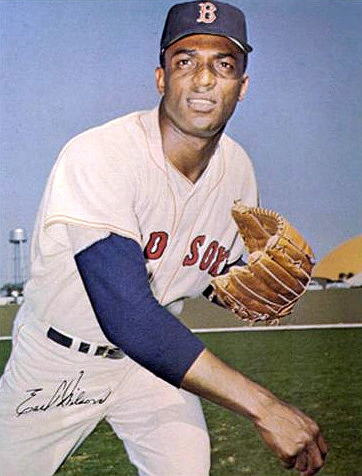
Attr: Unknown author
| 30 Quotes | |
| Born as | Earl Lawrence Wilson |
| Occup. | Athlete |
| From | USA |
| Born | October 2, 1934 Ponchatoula, Louisiana, U.S. |
| Died | April 23, 2005 Southfield, Michigan, U.S. |
| Aged | 70 years |
| Cite | |
Citation Formats
APA Style (7th ed.)
Earl wilson biography, facts and quotes. (2026, February 11). FixQuotes. https://fixquotes.com/authors/earl-wilson/
Chicago Style
"Earl Wilson biography, facts and quotes." FixQuotes. February 11, 2026. https://fixquotes.com/authors/earl-wilson/.
MLA Style (9th ed.)
"Earl Wilson biography, facts and quotes." FixQuotes, 11 Feb. 2026, https://fixquotes.com/authors/earl-wilson/. Accessed 26 Mar. 2026.
Early Life and Background
Earl Lawrence Wilson was born on October 2, 1934, in Pontiac, Michigan, a factory-town landscape where the rhythms of General Motors and the rituals of sandlot baseball shaped childhood imagination. The Great Depression had lifted, but its aftertaste lingered in thrift and work ethic; for a midwestern boy with a strong right arm, baseball offered both escape and a vocabulary for ambition. Wilson grew up during World War II and the early Cold War, years when American masculinity was coded in endurance and quiet competence, traits that would later show in his mound demeanor.From the beginning he carried a double identity that would define his inner life: outwardly steady, inwardly combustible. Friends and teammates remembered him as affable and funny, yet the game demanded control of anxiety as much as control of a breaking ball. That tension - between conviviality and pressure, between the life of the clubhouse and the solitude of the pitcher - became a private education long before any professional contract.
Education and Formative Influences
Wilson came of age as baseball modernized - night games, television, expanding farm systems - and the pitcher became both craftsman and performer. Signed out of Michigan as a teenager, he learned his trade in the minor leagues during the 1950s, moving through small towns where bus rides, uncertain pay, and the constant threat of replacement hardened skills and nerves. The era taught him economy: conserve emotion, repeat mechanics, and take failure as a scheduled appointment rather than a personal catastrophe.Career, Major Works, and Turning Points
A right-handed starter, Wilson debuted in the majors with the Boston Red Sox in 1959 and quickly proved durable enough to anchor rotations in an age that still expected complete games. His best sustained run came after a trade to the Detroit Tigers, where he became a key part of the club that surged to the 1968 World Series title, a season dominated by pitching and by the symbolic return of Detroit pride amid civic strain. Wilson won 22 games in 1968, started and won Game 3 of the World Series, and later added a memorable flourish as a competent-hitting pitcher, even becoming the first major leaguer to hit a grand slam in his first at-bat. He continued with stints including the San Diego Padres and Houston Astros before retiring in the early 1970s, his career shaped by workload, the rising importance of bullpens, and the slow drift from pitcher-as-ironman to pitcher-as-specialist.Philosophy, Style, and Themes
Wilson pitched with the plainspoken pragmatism of his time: challenge hitters, change speeds, and keep moving because the game will not wait for your doubts to resolve. Yet his public humor hinted at a deeper psychological method - laughter as a pressure valve. Baseball, for him, was never merely pastoral; it was a high-wire act conducted in a uniform. “A baseball game is simply a nervous breakdown divided into nine innings”. That line reads like comedy, but it also captures a pitcher's intimate knowledge that every inning renews vulnerability, and that composure is not serenity so much as managed panic.His personality also revealed an ethic of seasoned self-correction, the kind learned only by failing in front of thousands and returning four days later to try again. “Experience is what enables you to recognize a mistake when you make it again”. In Wilson's world, repetition was not mindless - it was the crucible where a flaw becomes visible early enough to be survived. And he understood that outward calm is often performance art, a mask worn for teammates as much as for opponents: “Poise: the ability to be ill at ease inconspicuously”. The definition fits the working pitcher, who must look effortless while feeling everything.
Legacy and Influence
Wilson died on April 23, 2005, leaving a legacy that sits at the intersection of athletic achievement and the culture of baseball storytelling. Statistically he is remembered as a strong starter of his era and a central piece of the 1968 Tigers, but his enduring influence comes from the way his career models the pitcher's psychological contract: accept fear, disguise it with poise, and keep taking the ball. In an age that increasingly quantifies performance, Wilson remains a vivid reminder that the game's hardest arithmetic is emotional - the daily conversion of nerves into outs, and of mistakes into the next, better decision.Our collection contains 30 quotes written by Earl, under the main topics: Witty One-Liners - Ethics & Morality - Wisdom - Puns & Wordplay - Sarcastic.
Other people related to Earl: Doris Lilly (Journalist)