
Ed Bradley Biography Quotes 29 Report mistakes
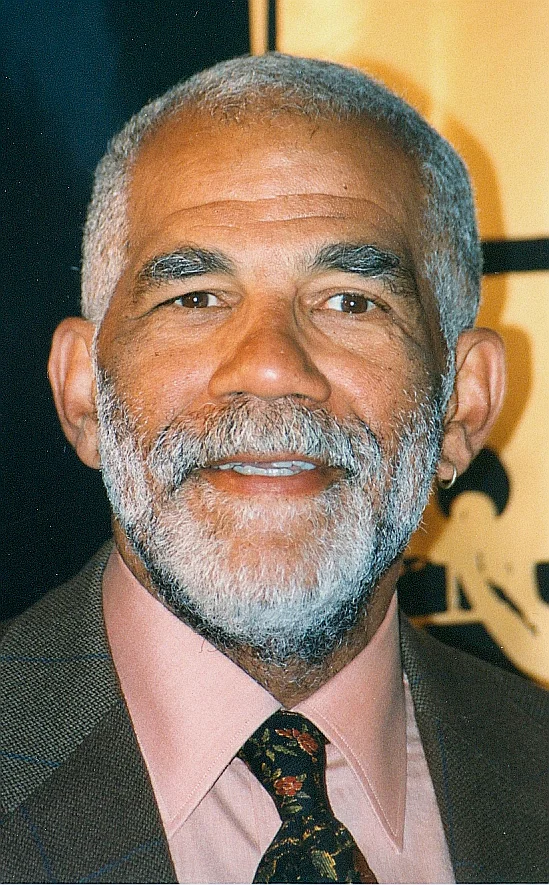
Attr: John Mathew Smith
| 29 Quotes | |
| Born as | Edward Rudolph Bradley Jr. |
| Occup. | Journalist |
| From | USA |
| Born | June 22, 1941 Philadelphia, Pennsylvania, U.S. |
| Died | November 9, 2006 New York City, USA |
| Aged | 65 years |
| Cite | |
Citation Formats
APA Style (7th ed.)
Ed bradley biography, facts and quotes. (2026, February 11). FixQuotes. https://fixquotes.com/authors/ed-bradley/
Chicago Style
"Ed Bradley biography, facts and quotes." FixQuotes. February 11, 2026. https://fixquotes.com/authors/ed-bradley/.
MLA Style (9th ed.)
"Ed Bradley biography, facts and quotes." FixQuotes, 11 Feb. 2026, https://fixquotes.com/authors/ed-bradley/. Accessed 24 Mar. 2026.
Early Life and Background
Edward Rudolph Bradley Jr. was born on June 22, 1941, in Philadelphia, Pennsylvania, and grew up in a city whose rowhouse neighborhoods and hard-edged politics sharpened an early ear for real talk. He was raised largely by his mother after his father left when he was young, and the household ran on discipline, thrift, and the kind of everyday improvisation that later suited him to live reporting. His mother worked a succession of jobs to keep the family afloat, and Bradley never forgot the dignity and fatigue embedded in that routine: “My mother worked in factories, worked as a domestic, worked in a restaurant, always had a second job”.He came of age as television consolidated its power over American life and as the civil rights movement forced questions of voice and representation into every newsroom. For a Black kid in mid-century Philadelphia, ambition had to be both practical and audacious. Bradley absorbed the lesson that credibility was earned minute by minute - by showing up prepared, sounding certain, and refusing to be intimidated by gatekeepers who assumed he did not belong.
Education and Formative Influences
Bradley attended Cheyney State College (now Cheyney University of Pennsylvania), one of the nation's oldest historically Black institutions, where he studied education and learned to translate complex material for an audience - a skill that would later make his reporting clear without sounding simplistic. Before journalism fully claimed him, he worked as a public school teacher, a period that trained his patience and his sense of pacing: “I taught sixth grade for three and a half years”.Career, Major Works, and Turning Points
Bradley entered radio in Philadelphia and quickly moved to New York, working in local news before landing at WCBS Radio, where he covered street-level stories with a calm voice that carried urgency without hysteria. His career pivot came when CBS sent him to Paris as a stringer during the Vietnam era; he made a leap that was part gamble, part conviction: “I made the decision to come back to New York, quit my job and move to Paris”. In Paris he covered the Vietnam peace talks, filing constant updates that tested endurance and rewarded precision - later he would say the beat was literally his livelihood: “The Paris peace talks kept a roof over my head and food on the table and clothes on my back because if something was said going in or coming out, I had the rent for the month”. CBS brought him onto television as a correspondent in the 1970s; by 1981 he became the first Black correspondent on "60 Minutes", and over the next decades he reported defining pieces on race, justice, war, sports, culture, and government power - including investigations that pulled national institutions into uncomfortable light. He won multiple Emmy Awards, a Peabody, and other honors, while also anchoring "CBS Evening News" and "60 Minutes II", and he maintained a second life as a jazz enthusiast and on-air host, a reminder that curiosity, not cynicism, powered him. Bradley died on November 9, 2006, after battling leukemia, having spent his final years still identified with that steady, unshowy authority.Philosophy, Style, and Themes
Bradley's reporting ethic was built from craft rather than bravado, and he described his apprenticeship as a kind of listening discipline: “I would listen to how they told the story, to what elements they used, to how it sounded, and that's who I patterned myself after, the people who were on CBS News”. That attention to sound and structure was not cosmetic - it was his method for earning trust, especially when the subject was combustible and the audience polarized. His pieces rarely depended on flourish; they depended on sequencing, the strategic pause, the patient follow-up that made evasions audible.Underneath the poise was a working-class anxiety about security, a sense that journalism was both calling and rent money, and that the only antidote was readiness. He framed success as an equation of labor and chance: “Be prepared, work hard, and hope for a little luck. Recognize that the harder you work and the better prepared you are, the more luck you might have”. That credo explains his persona - composed, unsentimental, never casual about facts - and it also explains his empathy for people whose lives were narrowed by systems rather than personal failure. His inner life, by most accounts, was guarded; on camera he shared little of himself, but the care with which he gave others room to speak suggested a private knowledge of how easily a person can be reduced to a headline.
Legacy and Influence
Bradley's enduring influence lies in how he expanded the idea of who could embody authority on American television without performing it. As the first Black correspondent on "60 Minutes", he did not ask to be treated as an exception; he insisted on being treated as a standard, and the standard was rigorous reporting under pressure. He helped normalize a model of investigative journalism that was tough but not theatrical, morally alert but not sermonizing, and his career remains a template for correspondents who want longevity: master the craft, protect the facts, stay curious, and let the story - not the reporter - be the center of gravity.Our collection contains 29 quotes written by Ed, under the main topics: Learning - Sports - Work Ethic - War - Father.
Other people related to Ed: Lesley Stahl (Journalist), Don Hewitt (Producer)
Source / external links