
Eddie Bernice Johnson Biography Quotes 23 Report mistakes
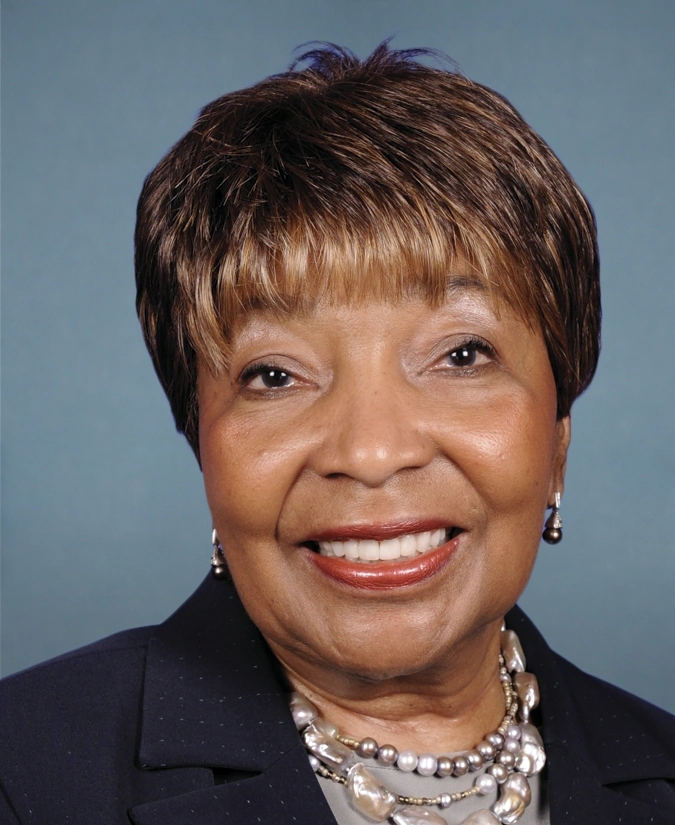
| 23 Quotes | |
| Occup. | Politician |
| From | USA |
| Born | December 3, 1935 |
| Age | 90 years |
| Cite | |
Citation Formats
APA Style (7th ed.)
Eddie bernice johnson biography, facts and quotes. (2026, February 11). FixQuotes. https://fixquotes.com/authors/eddie-bernice-johnson/
Chicago Style
"Eddie Bernice Johnson biography, facts and quotes." FixQuotes. February 11, 2026. https://fixquotes.com/authors/eddie-bernice-johnson/.
MLA Style (9th ed.)
"Eddie Bernice Johnson biography, facts and quotes." FixQuotes, 11 Feb. 2026, https://fixquotes.com/authors/eddie-bernice-johnson/. Accessed 23 Mar. 2026.
Early Life and Background
Eddie Bernice Johnson was born on December 3, 1935, in Waco, Texas, into a segregated America still shaped by the Great Depression and the one-party order of Jim Crow. Her early years unfolded amid the tight constraints and quiet solidarities of Black life in Central Texas - churches, schools, and extended family networks that had to function as both refuge and infrastructure. The limits imposed from outside were not abstract: they touched housing, health care, education, and the simple ability to move through public space without humiliation or threat.That environment produced a distinctive kind of ambition - not the romantic individualism of frontier myth, but a practical determination to become useful and to open doors for others. Johnson later carried with her the memory of how sickness and scarcity could reorder a household overnight, and how women often kept families and neighborhoods working when formal institutions failed them. The sense of duty that runs through her career began as an intimate, family-level ethic: to stabilize what could be stabilized, to mend what could be mended, and to insist that public systems serve people who were too often treated as expendable.
Education and Formative Influences
Johnson trained as a nurse, earning a nursing degree and later a masters in public administration, a combination that fused bedside realism with bureaucratic fluency. Nursing gave her an unvarnished view of how policy turns into pain or relief, while graduate study provided the language of budgets, agencies, and governance. She came of age alongside the modern Civil Rights Movement, and like many Black professionals of her generation, she learned to navigate white institutions without accepting their premises - cultivating patience, procedural mastery, and a hard-edged clarity about who benefits when government works and who suffers when it does not.Career, Major Works, and Turning Points
Johnson entered public life through Texas politics, serving in the Texas House of Representatives before becoming a Dallas County commissioner, and then in 1992 winning election to the U.S. House from Dallas, where she served for nearly three decades. In Congress she built influence through committee work rather than celebrity, becoming a leading voice on transportation, science, and urban investment, and later chairing the House Science, Space, and Technology Committee. Her tenure tracked the country from post-Cold War optimism through 9/11, the Iraq War, Hurricane Katrina, the Great Recession, and the sharpened partisanship of the 2010s - crises that repeatedly tested her faith that institutions could be bent toward fairness through persistence, coalition-building, and measurable results.Philosophy, Style, and Themes
Johnson thought like a nurse and governed like an administrator: listen, diagnose, document, intervene, follow up. Her politics were rooted in the belief that private hardship is often public design - underfunded clinics, unsafe roads, neglected schools, and fragile voting access. That clinical moral vision is captured in her own plain statement, “I came up in a family oriented towards the sick, so I always felt an obligation for doing something”. It is not sentimental charity; it is an argument about responsibility, in which empathy becomes a mandate to build systems that prevent predictable suffering. Her emphasis on science, infrastructure, and health access fits the same pattern: practical tools deployed against avoidable harm.A second thread in her inner life was an insistence that democracy requires participation, and participation requires culture change as much as law. She understood voting not only as a right but as a learned habit, shaped by fear, intimidation, and inherited caution. “I try hard to convince them it's important - but there's a history of discomfort with minorities voting in some parts of this country, so most especially the older people have to get accustomed to it”. Her tone was often matter-of-fact rather than fiery, but the steel was there: the country could not claim legitimacy while treating minority turnout as a problem to be managed. At the same time, Johnson framed gender politics as inseparable from every other policy debate, rejecting the idea that women belong in a separate policy corner: “All issues are women's issues - and there are several that are just women's business”. The line signals a worldview in which care work, health, and family stability are not niche concerns but core state functions.
Legacy and Influence
Johnson left an imprint defined by durability - one of the long-serving Black women in Congress who expanded what representation could look like: technically adept, institutionally powerful, and unapologetically grounded in the daily realities of constituents. Her legacy sits at the junction of civil rights and governance: a figure who translated the moral claims of the movement into committee rooms, appropriations fights, and oversight of science and infrastructure. For Dallas and for national politics, she modeled a career built on competence and persistence, and she helped normalize the expectation that Black women not only advocate but also chair, manage, and set the agenda in the federal government.Our collection contains 23 quotes written by Eddie, under the main topics: Justice - Leadership - Parenting - Equality - War.
Other people related to Eddie: Lamar S. Smith (Politician)
Source / external links