
Eddie Guerrero Biography Quotes 1 Report mistakes
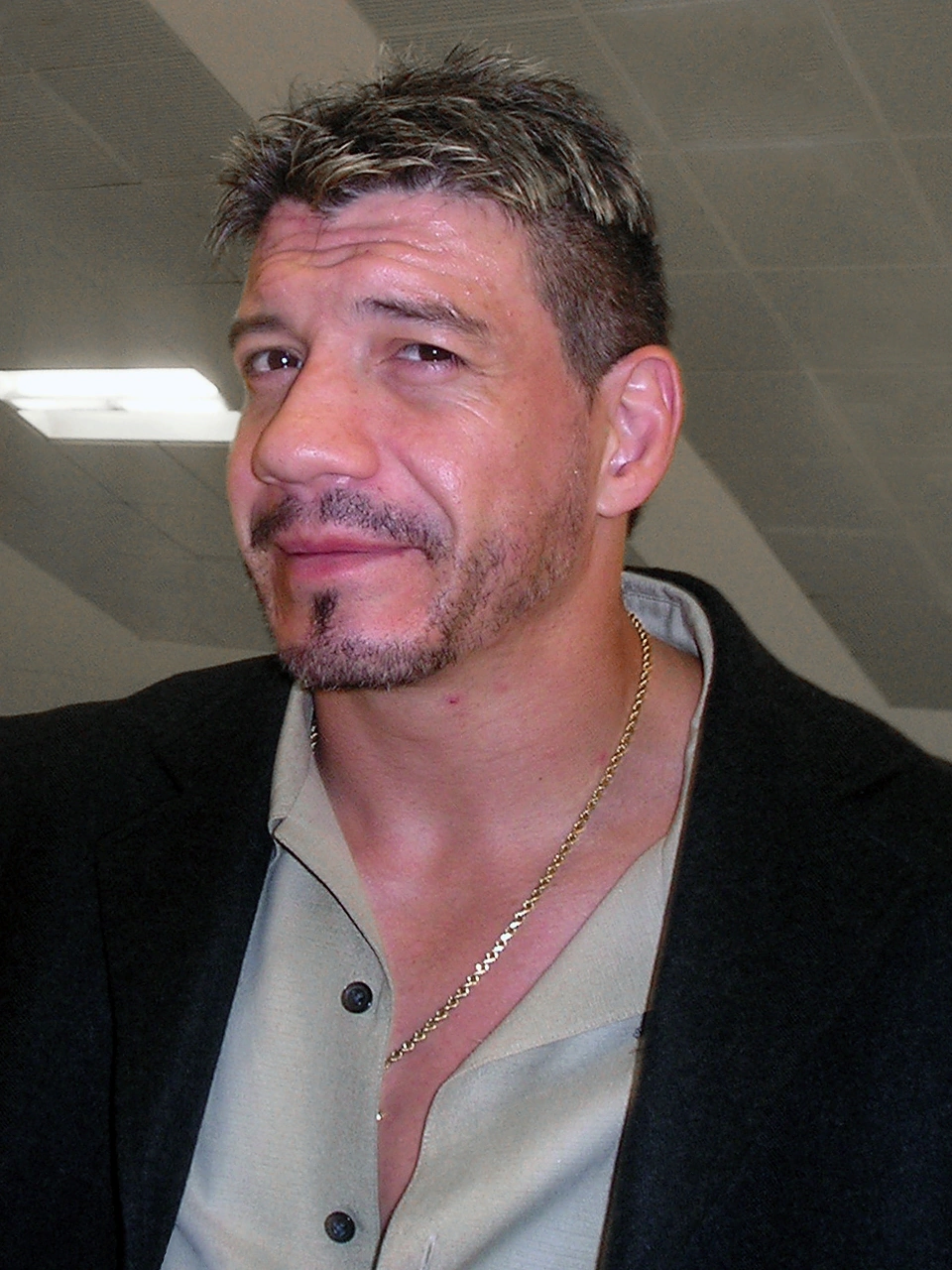
Attr: RanZag, CC BY-SA 2.0
| 1 Quotes | |
| Born as | Eduardo Gory Guerrero Llanes |
| Occup. | Entertainer |
| From | USA |
| Spouse | Vickie Guerrero |
| Born | October 9, 1967 El Paso, Texas, USA |
| Died | November 13, 2005 Minneapolis, Minnesota, USA |
| Cause | Acute heart failure |
| Aged | 38 years |
| Cite | |
Citation Formats
APA Style (7th ed.)
Eddie guerrero biography, facts and quotes. (2026, March 23). FixQuotes. https://fixquotes.com/authors/eddie-guerrero/
Chicago Style
"Eddie Guerrero biography, facts and quotes." FixQuotes. March 23, 2026. https://fixquotes.com/authors/eddie-guerrero/.
MLA Style (9th ed.)
"Eddie Guerrero biography, facts and quotes." FixQuotes, 23 Mar. 2026, https://fixquotes.com/authors/eddie-guerrero/. Accessed 28 Mar. 2026.
Early Life and Background
Eddie Guerrero was born Eduardo Gory Guerrero Llanes on October 9, 1967, in El Paso, Texas, into one of professional wrestling's great dynasties. His father, Gory Guerrero, was a revered wrestler and promoter; his mother, Herlinda, anchored a household in which wrestling was not a spectacle glimpsed from afar but the family trade, language, and inheritance. He grew up around the promotion that would become known through the El Paso wrestling scene and the old Southwest circuit, watching his brothers Chavo, Mando, and Hector work, listening to locker-room codes, and absorbing the strange blend of toughness, theater, and improvisation that defined territorial wrestling before national television transformed the business. For Eddie, wrestling was less a career choice than an atmosphere in which identity was formed.
That inheritance gave him both grounding and pressure. The Guerrero name carried expectation: technical skill, grit, and showmanship were not optional. Yet being the youngest major in-ring son in a famous family also sharpened his hunger to distinguish himself. He was shorter than many heavyweights who dominated late-20th-century American wrestling, but he possessed quickness, comic timing, and a natural instinct for emotional manipulation of a crowd. Those early contradictions - pride in lineage, resentment of limits, and a need to win love through performance - became central to his persona. The smiling trickster audiences later adored was rooted in a boyhood spent learning that charisma could be as decisive as brute force.
Education and Formative Influences
Guerrero attended Thomas Jefferson High School in El Paso, where he wrestled amateur style, then studied at the University of New Mexico while continuing to chase the family profession. His true education, however, came through ring apprenticeship across cultures. He learned mat fundamentals and storytelling from his father, but his imagination widened in Mexico's lucha libre tradition, where speed, masks, rudos and tecnicos, and inventive pacing created a more elastic grammar of performance. In Japan, especially through New Japan and later tours that prized precision and intensity, he refined stamina and timing. These overlapping traditions - American television psychology, Mexican flash and trickery, Japanese discipline - made him one of the most complete wrestlers of his generation and gave him a cosmopolitan style before globalization became wrestling's norm.
Career, Major Works, and Turning Points
Guerrero debuted professionally in the late 1980s, wrestled in Mexico's CMLL and AAA, and emerged internationally through bouts in Japan as Black Tiger II and as a standout junior heavyweight. In the United States he became essential to ECW's mid-1990s revolution, then joined WCW, where matches with Rey Mysterio Jr., Dean Malenko, Chris Jericho, and others helped redefine what mainstream American audiences could expect from cruiserweights. Yet WCW often treated smaller wrestlers as an attraction beneath the main event ceiling, and that frustration fed the exodus that created The Radicalz in WWE in 2000. His ascent there was repeatedly interrupted by addiction, arrests, and the collapse of his first run with the company in 2001. The comeback was the true turning point: after rehabilitation and a period on the independent circuit, he returned in 2002 leaner, spiritually urgent, and artistically sharper. He transformed the gimmick "Lie, Cheat, and Steal" into something deeper than comedy - a rogue ethic of survival delivered with irresistible warmth. In 2004 he reached the summit by defeating Brock Lesnar for the WWE Championship at No Way Out, one of the era's most emotionally charged title changes. His later partnership and feud with Chris Benoit, his alliance with Chavo Guerrero, and his work on SmackDown confirmed him as not merely a great worker but a complete main-event storyteller. He died on November 13, 2005, in Minneapolis at age 38, his heart weakened after years of substance abuse and punishing physical strain.
Philosophy, Style, and Themes
Guerrero's art rested on contradiction. He could work with dazzling technical fluency, yet he understood that wrestling at its highest level is not a sequence of moves but a moral seduction. His most famous persona asked audiences to enjoy deceit while still believing in the man beneath it. He stole victories, faked injuries, and weaponized charm, but the reason it worked was that he never hid the wound under the grin. “How can you beat someone that's already lost everything?” That line condensed the psychology of his late career: he performed not as an invincible hero but as a man who had descended into humiliation, addiction, estrangement, and professional collapse, then returned with nothing left to protect except his hard-won soul. The crowd did not just cheer his cleverness; it recognized a survivor's defiance.
In the ring, that inner drama translated into extraordinary control of rhythm. Guerrero could be funny without breaking stakes, villainous without forfeiting sympathy, and sentimental without turning false. He made exasperation lovable. He made rule-breaking feel like an underdog's intelligence rather than a coward's shortcut. The famous shoulder shimmy and sly grin were not decorative mannerisms but signals that performance itself could be liberation - that a man burdened by heritage, addiction, and expectation could turn style into self-redemption. Even his cheating had a strange honesty: it acknowledged that purity was never his story. What mattered was struggle, confession, and the possibility of grace after failure. That complexity gave his matches uncommon emotional density and made his screen character feel inseparable from lived experience.
Legacy and Influence
Eddie Guerrero's legacy reaches far beyond championships. He helped normalize a more international, hybrid style in major American wrestling and proved that a wrestler under the old heavyweight ideal could still command the industry's biggest stage through intelligence, pace, and emotional truth. For Latino fans, he was a rare mainstream star who carried cultural specificity without caricature consuming him; for wrestlers, he became a model of craft, adaptability, and vulnerability. Performers from later generations have borrowed his feints, counters, comedic beats, and audience psychology, but the deeper inheritance is spiritual: the idea that brokenness can become narrative power. His death intensified the legend, yet it did not create it. Guerrero endures because his life and work captured wrestling's central paradox better than almost anyone - that the most convincing performances often come from those fighting, in public, to become worthy of their own second chance.
Our collection contains 1 quotes written by Eddie, under the main topics: Resilience.
Source / external links