
Edgar R. Fiedler Biography Quotes 8 Report mistakes
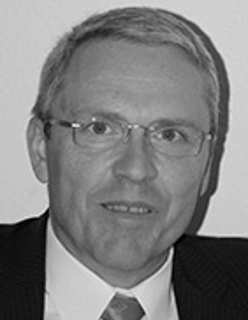
| 8 Quotes | |
| Born as | Edgar Russell Fiedler |
| Occup. | Economist |
| From | USA |
| Born | April 21, 1929 |
| Died | March 15, 2003 |
| Aged | 73 years |
| Cite | |
Citation Formats
APA Style (7th ed.)
Edgar r. fiedler biography, facts and quotes. (2026, February 16). FixQuotes. https://fixquotes.com/authors/edgar-r-fiedler/
Chicago Style
"Edgar R. Fiedler biography, facts and quotes." FixQuotes. February 16, 2026. https://fixquotes.com/authors/edgar-r-fiedler/.
MLA Style (9th ed.)
"Edgar R. Fiedler biography, facts and quotes." FixQuotes, 16 Feb. 2026, https://fixquotes.com/authors/edgar-r-fiedler/. Accessed 28 Mar. 2026.
Early Life and Background
Edgar Russell Fiedler was born on April 21, 1929, in the United States, into a country moving from the aftershocks of the 1929 crash into the institutional experimentation of the New Deal. He came of age while war mobilization remade American industry and while the early Cold War pushed economic expertise into the center of government and business decision-making. Those macro forces mattered for him: his generation learned that policy, production, and prediction were no longer separate worlds.By temperament, Fiedler gravitated to the junction where numbers met nerves - the place where executives and officials asked, urgently, what came next. The postwar decades also trained the public to expect the business cycle to be managed, not merely endured. That expectation created a market for professional forecasting and, for Fiedler, a lifelong arena: translating uncertain futures into usable guidance, while warning clients against the seductions of certainty.
Education and Formative Influences
Fiedler trained as an economist in the era when Keynesian stabilization policy, national income accounting, and the first generations of large-scale macroeconomic models were becoming standard tools. He absorbed the craft traditions of applied economics - careful measurement, attention to institutions, and an interest in cyclical dynamics - while also learning how quickly elegant theory could collide with messy data, shifting policy regimes, and the psychology of markets.Career, Major Works, and Turning Points
He became best known as the founder and long-time leader of the economic forecasting firm Fiedler & Associates, advising corporate and financial clients through the volatile sequence of postwar booms, the inflationary 1970s, the disinflation and recession of the early 1980s, and the renewed confidence of the 1990s. His public profile grew through frequent commentary and interviews, where he played a rare role: a forecaster who treated humility as a professional discipline rather than a public-relations pose. The turning point in his career was not a single publication but the steady accumulation of credibility in real time - calling attention to risks, revising when facts changed, and refusing the theater of absolute predictions.Philosophy, Style, and Themes
Fiedler's central theme was the gap between the clean logic of models and the unruly character of economies. “For economist the real world is often a special case”. In that inversion, he expressed an applied economist's suspicion of systems that fit too perfectly: the economy, for him, was an evolving set of institutions, incentives, and shocks, not a closed laboratory. His style favored plain-spoken warnings, historical analogies, and a practitioner's sense that forecasts live or die by their usefulness to decisions made under pressure.Just as important was his psychology of forecasting - a sustained critique of ego and groupthink. “He who lives by the crystal ball soon learns to eat ground glass”. He treated prediction as a probabilistic craft and argued that reputations are often built by overconfidence and protected by selective memory. That skepticism extended to the social dynamics of the forecasting industry: “The herd instinct among forecasters makes sheep look like independent thinkers”. In his view, the real danger was not being wrong - which is inevitable in complex systems - but being wrong together for the same fashionable reasons, because that is how careers are insulated while clients are exposed.
Legacy and Influence
Fiedler died on March 15, 2003, leaving an influence that is less about a single canonical text than a professional posture: disciplined humility, historical awareness, and resistance to consensus comfort. He helped normalize the idea that economic forecasting should be judged like risk management - by scenario thinking, transparent revisions, and attention to incentives - rather than by theatrical point estimates. In an age that oscillated between faith in technocracy and skepticism about expertise, his enduring contribution was a tough-minded middle ground: use the tools, distrust the certainty, and remember that the economy is always larger than the forecast.Our collection contains 8 quotes written by Edgar, under the main topics: Witty One-Liners - Wisdom - Knowledge - Decision-Making.
Source / external links