
Edgard Varese Biography Quotes 10 Report mistakes
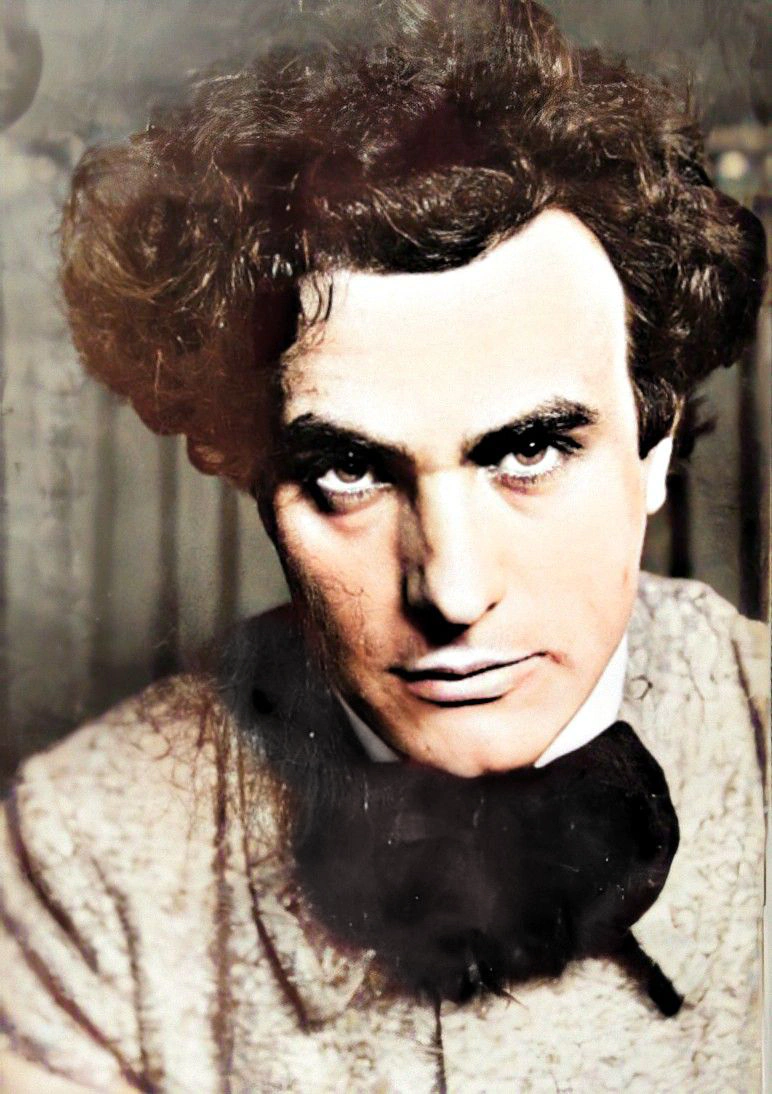
| 10 Quotes | |
| Born as | Edgard Victor Achille Charles Varèse |
| Native name | Edgard Varèse |
| Occup. | Composer |
| From | France |
| Born | December 22, 1883 Paris, France |
| Died | November 6, 1965 New York City, New York, USA |
| Aged | 81 years |
| Cite | |
Citation Formats
APA Style (7th ed.)
Edgard varese biography, facts and quotes. (2026, February 11). FixQuotes. https://fixquotes.com/authors/edgard-varese/
Chicago Style
"Edgard Varese biography, facts and quotes." FixQuotes. February 11, 2026. https://fixquotes.com/authors/edgard-varese/.
MLA Style (9th ed.)
"Edgard Varese biography, facts and quotes." FixQuotes, 11 Feb. 2026, https://fixquotes.com/authors/edgard-varese/. Accessed 20 Mar. 2026.
Early Life and Background
Edgard Victor Achille Charles Varese was born on 22 December 1883 in Paris, but his earliest memories were shaped less by the capital than by the pull between two households and two temperaments. His mother, Blanche-Marie Cortot, had family ties that encouraged a more cultivated, artistic outlook; his father, Henri Varese, was an engineer whose practical demands and frequent moves imposed a harsher order. As a child Varese spent significant time in Italy, including Turin, where the sights and noises of an industrializing city - factories, tramways, street calls, church bells - formed a private catalog of timbres long before he had a technique to notate them.That domestic tension mattered: Varese grew up with a sense that sound was not decoration but force, something that could press against authority, religion, and habit. He was often restless, socially blunt, and internally single-minded - traits that later made him both magnetic and difficult. The late 19th century was also an age when science and modern war were transforming the imagination; Varese absorbed that atmosphere early, listening for the future in the present and learning to distrust polite musical rhetoric.
Education and Formative Influences
In his late teens and early twenties he pursued formal study across France and Italy, ultimately returning to Paris where the citys ferment offered models of artistic revolt. He studied with figures linked to French modernism, notably Albert Roussel, and moved in circles that included Debussys aura and the wider symbolist and avant-garde milieu, even as he felt constrained by inherited harmony and orchestral etiquette. More than a single teacher, it was Paris itself - its exhibitions, its new machines, its cosmopolitan arguments about art and technology - that convinced him composition could be rebuilt from the level of sound.Career, Major Works, and Turning Points
In 1915 Varese left Europe for the United States, a decisive break that aligned him with New Yorks modernist energy and relative freedom from conservatory gatekeeping. He organized concerts for new music, founded the International Composers Guild (with Carlos Salzedo), and positioned himself as a builder of institutions as well as pieces. The 1920s brought the works that announced his voice: Amériques (completed 1921, revised 1927) with its siren-like urban roar, Hyperprism (1923) and Intégrales (1925) with their hard-edged blocs of sound, and Octandre (1923) for winds and bass that treated ensemble color as architecture. A later turning point came with Ionisation (1931), a landmark for percussion ensemble, and then a long period of frustration as he waited for technologies and funding that could realize his ideas. When tape and studio resources finally caught up, he produced Déserts (1954) for orchestra and electronic sound, and Poème électronique (1958) for the Philips Pavilion at the Brussels Worlds Fair, an immersive work that made his lifelong dream of spatialized, engineered sound briefly concrete.Philosophy, Style, and Themes
Vareses inner life reads as a struggle between volcanic imagination and the limits of available tools. His most quoted definition - “Music is organized sound”. - was not a slogan for chaos but for discipline: organization, in his mind, meant shaping sonic matter the way an engineer shapes materials, with rigor rather than sentimentality. That is why he distrusted the inherited rules of Western notation and harmony, insisting, “Our musical alphabet is poor and illogical”. The complaint reveals a psychology both impatient and precise: he heard complexities that the old symbols could not capture, and the gap between ear and system felt like an ethical problem.His pieces often behave like physical events. Instead of melody unfolding over accompaniment, he constructed masses, trajectories, collisions, and sudden clearings - sound as weather or geology. He described form as a living mechanism: “There is an idea, the basis of an internal structure, expanded and split into different shapes or groups of sound constantly changing in shape, direction, and speed, attracted and repulsed by various forces”. In practice that meant blocks of brass, wind clusters, percussion shocks, and silences placed with almost architectural exactness, often in stark registral extremes. The recurring theme is liberation: of timbre from orchestral convention, of rhythm from square periodicity, and of musical space from the single frontal stage - a modernist ethic that treated technology not as ornament but as destiny.
Legacy and Influence
By the time of his death on 6 November 1965, Varese had become a patron saint of sonic modernism: a composer with a relatively small catalog whose impact was disproportionate to its size. He helped legitimize percussion as a primary medium, opened pathways for electronic and tape composition, and influenced postwar figures from Pierre Schaeffer and Karlheinz Stockhausen to Iannis Xenakis, as well as later experimentalists who heard in him a blueprint for treating sound itself as subject. His enduring influence lies less in a school of followers than in a widened permission: to think like a physicist, to compose with noise, space, and energy, and to demand instruments equal to the imagination that conceives them.Our collection contains 10 quotes written by Edgard, under the main topics: Wisdom - Art - Music.
Other people related to Edgard: Frank Zappa (Musician)
Source / external links