
Edin Džeko Biography Quotes 7 Report mistakes
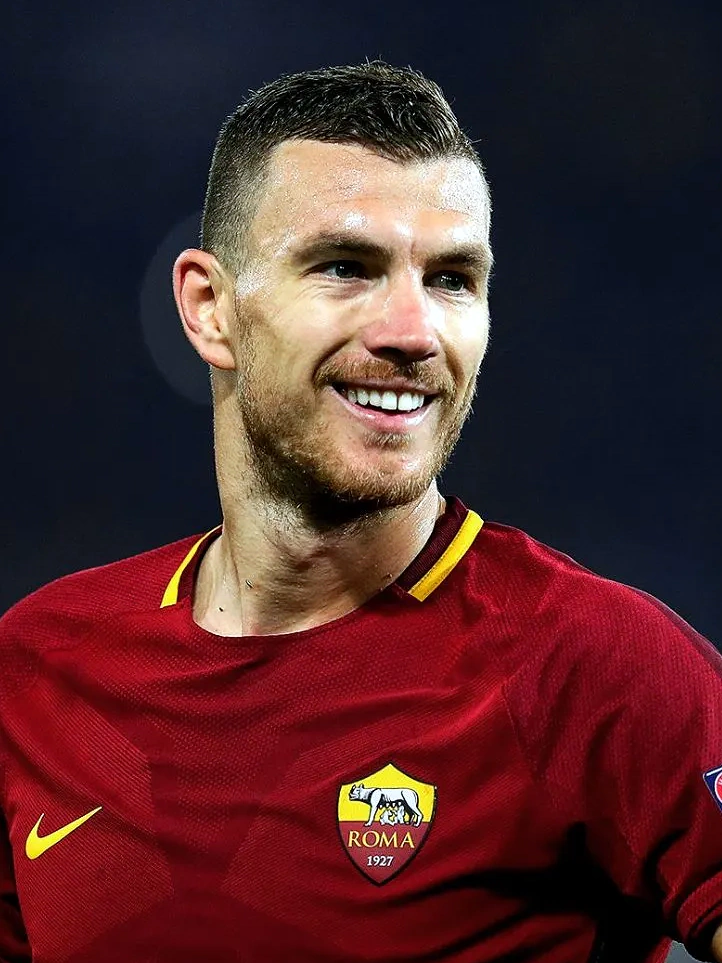
Attr: thesefootballtimes.co
| 7 Quotes | |
| Occup. | Athlete |
| From | Bosnia and Herzegovina |
| Spouse | Amra Džeko |
| Born | March 17, 1986 Sarajevo, SR Bosnia and Herzegovina, SFR Yugoslavia |
| Age | 40 years |
| Cite | |
Citation Formats
APA Style (7th ed.)
Edin džeko biography, facts and quotes. (2026, March 10). FixQuotes. https://fixquotes.com/authors/edin-dzeko/
Chicago Style
"Edin Džeko biography, facts and quotes." FixQuotes. March 10, 2026. https://fixquotes.com/authors/edin-dzeko/.
MLA Style (9th ed.)
"Edin Džeko biography, facts and quotes." FixQuotes, 10 Mar. 2026, https://fixquotes.com/authors/edin-dzeko/. Accessed 30 Mar. 2026.
Early Life and Background
Edin Dzeko was born on March 17, 1986, in Sarajevo, then part of socialist Yugoslavia, into a Bosniak family whose ordinary urban life was shattered by the Bosnian War. His childhood unfolded against siege, scarcity, and the intimate geography of danger: apartment blocks, improvised shelters, disrupted schooling, and a city under shelling. For many athletes from the former Yugoslavia, war is backdrop; for Dzeko it was formative atmosphere. The discipline later visible in his movement and temperament was shaped not by academy polish alone but by a generation's early education in endurance. Sarajevo in the 1990s taught economy - of emotion, of food, of hope - and that starkness remained visible in his public manner: restrained, practical, rarely theatrical.He grew up in a football culture where the sport offered not just aspiration but psychic escape and social continuity. Bosnia and Herzegovina's postwar reconstruction was uneven, and young players often advanced through damaged institutions, fragile clubs, and uncertain finances. Dzeko's rise therefore carried a national symbolism larger than personal success. As a tall forward from a country more often associated abroad with conflict than excellence, he came to embody a different Bosnian story - one of persistence, repair, and outward achievement without disowning origins. That he would later become captain and record scorer for the national team gave retrospective meaning to those early years: the child of besieged Sarajevo became one of the country's most recognizable and unifying public figures.
Education and Formative Influences
Dzeko's education was inseparable from football's apprenticeship system rather than elite academic formation. He came through Zeljeznicar's youth structure in Sarajevo, where he first appeared more gangly than dominant, and where coaches initially saw a technically useful but physically incomplete attacker. A loan to Usti nad Labem in the Czech Republic proved decisive because it exposed him to a harder professional routine and to the emotional demands of being a young Balkan player abroad. His move to Teplice sharpened him further: Czech football's emphasis on organization, repetition, and tactical clarity refined a striker who had relied mainly on instinct. Influences were less glamorous than cumulative - postwar resilience from home, Central European discipline from league football, and a growing self-belief nourished by goals. By the time Felix Magath brought him to Wolfsburg in 2007, Dzeko had acquired the essential traits that would define him: patience in development, seriousness of method, and the conviction that production eventually silences doubt.Career, Major Works, and Turning Points
At Wolfsburg, Dzeko became one of Europe's most complete center-forwards. In partnership with Grafite, he drove the club to the 2008-09 Bundesliga title, a seismic achievement in German football, and established himself through a rare blend of height, timing, link play, and calm finishing with either foot or head. Manchester City signed him in 2011 during the club's transformation into a superpower, and though he was not always treated as the symbolic centerpiece, he repeatedly altered seasons through decisive goals - in title races, cup runs, and high-pressure league matches. He won two Premier League titles there and became a specialist in moments that required emotional steadiness rather than spectacle. A move to Roma in 2015 revived him as a central protagonist: he became Serie A's Capocannoniere in 2016-17, led the line in the Champions League run that included the defeat of Barcelona, and broadened his reputation from finisher to strategic attacking hub. Later, at Inter, he adapted again, contributing experience, movement, and goals deep into his thirties. Running parallel was his historic international career: Bosnia and Herzegovina's captain, all-time leading scorer, and the face of the team that reached its first major tournament, the 2014 FIFA World Cup. That qualification remains one of the defining collective moments in modern Bosnian sport, and Dzeko was its emotional and technical center.Philosophy, Style, and Themes
Dzeko's football philosophy is unusually transparent because his public language mirrors his game. “For me it's simple: as long as the coach calls me up, I will accept and do my best to help as much as I can”. That sentence captures a personality built on duty rather than vanity. Even when he played for elite clubs, he rarely cultivated the aura of the untouchable star; he projected usefulness, reliability, and hierarchy accepted in service of the team. Equally revealing is his insistence, “I always try to do my best. Sometimes that's enough to get a good result, sometimes not, but I never give up and never will”. This is not empty athlete rhetoric. It explains the arc of a player who was doubted at several stages - too raw in youth, too streaky in England, too old by the time he reached later peaks in Italy - yet repeatedly reconstructed his relevance.Stylistically, he belonged to an older lineage of center-forward while continually updating it. He could play with his back to goal, dominate in the air, combine in tight spaces, and still attack channels with deceptive grace for a tall man. But the deeper theme of his career was self-renewal through confidence without flamboyance. “No, it's not a surprise for me because I've always scored goals - just last year was a bit different. This is where I'm at now and I want to push on and prove I can do even better”. The psychology here matters: Dzeko's self-belief was restorative, not narcissistic. He did not need reinvention by myth; he trusted repetition, form, and memory. That made him especially significant for Bosnia and Herzegovina, where his captaincy expressed not only leadership but composure - a refusal to let volatility define identity.
Legacy and Influence
Dzeko's legacy rests on both numbers and symbolism. He is one of the greatest players in the history of Bosnia and Herzegovina, its record international scorer, and the captain most closely associated with the country's arrival on football's biggest stage. Across Germany, England, and Italy, he proved adaptable enough to succeed in three major leagues and durable enough to matter across changing tactical eras. Younger Balkan forwards have seen in him a model for leaving smaller markets without losing cultural rootedness, while Bosnian supporters have seen something rarer: a global athlete who remained legible as one of their own. His career argues that greatness can be cumulative rather than explosive - built from resilience, disciplined craft, and a mature understanding of responsibility. In that sense, Dzeko's enduring influence reaches beyond trophies and goals. He stands as a postwar Bosnian exemplar of steadiness under pressure, ambition without self-dramatization, and national representation carried with seriousness rather than slogan.Our collection contains 7 quotes written by Edin, under the main topics: Never Give Up - Leadership - Victory - Success - Perseverance.
Source / external links