
Edmund Burke Biography Quotes 78 Report mistakes
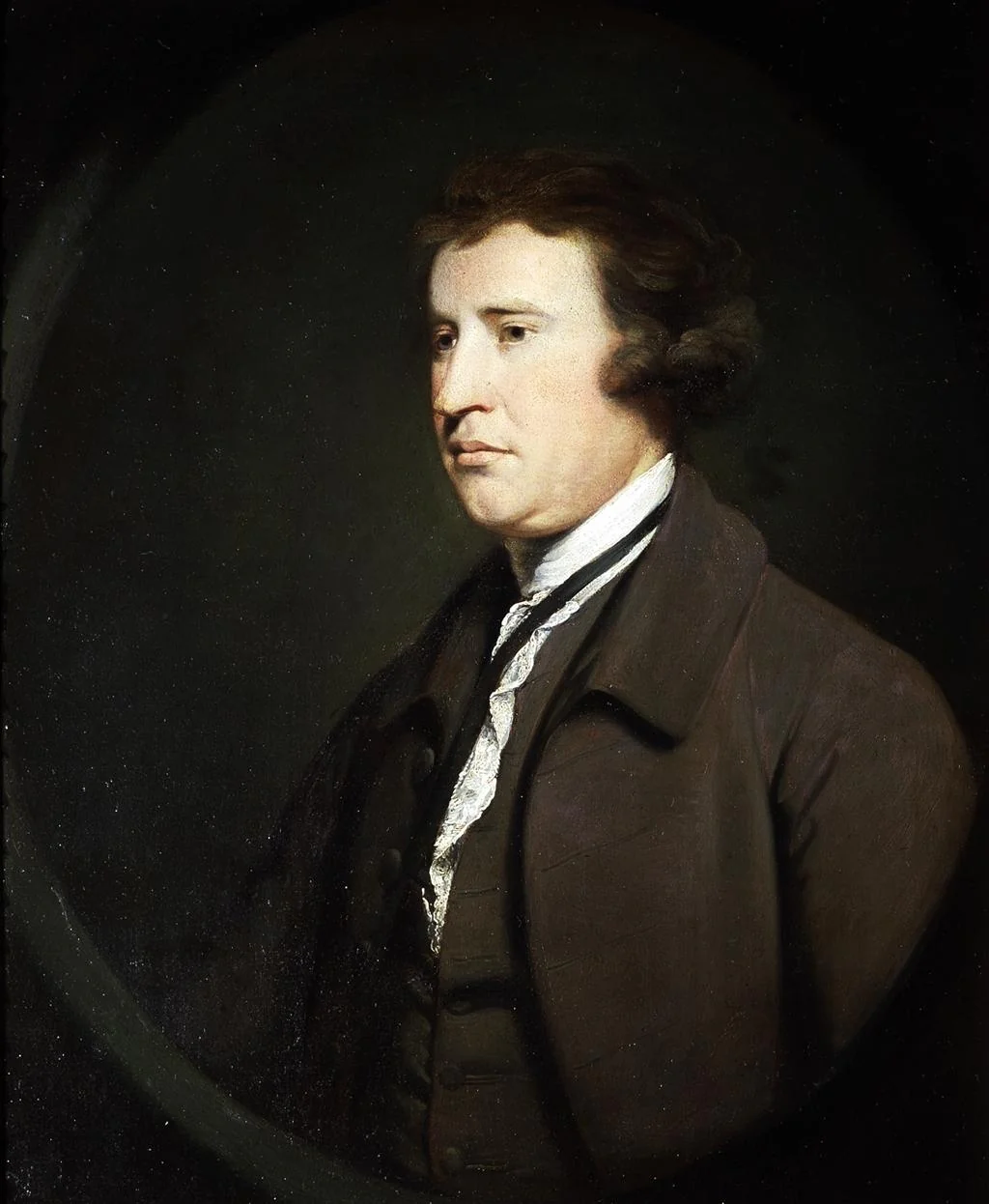
| 78 Quotes | |
| Occup. | Statesman |
| From | Ireland |
| Born | January 12, 1729 |
| Died | July 9, 1797 |
| Aged | 68 years |
| Cite | |
Citation Formats
APA Style (7th ed.)
Edmund burke biography, facts and quotes. (2026, February 1). FixQuotes. https://fixquotes.com/authors/edmund-burke/
Chicago Style
"Edmund Burke biography, facts and quotes." FixQuotes. February 1, 2026. https://fixquotes.com/authors/edmund-burke/.
MLA Style (9th ed.)
"Edmund Burke biography, facts and quotes." FixQuotes, 1 Feb. 2026, https://fixquotes.com/authors/edmund-burke/. Accessed 8 Apr. 2026.
Early Life and Background
Edmund Burke was born on January 12, 1729, in Dublin, in a kingdom still shaped by the Protestant Ascendancy, Penal Laws, and the aftershocks of earlier Jacobite conflicts. His father, Richard Burke, was a prosperous attorney and a Church of Ireland Protestant; his mother, Mary Nagle, came from a Catholic family in County Cork. That mixed household did not make him a religious relativist, but it did train his political imagination to notice how law, custom, and identity interlocked - and how easily a governing class could mistake its own security for legitimacy.As a young man he absorbed the daily frictions of Irish life under British rule: landlord power, sectarian boundaries, and the paradox of an imperial constitution that could claim liberty at home while tolerating coercion at the periphery. Burke never became a nationalist in the later, romantic sense, yet Ireland gave him a lifelong instinct that injustice was not only cruel but also strategically stupid - a seed that would later flower in his attacks on misgovernment in America, India, and revolutionary France.
Education and Formative Influences
Burke studied at Trinity College Dublin (1744-1748), reading classics, moral philosophy, and rhetoric in a culture that prized public disputation, then went to London to read law at the Middle Temple, though he did not practice. London pulled him into the world of print and argument: he wrote early on aesthetics and social psychology (A Philosophical Enquiry into the Origin of Our Ideas of the Sublime and Beautiful, 1757), and he began to see politics as a matter of inherited habits and felt attachments as much as abstract principle - an outlook reinforced by the English constitution, party alignments, and the hard lessons of patronage.Career, Major Works, and Turning Points
Burke entered Parliament in 1765 as member for Wendover under the patronage of the Marquess of Rockingham, becoming the chief intellectual voice of the Rockingham Whigs and a pioneering theorist of party as a moral instrument rather than a faction. He backed conciliation with the American colonies (Speech on American Taxation, 1774; Speech on Conciliation with the Colonies, 1775), criticized crown influence, defended Catholic relief, and helped prosecute Warren Hastings in the long impeachment trial (begun 1788) as a test case against imperial corruption in India. His rupture with many old allies came with the French Revolution: Reflections on the Revolution in France (1790) made him the era's most famous conservative critic of radical rupture, followed by the harder-edged Letters on a Regicide Peace (1795-1797) as Europe slid into war. Personally, the 1790s were marked by exhaustion, isolation, and grief after the death of his only son, Richard, in 1794, which darkened his sense that civilization was always more fragile than the confident believed.Philosophy, Style, and Themes
Burke's political mind worked from a moral anthropology: humans were passionate, imitative, status-seeking, and prone to self-deception, so stable liberty required institutions that disciplined power and educated feeling over time. His suspicion of utopian schemes was not a hatred of change but a fear of change unmoored from experience: “A spirit of innovation is generally the result of a selfish temper and confined views. People will not look forward to posterity, who never look backward to their ancestors”. Behind that sentence is Burke's psychology of the reformer who flatters himself as emancipator while quietly narrowing his vision to the present moment and his own moral vanity.He wrote with the cadence of the pulpit and the courtroom - metaphors, moral portraits, and a relentless eye for the way fine language masks appetite. That is why he distrusted grand promises from movements that had not yet learned the limits of power: “Hypocrisy can afford to be magnificent in its promises, for never intending to go beyond promise, it costs nothing”. Yet he was not a quietist; he believed responsibility scaled down to the smallest act of civic courage, and his own career - from America to India - shows a man who refused to wait for perfect conditions: “Nobody made a greater mistake than he who did nothing because he could do only a little”. Across his work runs a single theme: reform is essential, but it must be chastened by history, checked by law, and animated by sympathy, or it becomes a moral performance that ends in coercion.
Legacy and Influence
Burke died on July 9, 1797, at Beaconsfield, leaving a body of speeches and pamphlets that became a template for modern political argument - at once philosophical and fiercely particular. To conservatives he offered the classic case for tradition, incremental reform, and the moral capital of institutions; to liberals and anti-imperial critics he left an enduring indictment of arbitrary power, especially in colonial administration. His best pages still shape how readers think about revolution, legitimacy, and the limits of rational design: politics is not a geometry problem but a human inheritance, and the statesman is judged less by slogans than by whether he can preserve liberty without dissolving the social bonds that make liberty livable.Our collection contains 78 quotes written by Edmund, under the main topics: Motivational - Ethics & Morality - Truth - Wisdom - Art.
Other people related to Edmund: Thomas Paine (Writer), John Morley (Statesman), Dinesh D'Souza (Author), Joshua Reynolds (Artist), James Mackintosh (Judge), George Crabbe (Poet), Elizabeth Montagu (Writer), Frances Burney (Writer), Hannah More (Writer), Gertrude Himmelfarb (Historian)
Source / external links