
Edmund Wilson Biography Quotes 10 Report mistakes
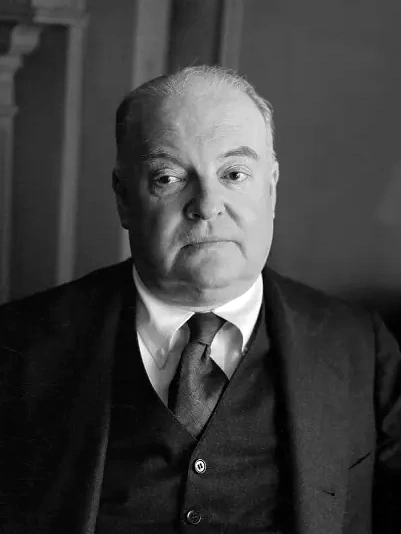
| 10 Quotes | |
| Occup. | Critic |
| From | USA |
| Born | May 8, 1895 Red Bank, New Jersey |
| Died | June 12, 1972 Talcottville, New York |
| Aged | 77 years |
| Cite | |
Citation Formats
APA Style (7th ed.)
Edmund wilson biography, facts and quotes. (2026, February 11). FixQuotes. https://fixquotes.com/authors/edmund-wilson/
Chicago Style
"Edmund Wilson biography, facts and quotes." FixQuotes. February 11, 2026. https://fixquotes.com/authors/edmund-wilson/.
MLA Style (9th ed.)
"Edmund Wilson biography, facts and quotes." FixQuotes, 11 Feb. 2026, https://fixquotes.com/authors/edmund-wilson/. Accessed 6 Mar. 2026.
Early Life and Background
Edmund Wilson was born on May 8, 1895, in Red Bank, New Jersey, into a patrician, anxious America entering the machine age. His father, an attorney tied to the New York and New Jersey professional class, and his mother, a cultivated woman with firm expectations, gave him both security and an early sense of social performance. That background mattered: Wilson would become a critic who understood power from the inside, suspicious of cant yet never fully outside the institutions he anatomized.In youth he developed the traits that later defined his inner life: an intense need to make experience cohere, a skepticism toward public pieties, and a competing hunger for intimacy and privacy. The pre-World War I years offered him the last breath of the old American elite, but his temperament leaned toward exposure rather than comfort. He learned early that taste could be a weapon and that intelligence could be a form of loneliness.
Education and Formative Influences
Wilson attended the Hill School in Pennsylvania and then Princeton University, where he moved among a generation that would re-make American letters: F. Scott Fitzgerald, John Peale Bishop, and others clustered around campus magazines and arguments about modernism. Princeton gave him a classical polish and a lifelong habit of close reading, while the broader era - the shock of World War I, the breakdown of Victorian assurances, the rise of mass culture - supplied the antagonists. Serving during the war years deepened his conviction that ideas had consequences in history, not just in seminars, and it pushed him toward criticism as a civic act.Career, Major Works, and Turning Points
After the war Wilson worked in New York journalism and soon became a central editorial intelligence at Vanity Fair and The New Republic, helping define the critic as a public interpreter of literature, politics, and culture. In the 1920s he chronicled the disillusionments of the "Lost Generation" while remaining skeptical of its self-mythology. His major books established his range: Axel's Castle (1931) clarified the European Symbolist roots of modern literature; Travels in Two Democracies (1936) contrasted American and Soviet life during the decade of economic crisis; To the Finland Station (1940) traced socialist ideas from Michelet through Marx to Lenin with unusual narrative drive; and Patriotic Gore (1962) re-read Civil War literature as a national psychodrama. Later he fought a notorious battle with the U.S. tax authorities, a fight that fed his suspicion of bureaucratic language and sharpened his belief that the writer must defend intellectual independence even at personal cost. He died on June 12, 1972, in New York State, after decades in which his essays served as a running education for American readers.Philosophy, Style, and Themes
Wilson approached literature as a record of consciousness under pressure - personal, social, and historical. He refused the notion of a single authoritative meaning, insisting that reading is an encounter between two subjectivities: “No two persons ever read the same book”. That sentence is not a relativist shrug so much as a psychological fact about him: he read as someone trying to locate the self inside a web of inherited forms, alert to how temperament, class, and desire edit the text in the mind. His criticism therefore moved outward from sentences to systems, from imagery to institutions, and back again, testing every abstraction against the grain of lived experience.At the same time, Wilson was attracted to grand explanatory schemes and equally determined to puncture them. His long engagement with socialism - sympathetic in the Depression, disenchanted by the realities of Soviet power and the seductions of doctrinal thinking - produced one of his most quoted reversals: “Marxism is the opium of the intellectuals”. The line reveals a critic wary of his own susceptibility to belief, as if he feared that the desire for moral clarity could become a narcotic. Underneath his public severity ran a private romanticism: “If I could only remember that the days were, not bricks to be laid row on row, to be built into a solid house, where one might dwell in safety and peace, but only food for the fires of the heart”. It captures his lifelong tension between discipline and longing - the critic as administrator of culture, and the man who knew that experience burns faster than it builds.
Legacy and Influence
Wilson helped invent the modern American man of letters: a critic who could write with narrative force, historical intelligence, and a refusal to separate aesthetics from politics. He influenced generations of essayists and reviewers by demonstrating that criticism can be literature - capacious, argumentative, and concrete - and that the critic must be accountable to evidence, not fashion. Even where later scholars revised his judgments, his method remained a model: read the work, read the era, read the self reading. In that sense his enduring influence lies not only in the books he explained, but in the vigilant way he taught readers to notice how ideas and desires shape what seems like mere taste.Our collection contains 10 quotes written by Edmund, under the main topics: Ethics & Morality - Writing - Deep - Live in the Moment - Science.
Other people related to Edmund: Mary McCarthy (Author), Louise Bogan (Poet), Howard Mumford Jones (Writer), Lionel Trilling (Critic), John Dos Passos (Novelist), Leon Edel (Critic), Van Wyck Brooks (Critic), Alfred Kazin (Critic)