
Edna Ferber Biography Quotes 12 Report mistakes
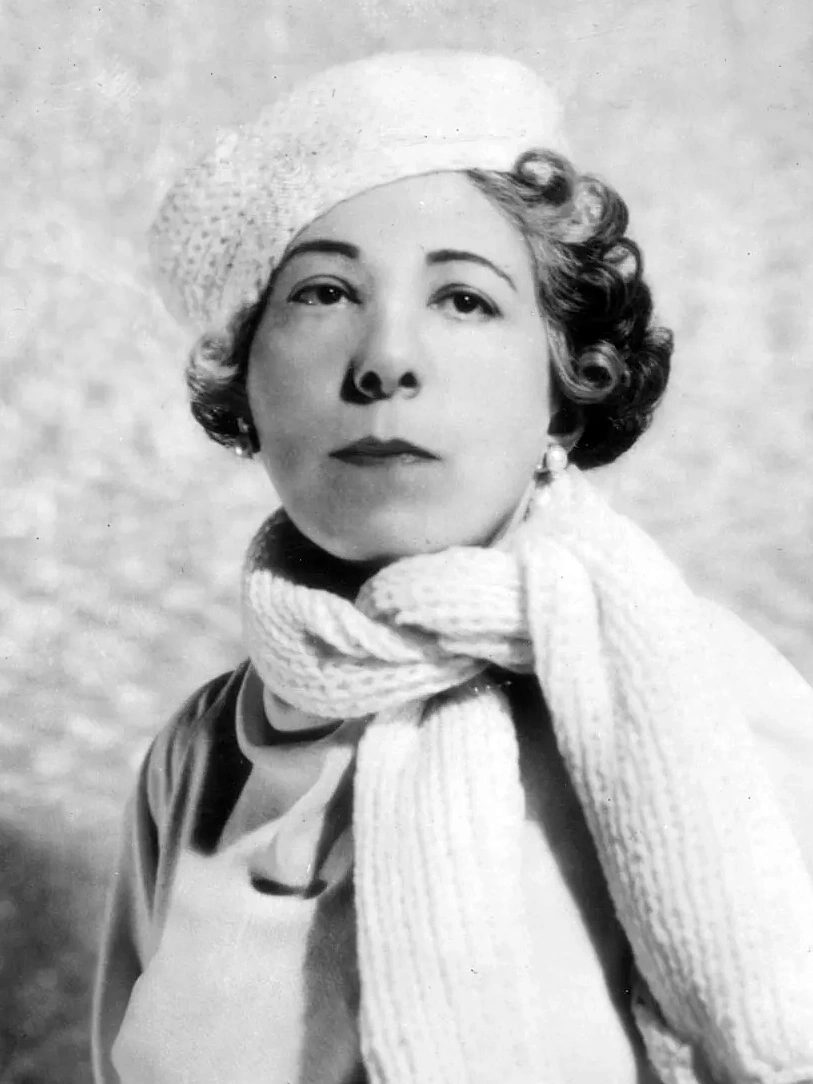
Attr: Britannica
| 12 Quotes | |
| Occup. | Novelist |
| From | USA |
| Born | August 15, 1885 Joliet, Illinois, USA |
| Died | April 16, 1968 New York City, New York, USA |
| Aged | 82 years |
| Cite | |
Citation Formats
APA Style (7th ed.)
Edna ferber biography, facts and quotes. (2026, February 15). FixQuotes. https://fixquotes.com/authors/edna-ferber/
Chicago Style
"Edna Ferber biography, facts and quotes." FixQuotes. February 15, 2026. https://fixquotes.com/authors/edna-ferber/.
MLA Style (9th ed.)
"Edna Ferber biography, facts and quotes." FixQuotes, 15 Feb. 2026, https://fixquotes.com/authors/edna-ferber/. Accessed 26 Mar. 2026.
Early Life and Background
Edna Ferber was born on August 15, 1885, in Kalamazoo, Michigan, the daughter of Jacob Ferber, a Hungarian-Jewish immigrant shopkeeper, and Julia Neumann Ferber, from a Milwaukee German-Jewish family. The Ferbers moved often as Jacob chased workable businesses across the Midwest - Iowa, Wisconsin, Illinois - a restlessness that imprinted the young Ferber with a reporter's attention to regional speech, local ambition, and the brittle social hierarchies of small towns.Ferber grew up acute to outsiderhood: Jewish, bookish, and female in places that could be narrow and casually anti-Semitic. Those pressures did not soften her; they sharpened her. She learned early to read a room like a stage and to convert slights into observation. The Midwest of the 1890s and early 1900s - boom towns, rail lines, grain markets, and pious respectability - later reappeared in her fiction as both a proving ground and a cage, especially for women expected to accept diminishment as destiny.
Education and Formative Influences
After attending school in Appleton, Wisconsin, Ferber graduated from Lawrence University in 1902, unusually young, and almost immediately entered journalism. The newsroom gave her discipline, deadlines, and the habit of listening for what people avoided saying. She absorbed the era's tensions - the Progressive movement, immigrant aspiration, and the growing visibility of women in public life - while building a style that fused brisk reportorial detail with theatrical pacing, as if each scene had to earn its space.Career, Major Works, and Turning Points
Ferber began as a reporter for the Appleton Daily Crescent and in 1904 joined the Milwaukee Journal, experiences that fed her early short stories and her first major success, the Emma McChesney series (collected from 1913), featuring a traveling saleswoman who insists on competence and self-respect in a man's economy. Fame broadened with novels that mapped American myth onto intimate lives: So Big (1924), which won the Pulitzer Prize; Show Boat (1926), later transformed by Jerome Kern and Oscar Hammerstein II into the landmark musical; Cimarron (1930); and later sprawling national canvases such as Saratoga Trunk (1941) and Giant (1952). In midlife she also became a formidable collaborator on Broadway with George S. Kaufman - notably Dinner at Eight (1932) and Stage Door (1936) - proving she could write with the snap of comedy while keeping her eye on class, gender, and power. Her 1939 autobiography, A Peculiar Treasure, framed her career as a long argument with limitation, conducted in public through work.Philosophy, Style, and Themes
Ferber wrote as a moral realist who loved spectacle but distrusted mere bigness. Her America is built by strivers, salesmen, actresses, ranchers, and immigrants, yet the cost of expansion is always counted - in exhausted bodies, broken families, and the quiet violence of prejudice. She had a pragmatic suspicion of nostalgia; her characters are punished when they clutch backward-looking fantasies rather than confront what is. “Living the past is a dull and lonely business; looking back strains the neck muscles, causing you to bump into people not going your way”. That sentence doubles as self-portrait: Ferber used memory as material, not as refuge, turning personal abrasions into forward motion on the page.Her style is muscular and visual, built from sharp dialogue and the telling object - the hotel lobby, the riverboat, the prairie house, the garment that does or does not fit. She repeatedly tested how a woman might remain both socially legible and inwardly free, often through wit that carries an edge of calculation about appearances. “A woman can look both moral and exciting... if she also looks as if it was quite a struggle”. Beneath the joke is her psychology of survival: respectability as armor, desire as pressure, and performance as a tool rather than a surrender. Yet she also wrote with a fierce tenderness for endurance itself, especially in nature and in people who keep their dignity after damage: “A stricken tree, a living thing, so beautiful, so dignified, so admirable in its potential longevity, is, next to man, perhaps the most touching of wounded objects”. That sympathy runs through her best work - the belief that injury does not cancel worth, and that the wounded still contain futures.
Legacy and Influence
Edna Ferber died on April 16, 1968, in New York City, having helped define a distinctly American popular literary epic - big enough for rivers, oil fields, and stage lights, yet anchored in the daily negotiations of women and outsiders. Her novels and plays seeded enduring adaptations and standards, especially Show Boat and Giant, and her career offered a model of female authority in letters before it was commonplace. Ferber's lasting influence lies in how she stitched regional realism to national myth, insisting that the story of the United States is inseparable from the private costs of ambition, the corrosions of bigotry, and the stubborn, witty craft of people who refuse to be minimized.Our collection contains 12 quotes written by Edna, under the main topics: Witty One-Liners - Wisdom - Nature - Writing - Live in the Moment.
Other people related to Edna: Wesley Ruggles (American), Franklin Pierce Adams (Writer), Robert E. Sherwood (Playwright)
Edna Ferber Famous Works
- 1958 Ice Palace (Novel)
- 1952 Giant (Novel)
- 1945 Great Son (Novel)
- 1941 Saratoga Trunk (Novel)
- 1939 A Peculiar Treasure (Autobiography)
- 1938 Nobody's in Town (Collection)
- 1936 Stage Door (Play)
- 1935 Come and Get It (Novel)
- 1935 Look Homeward, Angel (Essay)
- 1932 Dinner at Eight (Play)
- 1929 Cimarron (Novel)
- 1928 Old Man Minick (Play)
- 1927 The Royal Family (Play)
- 1926 As He Should Be (Collection)
- 1926 Show Boat (Novel)
- 1924 So Big (Novel)
- 1920 Half Portions (Collection)
- 1917 Fanny Herself (Novel)
- 1912 Buttered Side Down (Collection)
- 1911 Dawn O'Hara, The Girl Who Laughed (Novel)