
Eduardo Chillida Biography Quotes 9 Report mistakes
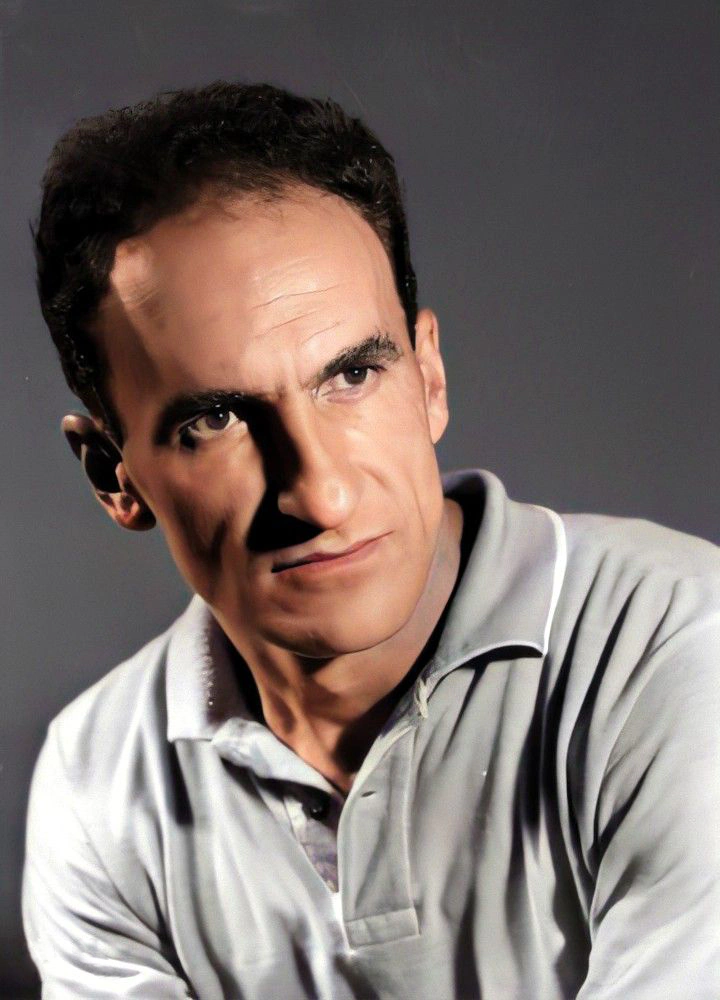
| 9 Quotes | |
| Born as | Eduardo Chillida Juantegui |
| Occup. | Sculptor |
| From | Spain |
| Born | January 10, 1924 San Sebastian, Spain |
| Died | August 19, 2002 San Sebastian, Spain |
| Cause | Heart attack |
| Aged | 78 years |
| Cite | |
Citation Formats
APA Style (7th ed.)
Eduardo chillida biography, facts and quotes. (2026, February 11). FixQuotes. https://fixquotes.com/authors/eduardo-chillida/
Chicago Style
"Eduardo Chillida biography, facts and quotes." FixQuotes. February 11, 2026. https://fixquotes.com/authors/eduardo-chillida/.
MLA Style (9th ed.)
"Eduardo Chillida biography, facts and quotes." FixQuotes, 11 Feb. 2026, https://fixquotes.com/authors/eduardo-chillida/. Accessed 13 Feb. 2026.
Early Life and Background
Eduardo Chillida Juantegui was born on January 10, 1924, in San Sebastian (Donostia), Gipuzkoa, in Spain's Basque Country - a maritime city whose seawalls, winds, and iron economy formed an early grammar of resistance and openness. Raised in a conservative Catholic milieu under the shadow of political fracture, he came of age as the Spanish Civil War ended and Franco's dictatorship hardened. The public sphere narrowed; private conviction had to deepen. That pressure fed a temperament both inward and stubbornly experimental, a mind that searched for freedom not in slogans but in form, weight, and the ethics of making.As a young man he was drawn to athletics and briefly played as a goalkeeper for Real Sociedad, an apprenticeship in spatial intuition: anticipating trajectories, guarding thresholds, reading air. A tuberculosis illness interrupted that path and forced long convalescence, turning attention from the body in motion to the body as measure - hand, breath, and endurance. Basque identity, with its stubborn material culture and pride in craft, became less a political banner than a source of gravity: a conviction that work, not rhetoric, is what remains.
Education and Formative Influences
In 1943 Chillida moved to Madrid to study architecture, absorbing proportional systems and the discipline of drawing, but he abandoned the degree in 1947, dissatisfied with plans that stayed on paper. He began to draw and sculpt independently, then traveled to Paris the same year, encountering a postwar city rebuilding its artistic language around abstraction and existential doubt. At the Musee du Louvre he studied archaic and classical sculpture as problems of volume and void, while the modernists around him suggested that a figure could be evoked by absence as much as by mass. Those years clarified a lifelong stance: tradition as a quarry, not a cage.Career, Major Works, and Turning Points
Chillida returned to San Sebastian in 1951 and made a decisive turn toward forged iron, collaborating with blacksmiths in Hernani and other Basque workshops; the anvil became his studio and the industrial past his palette. Recognition accelerated: a prize at the Venice Biennale in 1958, and by the 1960s his work traveled widely, from intimate alabasters to monumental steel. Turning points arrived as he pushed sculpture into public dialogue with landscape - Peine del Viento (Wind Comb) installed in 1977 at the rocky edge of San Sebastian; the concrete and sea-facing Elogio del Horizonte (Praise of the Horizon) in Gijon, 1990; and the dense, gravity-haunted steel volumes of the Elogio de la Luz series. In 1998 he opened Chillida Leku in Hernani, a museum-park that staged his career as a walk through matter and weather. He died on August 19, 2002, in San Sebastian, having made Basque space legible to an international modernism.Philosophy, Style, and Themes
Chillida's central subject was space treated as a physical and moral reality - not an emptiness to be filled, but a partner with its own dignity. He thought in thresholds: the meeting of sea and rock, light and shadow, interior and exterior. "Boundaries are actually the main factor in space, just as the present, another boundary, is the main factor in time". That sentence is not a metaphor in his hands; it is a working method. His sculptures do not merely occupy sites, they set conditions for perception, forcing the body to negotiate turns, compressions, and openings, so that space becomes something felt in ribs and palms.The psychology beneath the form is a disciplined mistrust of certainty, a commitment to discovery through making. "In my work, I have never had any use for anything that I have known in advance". Even his most monumental pieces preserve that risk - the sense that a mass might still be searching for its final balance. Yet the search is not romantic chaos; it is an ethics of attention, a belief that knowledge remains provisional and that the artist must stay porous to what resists being named: "One can never know enough. The unknown and its call lies even in what we know". This is why his surfaces are never merely finished - they are argued into being, bearing the memory of heat, strain, and the patience of the hand.
Legacy and Influence
Chillida endures as one of the defining sculptors of postwar Europe, a maker who reconciled modern abstraction with local craft and civic responsibility. He expanded the language of public sculpture by treating landscape as co-author, influencing later site-specific artists and architects who think in promenades, thresholds, and embodied viewing. In Spain's late-Franco and democratic eras his work offered a non-didactic model of freedom: rigorous, material, and quietly radical. Through Chillida Leku and iconic works like Peine del Viento, he continues to teach that form is not decoration but a way of knowing - and that the deepest monument is an experience of space newly understood.Our collection contains 9 quotes written by Eduardo, under the main topics: Wisdom - Art - Deep - Knowledge - Self-Improvement.
Source / external links