
Eduardo Saverin Biography Quotes 7 Report mistakes
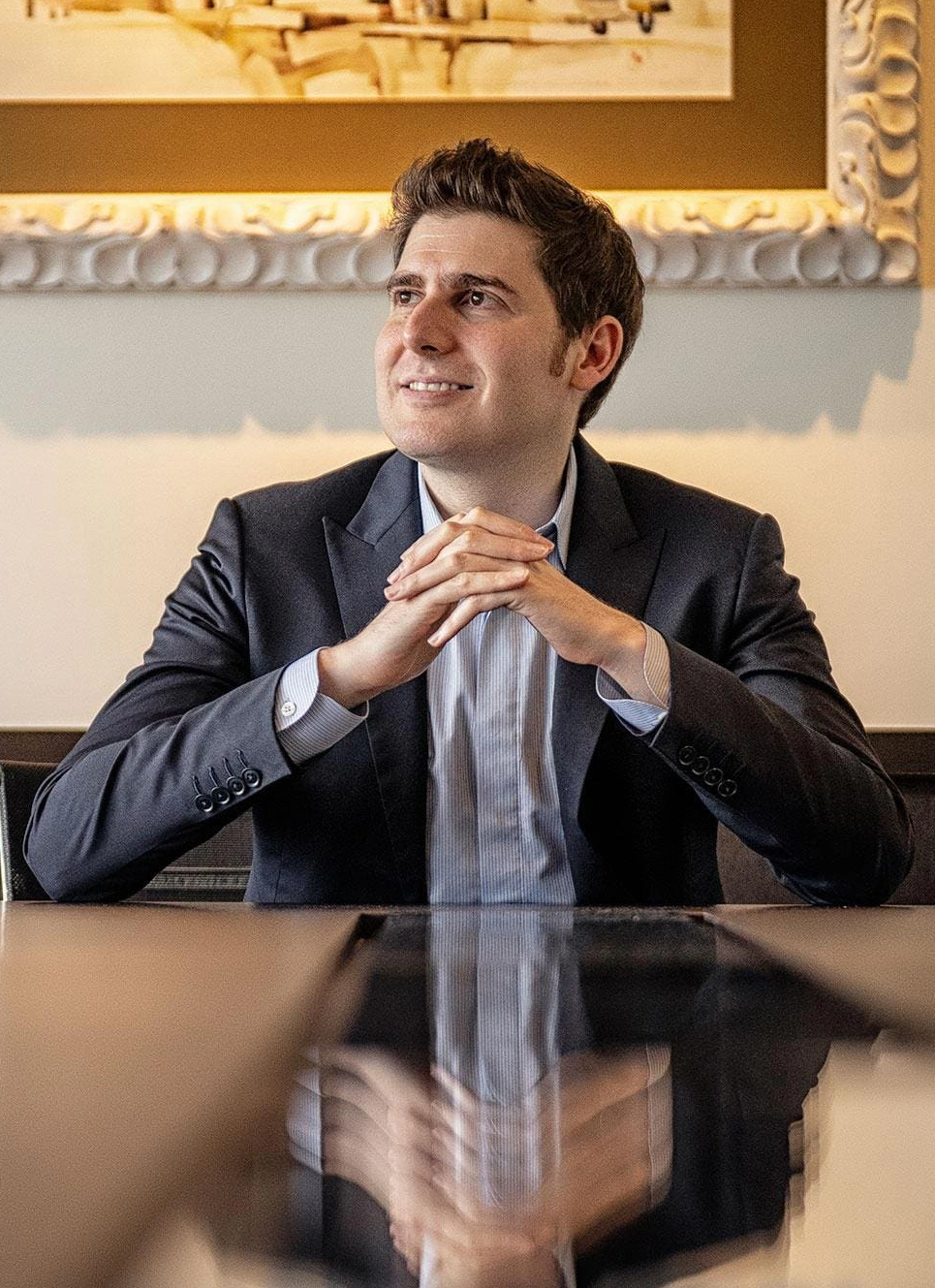
| 7 Quotes | |
| Born as | Eduardo Luiz Saverin |
| Occup. | Entrepreneur |
| From | Brazil |
| Spouse | Elaine Andriejanssen |
| Born | March 19, 1982 São Paulo, Brazil |
| Age | 43 years |
| Cite | |
Citation Formats
APA Style (7th ed.)
Eduardo saverin biography, facts and quotes. (2026, February 11). FixQuotes. https://fixquotes.com/authors/eduardo-saverin/
Chicago Style
"Eduardo Saverin biography, facts and quotes." FixQuotes. February 11, 2026. https://fixquotes.com/authors/eduardo-saverin/.
MLA Style (9th ed.)
"Eduardo Saverin biography, facts and quotes." FixQuotes, 11 Feb. 2026, https://fixquotes.com/authors/eduardo-saverin/. Accessed 6 Mar. 2026.
Early Life and Background
Eduardo Luiz Saverin was born on March 19, 1982, in Sao Paulo, Brazil, into a Jewish family whose fortunes were tied to the volatility and promise of late-20th-century Brazilian capitalism. His father, Roberto Saverin, built a career in business and finance, and the family moved through a milieu where currency swings, political uncertainty, and private enterprise shaped daily decisions. That early exposure to risk and calculation mattered later - not as mythology, but as a lived sense that stability is engineered, not guaranteed.In the early 1990s the Saverins relocated to the United States, settling in Florida. The immigrant reset sharpened Eduardo's instinct for social codes: he learned to read institutions quickly, to locate leverage, and to compete on unfamiliar ground. He was athletic and academically driven, but even more notable was his comfort with structured ambition - the kind that treats friendships, clubs, and competitions as networks rather than mere pastimes.
Education and Formative Influences
Saverin attended Gulliver Preparatory School in Miami before enrolling at Harvard University, where he studied economics and moved through the intensely status-conscious ecosystem of the early-2000s Ivy League. Harvard at that moment was a laboratory for online identity and reputation: email, student directories, and message boards were becoming social infrastructure, and the campus appetite for exclusivity fit the era's emerging "walled garden" internet. Saverin gravitated toward finance and entrepreneurship, joining organizations such as the Harvard Investment Association and developing a temperament that valued both analytical models and the messy, human drivers of adoption - attention, belonging, and prestige.Career, Major Works, and Turning Points
In 2004 Saverin co-founded Facebook (initially "Thefacebook") with Mark Zuckerberg, Dustin Moskovitz, and Chris Hughes. Saverin provided early funding and served as the first chief financial officer and business manager, helping to incorporate the venture and seek monetization while the product spread from Harvard to other universities. The defining rupture of his career came the same year: disputes over strategy, control, and dilution ended with Saverin's stake reduced and his role severed, prompting litigation that concluded in a 2005 settlement restoring his recognition as a co-founder and adjusting his equity. He reemerged not as an operator inside Facebook but as a long-horizon investor, eventually basing himself in Singapore and building a venture portfolio through B Capital Group and other investments across Southeast Asia and beyond. In 2012, shortly before Facebook's IPO, he renounced U.S. citizenship - a choice that drew political scrutiny and tax-focused commentary, and that he later framed as compliance within the law.Philosophy, Style, and Themes
Saverin's public philosophy is less about visionary rhetoric than about boundaries, incentives, and the difference between narrative and operational reality. He has resisted the simplification that turns complex founding stories into dorm-room folklore, insisting that “Facebook wasn't built out of a Harvard dorm window”. Psychologically, the line reads as a corrective against erasure: an insistence that institutions, paperwork, capital, and unglamorous work matter - and that credit often follows charisma rather than contribution.He is also acutely aware of how fame compresses identity into a single label. “People always try to put a title or a symbol on you. If you work in a bank, you are a banker. For me, they see a co-founder of Facebook”. That complaint is not vanity so much as a defense mechanism: a way to reclaim inner complexity from a public that prefers archetypes. His preference for discretion fits the same pattern - “I don't like showing my privacy online”. - an unusually analog instinct for someone whose early career helped accelerate the social-web era. It suggests a man who understands, perhaps too well, how digital systems convert personality into data and intimacy into spectacle, and who chooses control where he can after losing it at a pivotal moment.
Legacy and Influence
Saverin's legacy sits at the intersection of creation and caution. As a Facebook co-founder, he is part of the small cohort that helped define social networking as a central infrastructure of 21st-century life, while his departure became a template for how founder conflicts, dilution, and corporate law can reshape origin stories. As an investor operating from Singapore, he has also influenced the globalization of venture capital, channeling Silicon Valley methods into Southeast Asian and broader emerging-market ecosystems. Just as importantly, his life has become a case study in how modern entrepreneurship can produce both immense wealth and enduring psychological aftershocks - the need to assert one's version of events, to protect privacy, and to keep building after being written out of the headline.Our collection contains 7 quotes written by Eduardo, under the main topics: Kindness - Privacy & Cybersecurity - Entrepreneur - Startup - Money.
Other people related to Eduardo: Facebook (American)
Source / external links