
Edward Bond Biography Quotes 34 Report mistakes
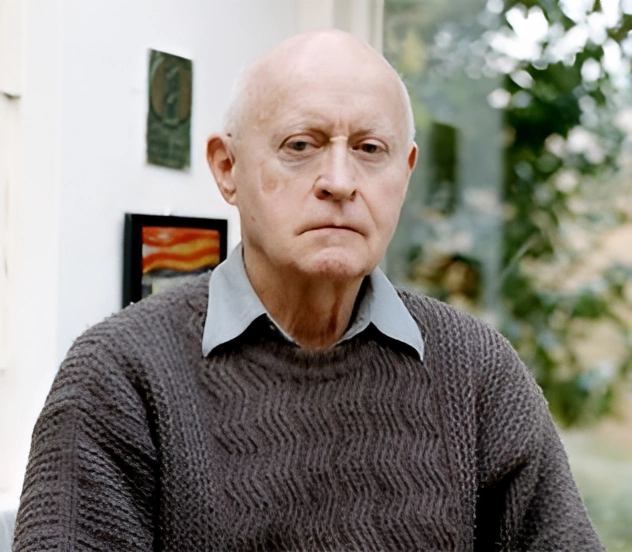
| 34 Quotes | |
| Occup. | Playwright |
| From | England |
| Born | July 18, 1934 Holloway, London, UK |
| Age | 91 years |
| Cite | |
Citation Formats
APA Style (7th ed.)
Edward bond biography, facts and quotes. (2026, February 11). FixQuotes. https://fixquotes.com/authors/edward-bond/
Chicago Style
"Edward Bond biography, facts and quotes." FixQuotes. February 11, 2026. https://fixquotes.com/authors/edward-bond/.
MLA Style (9th ed.)
"Edward Bond biography, facts and quotes." FixQuotes, 11 Feb. 2026, https://fixquotes.com/authors/edward-bond/. Accessed 26 Mar. 2026.
Early Life and Background
Edward Bond was born on July 18, 1934, in north London, a child of the Depression generation whose adolescence unfolded under the long shadow of the Second World War. He grew up amid the aftershocks of the Blitz, rationing, and bombsites that stayed in the landscape and in memory, forming an early education in how quickly civic order can be stripped to raw survival. Those years left him with a lifelong suspicion of official pieties and a sharper interest in what social systems do to ordinary people than in the consolations of private fate.Bond came of age as Britain tried to rebuild itself materially and morally, moving from wartime collectivism into the tensions of postwar austerity and the first bright glare of consumer culture. In that passage he found a defining contradiction: a society that celebrated decency and progress while tolerating class cruelty, institutional violence, and moral evasions. The young Bond absorbed London as a lived argument - public streets and public speech, the rough music of working life, the uneasy bargain between obedience and dignity - which later reappeared in his theatre as both setting and subject.
Education and Formative Influences
He left school relatively early and educated himself through voracious reading and intense attendance at the theatre, entering the profession without the credentialed path that shaped many of his contemporaries. The mid-century British stage offered him both provocation and permission: the emerging wave of new writing and social realism suggested that plays could talk directly about power, class, and the state, while earlier traditions - Greek tragedy, Shakespearean argument, and the moral rigors of European modern drama - supplied forms strong enough to carry political and psychological weight. From the start, he treated theatre less as entertainment than as a civic instrument, a place where public language might be tested under pressure.Career, Major Works, and Turning Points
Bond broke into prominence in the 1960s with plays that forced British theatre to confront the violences it preferred to keep offstage or sentimentalize: The Pope's Wedding (1962) announced a gritty, unsparing attention to social deprivation; Saved (1965), staged at the Royal Court, became infamous for its portrayal of brutality and helped accelerate the debate that led to the end of theatre censorship in Britain; and Early Morning (1967) extended his rage into surreal, satiric indictment. Later landmark works - including Lear (1971), his radical reimagining of Shakespeare; The Sea (1973); and Bingo (1973), a chilling meditation on Shakespeare and complicity - deepened his exploration of authority and moral failure. Over subsequent decades he wrote prolifically, often alongside rigorous essays and rehearsal practices, increasingly focused on the ethics of representation, the responsibilities of actors and audiences, and the possibility of a genuinely democratic theatre even as his relationship with mainstream institutions grew more contentious.Philosophy, Style, and Themes
Bond's theatre is driven by a moral intelligence that distrusts comfort. He does not present cruelty as spectacle or destiny; he presents it as a social product, made by ideas, habits, and institutions that teach people what to tolerate. This is why his plays are packed with ordinary settings and plain speech that suddenly turns dangerous - the moment when a community reveals the violence it has rationalized. In his own formulation, “Art is the close scrutiny of reality and therefore I put on the stage only those things that I know happen in our society”. The line is not a realist slogan so much as a psychological pledge: he writes as if denial is the central modern sin, and the stage must be a place where denial fails.Justice, for Bond, is not a theme among others but the axis around which theatrical meaning turns, because it is the measure of whether a society deserves loyalty. “In the end I think theatre has only one subject: justice”. That insistence helps explain the peculiar severity of his dramaturgy: he builds situations like moral experiments, pushing characters to the point where their language - excuses, commands, tenderness, ideology - either exposes their humanity or betrays it. Yet he resists the easy alibi that brutality is a natural constant; he stages violence to argue against it, not to worship it. “Violence is never a solution in my plays, just as ultimately violence is never a solution in human affairs”. His recurring figures - the abandoned child, the obedient functionary, the compromised artist, the frightened parent, the state that calls itself civilized - embody his fear that modern life trains people to confuse survival with goodness, and his hope that lucidity can reopen the possibility of change.
Legacy and Influence
Bond remains one of the decisive English dramatists of the postwar era: a writer whose controversies were inseparable from craft, because he forced theatre to argue publicly about censorship, responsibility, and what it means to represent harm. Saved did not only shock - it helped reshape the conditions of British playwriting by challenging legal and aesthetic restraints, while his later work offered directors and actors a demanding ethical vocabulary for performance. If his plays can be difficult, their difficulty is the point: they ask audiences to stop treating violence as an exception and start seeing it as a policy, a habit, or a convenience. Across generations of politically engaged theatre makers, Bond's influence persists as a standard of seriousness - a belief that drama is not a mirror held up to life, but a tool to interrogate how life is organized and how, if justice is the subject, it might be reorganized.Our collection contains 34 quotes written by Edward, under the main topics: Witty One-Liners - Ethics & Morality - Truth - Art - Justice.
Frequently Asked Questions
- Edward Bond Themes: Edward Bond's main themes include social justice, class struggle, violence, oppression, and the human condition, explored through his plays and writings.
- Edward Bond Lear: 'Lear' by Edward Bond is a radical re-telling of Shakespeare's King Lear, focusing on themes like violence, power, and social issues in a dystopian world.
- Edward Bond Poems: While Edward Bond is mostly known for his plays, he has also written poems that reflect his socio-political views, often published alongside his plays.
- Edward Bond Theory: Edward Bond's theory emphasizes social realism, portraying the struggles and issues faced by the working class in society through his plays.
- How old is Edward Bond? He is 91 years old
Edward Bond Famous Works
- 1995 The Worlds (Collection of Plays)
- 1978 The Bundle (Play)
- 1978 The Woman (Play)
- 1975 The Fool (Play)
- 1973 The Sea (Play)
- 1973 Bingo (Play)
- 1971 Lear (Play)
- 1968 Narrow Road to the Deep North (Play)
- 1968 Early Morning (Play)
- 1965 Saved (Play)
Source / external links