
Edward Fitzgerald Biography Quotes 15 Report mistakes
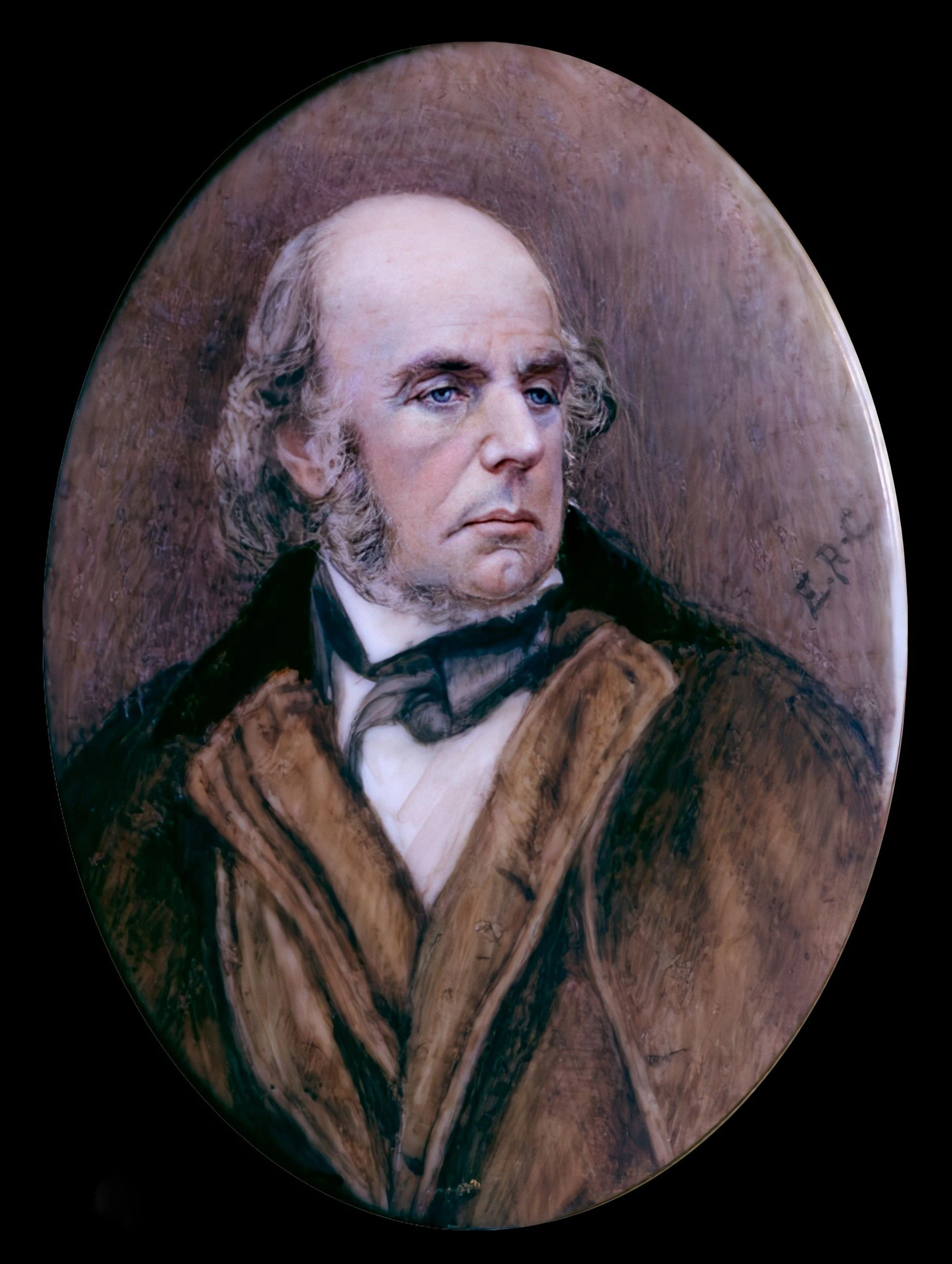
Attr: Eva Rivett-Carnac
| 15 Quotes | |
| Occup. | Poet |
| From | United Kingdom |
| Born | March 31, 1809 Suffolk, England |
| Died | July 14, 1883 Woodbridge, Suffolk, England |
| Aged | 74 years |
| Cite | |
Citation Formats
APA Style (7th ed.)
Edward fitzgerald biography, facts and quotes. (2026, February 11). FixQuotes. https://fixquotes.com/authors/edward-fitzgerald/
Chicago Style
"Edward Fitzgerald biography, facts and quotes." FixQuotes. February 11, 2026. https://fixquotes.com/authors/edward-fitzgerald/.
MLA Style (9th ed.)
"Edward Fitzgerald biography, facts and quotes." FixQuotes, 11 Feb. 2026, https://fixquotes.com/authors/edward-fitzgerald/. Accessed 5 Mar. 2026.
Early Life and Background
Edward FitzGerald was born on March 31, 1809, into a wealthy East Anglian family whose fortunes were tied to land and empire. He entered the world at Bredfield House near Woodbridge, Suffolk, but spent portions of childhood in France and in London, absorbing early the sense of being both privileged and slightly out of place - a condition that would later harden into a deliberate stance of semi-withdrawal from public life.In the 1810s-1820s Britain was moving through post-Napoleonic unease into industrial transformation, and FitzGerald watched from the sheltered side of the social divide. Family inheritance allowed him to live without a profession, yet that freedom became its own pressure: he cultivated a private, self-critical temperament, suspicious of cant, impatient with ambition, and prone to bouts of melancholy that he managed by friendship, reading, and the consolations of the coastal landscape of Suffolk.
Education and Formative Influences
He attended Bury St Edmunds School and then Trinity College, Cambridge (matriculated 1826; BA 1830), where he formed friendships that anchored his inner life: William Makepeace Thackeray, James Spedding, and especially Alfred Tennyson. Cambridge gave him not only classics but a model of male intellectual intimacy - witty, skeptical, emotionally reticent - that suited him. Romantic and post-Romantic literature sharpened his ear for cadence; the era's religious debates sharpened his resistance to dogma. He learned to distrust systems that promised certainty and to prefer the felt truth of a line or a voice.Career, Major Works, and Turning Points
FitzGerald published little under his own name for decades, living mostly in Suffolk, visiting friends, and writing letters of remarkable clarity and tone. His early books were translations and "free renderings" rather than original lyrics: Euphranor (1851), a Socratic dialogue on education; Six Dramas of Calderon (1853); and the idiosyncratic, artful translation of Aeschylus' Agamemnon (published 1865). The decisive turning point came through Persian studies with Edward Byles Cowell, who steered him to Omar Khayyam. FitzGerald's Rubaiyat of Omar Khayyam appeared anonymously in 1859 in a small London printing and initially languished; only later, as Pre-Raphaelites and late-Victorian aesthetes discovered its bleak music and sensual stoicism, did it become one of the most influential poems in English, eclipsing nearly everything else he wrote.Philosophy, Style, and Themes
FitzGerald's defining artistic act was not invention but transmutation: he used translation as a mask that let him speak. His Rubaiyat is less an ethnographic Persia than a crafted interior landscape - an English skeptic ventriloquizing an imagined astronomer-poet to articulate doubts that Victorian propriety could barely admit. The poem's fatalism is tempered by tenderness toward ordinary pleasures, an ethic of attention rather than salvation: “The Wine of Life keeps oozing drop by drop, The Leaves of Life keep falling one by one”. The line is not merely memento mori; it is a psychological self-instruction, a way to endure time by measuring it in sensuous increments rather than theological endpoints.His style, built on balanced quatrains and aphoristic turns, makes resignation sound like lucidity. Underneath is a mind both rebellious and homesick for certainty, testing doctrines with irony and then retreating into rhythm. “Strange, is it not? That of the myriads who Before us pass'd the door of Darkness through, Not one returns to tell us of the Road Which to discover we must travel too”. That question is the emotional engine of the Rubaiyat: not militant atheism so much as a refusal to pretend. And when he writes, “The Moving Finger writes; and, having writ, Moves on: nor all your Piety nor Wit Shall lure it back to cancel half a Line, Nor all your Tears wash out a Word of it”. , the rhetoric is stern but therapeutic - an attempt to accept irreversibility, to discipline regret into art. Even his hedonism is chastened, less riot than compromise: if meaning cannot be proved, at least a human scale of joy and companionship can be defended against the void.
Legacy and Influence
FitzGerald died on July 14, 1883, in Merton, Norfolk, having lived to see the Rubaiyat become a cultural phenomenon. Its afterlife ran far beyond poetry: it fed Aestheticism, fin-de-siecle skepticism, and later popular quotation culture, shaping how English speakers voiced doubt, time-consciousness, and the desire to "make the most of it" without sermonizing. Scholars continue to debate the ethics of his liberties with Khayyam, but the larger fact remains: FitzGerald created an English classic whose music and psychology offered Victorians - and their successors - a language for mortality that is neither pious nor despairing, but unflinchingly human.Our collection contains 15 quotes written by Edward, under the main topics: Witty One-Liners - Truth - Mortality - Live in the Moment - God.
Other people related to Edward: F. Scott Fitzgerald (Author), William Hamilton Maxwell (Novelist), Robert Emmet (Activist)
Edward Fitzgerald Famous Works
- 1859 Rubaiyat of Omar Khayyam (Poem)
- 1853 Six Dramas of Calderon (Translation)
- 1852 Polonius: A Collection of Wise Saws and Modern Instances (Collection)
- 1851 Euphranor: A Dialogue on Youth (Book)
Source / external links