
Edward Forbes Biography Quotes 6 Report mistakes
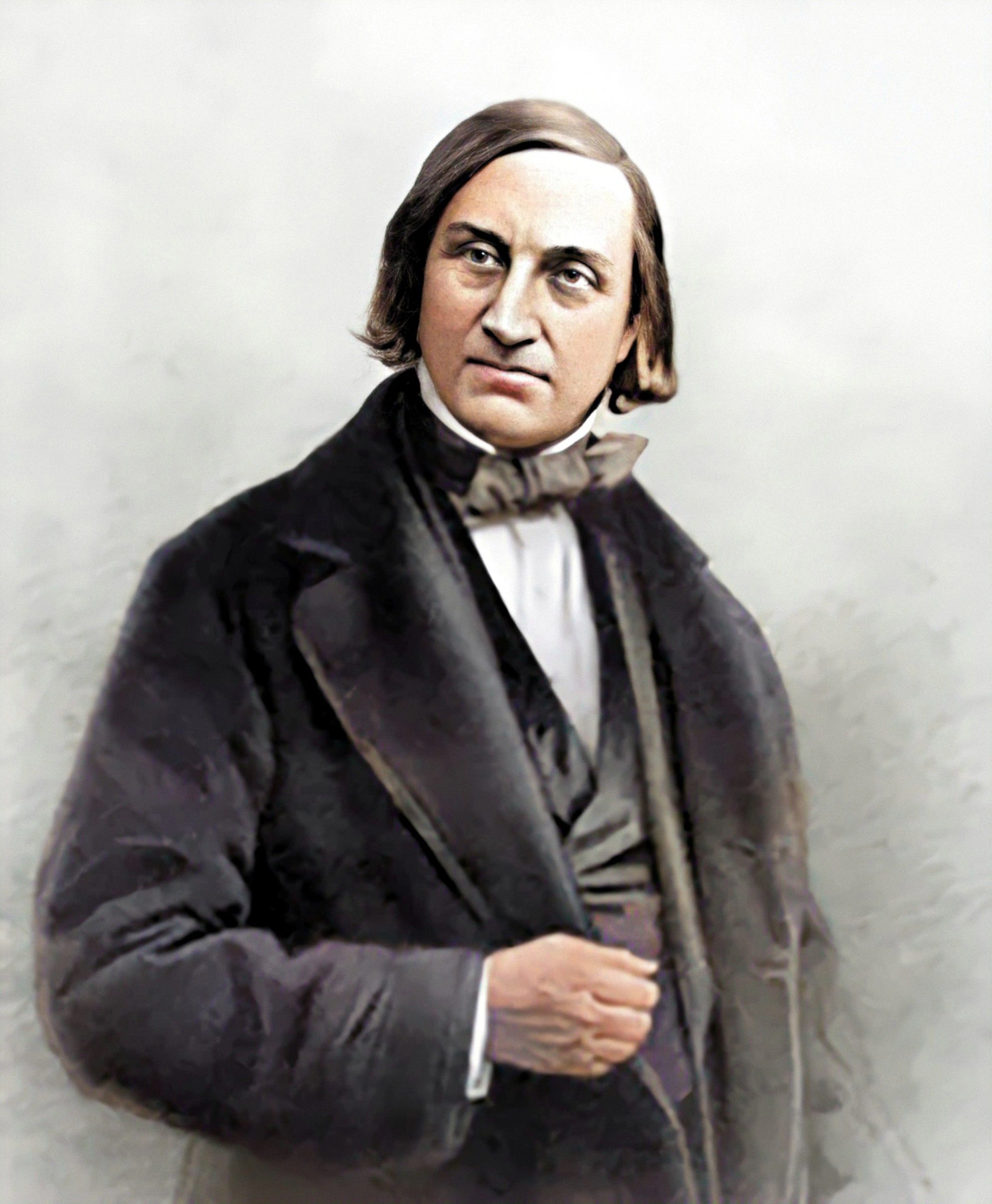
| 6 Quotes | |
| Occup. | Scientist |
| From | United Kingdom |
| Born | February 12, 1815 Douglas, Isle of Man |
| Died | November 18, 1854 Wardie, Edinburgh |
| Aged | 39 years |
| Cite | |
Citation Formats
APA Style (7th ed.)
Edward forbes biography, facts and quotes. (2026, February 11). FixQuotes. https://fixquotes.com/authors/edward-forbes/
Chicago Style
"Edward Forbes biography, facts and quotes." FixQuotes. February 11, 2026. https://fixquotes.com/authors/edward-forbes/.
MLA Style (9th ed.)
"Edward Forbes biography, facts and quotes." FixQuotes, 11 Feb. 2026, https://fixquotes.com/authors/edward-forbes/. Accessed 5 Mar. 2026.
Early Life and Background
Edward Forbes was born on 12 February 1815 on the Isle of Man, a maritime borderland where fishing grounds, kelp-strewn shores, and the tidal drama of the Irish Sea trained a boy's eye to think in zones and gradients. His family background was respectable but not wealthy; what he could command in abundance was proximity to nature and to seafaring talk. The Manx coast gave him two lifelong instincts: to treat the sea as a field site rather than a blank, and to make observation portable - something that could be done from a boat, a cliff, or a pocket notebook.From early on he combined restless curiosity with the social confidence to seek patrons, correspondents, and collaborators beyond his island. That temperament mattered in an era when British science was still partly club, partly profession: to rise, a naturalist needed not only specimens but networks. Forbes developed a practiced habit of turning local knowledge into general claims - a trait that later let him speak authoritatively about deep water, fossils, and the great question of how life is distributed in space and time.
Education and Formative Influences
He was educated first at home and in local schools, then moved through the intellectual corridors of early Victorian Britain: medical study in Edinburgh (where natural history and anatomy overlapped), time in London amid museum culture and scientific societies, and continental travel that widened his comparative eye. He did not complete a medical career; instead he chose the more precarious identity of naturalist, shaped by the period's fusion of geology with biology and by the rising prestige of fieldwork. Edinburgh's tradition of systematic classification, and the British Museum world of collections and correspondence, taught him to treat specimens as evidence for patterns, not merely curiosities.Career, Major Works, and Turning Points
Forbes made his reputation through marine zoology and biogeography, especially his dredging work in the Aegean and Mediterranean during the early 1840s, culminating in his influential "Report on the Mollusca and Radiata of the Aegean Sea" (1844). From those cruises he proposed a scheme of depth-zones and a controversial "azoic" deep-sea region, a hypothesis that made him famous even as later expeditions would overturn it. Back in Britain he became a central figure of Victorian natural history: paleontologist to the Geological Survey (1844), professor at King's College London (1852), and, shortly before his death, Regius Professor of Natural History at the University of Edinburgh (1854). He worked at high speed, publishing widely, curating, lecturing, and mentoring, while collaborating closely with the younger botanist Joseph Dalton Hooker on the "Natural History Review" and on broader questions of distribution. In 1854, just as his Edinburgh chair promised a more stable platform, he died on 18 November, only 39, leaving both finished works and a sense of momentum abruptly cut.Philosophy, Style, and Themes
Forbes wrote like a field naturalist trying to turn wet, messy particulars into legible order. His most characteristic move was to translate scenery into structure: shorelines into belts, seas into terraces, strata into chapters. The famous depth-zones were not simply a cataloging convenience; they reflected a mind drawn to thresholds and to the way environment molds form. He was also a comparative thinker who saw the sea as a testing ground for general laws, not a separate realm of marvels. “The naturalists of our own time hold equal faith in the wonders of the sea, but seek therein rather for the links of nature's chain than for apparent exceptions”. The sentence is revealing: he distrusted freakishness and preferred continuity, the notion that nature's surprises would still fit into a chain if the links could be found.That preference for continuity coexisted with a darkening gradient in his imagination of depth. As dredges came up poorer with increasing fathoms, he wrote with a dramatist's sense of descent: “As we descend deeper and deeper in this region its inhabitants become more and more modified, and fewer and fewer, indicating our approach towards an abyss where life is either extinguished, or exhibits but a few sparks to mark its lingering presence”. Here the psychology is plain - a man both thrilled and chastened by limits, turning diminishing returns into a coherent boundary. His shorthand conclusion, “Zero of Animal Life probably about 300 fathoms”. , shows the same urge to mark nature with a line, to stabilize uncertainty with a number. Even where later science proved the line misplaced, the underlying impulse was methodological: he wanted hypotheses bold enough to be tested, not merely impressions.
Legacy and Influence
Forbes's enduring influence lies less in the specific claim of an azoic deep sea than in the modern habits he helped normalize: zonation as an ecological concept, distribution as a historical problem, and dredging as a systematic tool rather than a gentleman's amusement. His synthesis of marine biology with geology shaped Victorian biogeography and helped prepare the conceptual terrain on which Darwinian thinking would later compete, argue, and consolidate. He was remembered as a brilliant organizer of facts, a vivid lecturer, and a scientist who made big patterns speak from small shells and muddy bottoms - a life compressed, but intensely catalytic, at the hinge of natural history becoming natural science.Our collection contains 6 quotes written by Edward, under the main topics: Science - Ocean & Sea.
Edward Forbes Famous Works
- 1859 The Natural History of the European Seas (Book)
- 1843 Report on the Mollusca and Radiata of the Aegean Sea (Book)
- 1841 A History of British Starfishes and other animals of the class Echinodermata (Book)
Source / external links