
Edward Hopper Biography Quotes 29 Report mistakes
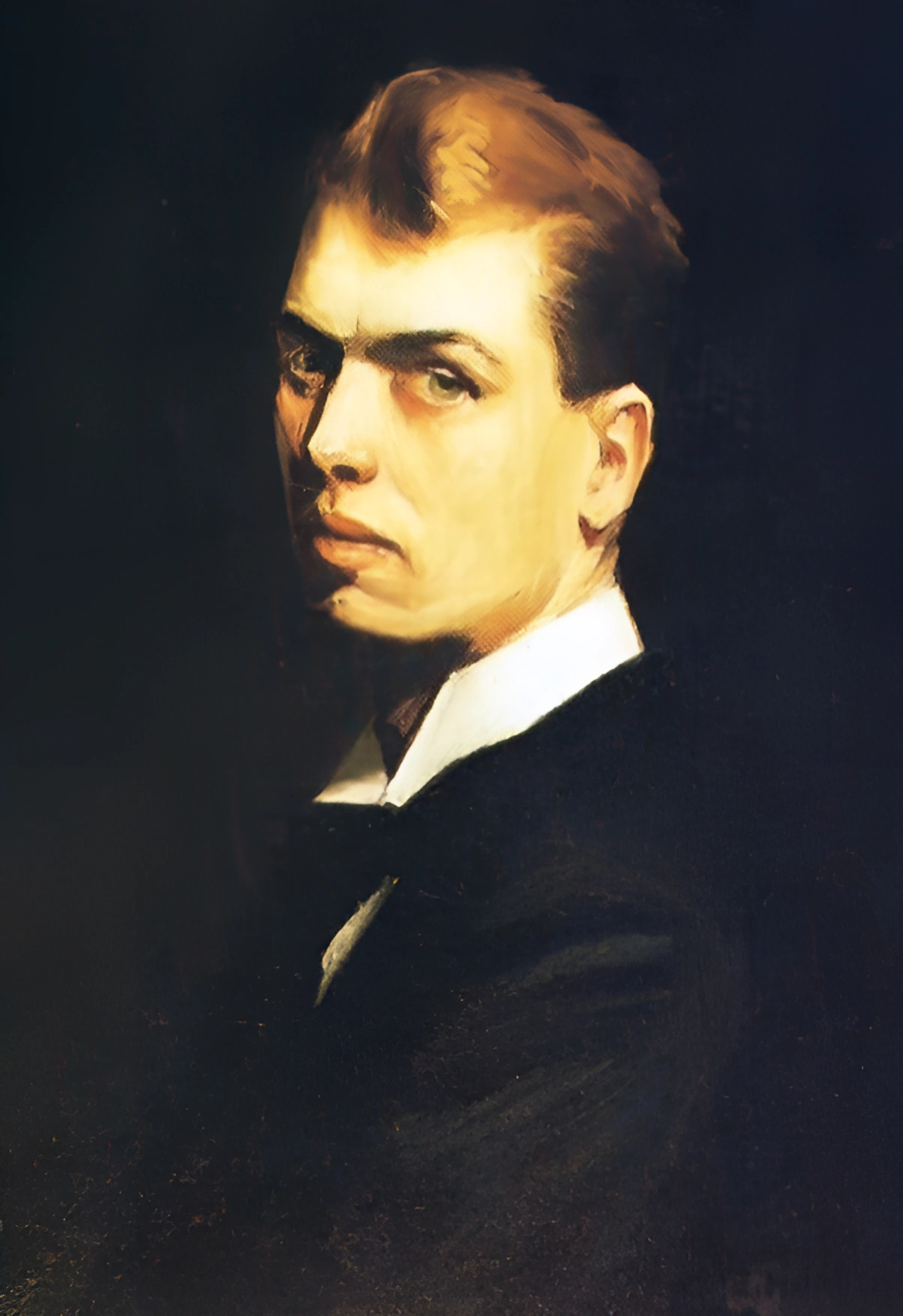
| 29 Quotes | |
| Occup. | Artist |
| From | USA |
| Born | July 22, 1882 Nyack, New York |
| Died | May 15, 1967 New York City, U.S. |
| Aged | 84 years |
| Cite | |
Citation Formats
APA Style (7th ed.)
Edward hopper biography, facts and quotes. (2026, February 11). FixQuotes. https://fixquotes.com/authors/edward-hopper/
Chicago Style
"Edward Hopper biography, facts and quotes." FixQuotes. February 11, 2026. https://fixquotes.com/authors/edward-hopper/.
MLA Style (9th ed.)
"Edward Hopper biography, facts and quotes." FixQuotes, 11 Feb. 2026, https://fixquotes.com/authors/edward-hopper/. Accessed 12 Feb. 2026.
Early Life and Background
Edward Hopper was born on July 22, 1882, in Nyack, New York, a Hudson River town where ferry landings, storefronts, and the geometry of late-day light were everyday facts. His father, Garrett Henry Hopper, worked in dry goods; his mother, Elizabeth Griffiths Smith Hopper, encouraged drawing and kept the household steady. The family was middle-class, Protestant, and orderly, and Hopper grew up with a sense of privacy that later hardened into something like guardedness.As a boy he built boats, read widely, and drew incessantly, already attracted to ships, Victorian houses, and the quiet drama of ordinary structures. Nyack offered both closeness and distance: a walkable main street, but also long views across water and fields that could make a person feel alone in plain sight. That tension between inhabited America and psychological remove became his lifelong terrain, sharpened by a temperament friends described as reserved, exacting, and slow to warm.
Education and Formative Influences
In 1900 Hopper entered the New York School of Art (later Parsons), studying illustration and painting under William Merritt Chase, Robert Henri, and Kenneth Hayes Miller. Henri in particular pushed students toward modern urban subject matter and personal truth, aligning Hopper with the Ashcan circle without making him stylistically one of them. Hopper traveled to Europe three times (1906, 1909, 1910), spending most time in Paris but also visiting London, Brussels, Amsterdam, and Berlin; he absorbed Degas' cropped viewpoints, Manet's frankness, and the structural clarity of French painting while remaining skeptical of avant-garde theatrics. He returned convinced that his subject would be American life as he actually met it, shaped by cinema, architecture, and the glare-and-shadow of city streets.Career, Major Works, and Turning Points
For years Hopper supported himself as a commercial illustrator, a compromise he disliked but that disciplined his design sense and patience. Recognition came slowly: he sold his first painting in 1913, made incisive etchings in the 1910s and early 1920s, and gained real momentum after a 1924 exhibition of his watercolors; the same year he married fellow artist Josephine (Jo) Nivison, who became his model, manager, and often his fiercest critic. A major turning point was the succession of mature canvases that fixed his reputation: House by the Railroad (1925), Chop Suey (1929), Early Sunday Morning (1930), New York Movie (1939), Gas (1940), and Nighthawks (1942). He spent long stretches in New York and summers in New England, especially at his studio in Truro, Cape Cod, where lighthouses, dunes, and clapboard houses became laboratories for light, isolation, and the American vernacular. By mid-century he was widely exhibited and collected, even as he worked in a narrow, self-policed vocabulary.Philosophy, Style, and Themes
Hopper insisted that painting should carry what language cannot: "If you could say it in words there would be no reason to paint". The line is not a romantic slogan so much as a confession of temperament. He was not a talker, and his canvases function like controlled disclosures - emotionally charged, but edited, with nothing ornamental to soften them. His people, often modeled by Jo, sit, wait, stare, or turn away; the narrative is suspended at the moment when an inner life is most active and least explainable. His journals and letters suggest a man wary of sentimentality and performance, turning instead to the mute eloquence of a lit window, a hotel corridor, a theater aisle, or a sunstruck wall.His craft served that restraint. He painted slowly, building compositions from sketches, memory, and adjustment, yet he aimed at fidelity to felt experience rather than literal reportage: "My aim in painting has always been the most exact transcription possible of my most intimate impression of nature". Light in Hopper is not simply illumination - it is a psychological instrument, separating bodies from rooms, exposing surfaces while withholding motives. He could sound almost brutally reductionist about his goals, as when he admitted, "Maybe I am not very human - what I wanted to do was to paint sunlight on the side of a house". The remark reads as self-defense and self-knowledge: by concentrating on light, edges, and architecture, he found a way to speak about desire, solitude, and modern alienation without rhetoric.
Legacy and Influence
Hopper died on May 15, 1967, in New York City; Jo died within a year, and their bequest enriched the Whitney Museum of American Art, ensuring his centrality in the American canon. His influence runs through realist and narrative painting, photography, and film: the nocturnal diner of Nighthawks echoes in cinema noir, Wim Wenders, and countless street photographers; his spare rooms and hard light inform artists from Fairfield Porter and Richard Diebenkorn to contemporary figurative painters. More broadly, Hopper helped define an American modernity that is neither heroic nor spectacular - a nation seen through thresholds, storefronts, and rented rooms, where the most decisive events are internal and the loudest sound is often the hum of electricity in an otherwise quiet night.Our collection contains 29 quotes written by Edward, under the main topics: Truth - Art - Nature - Self-Improvement - Journey.
Source / external links