
Edward T. Hall Biography Quotes 13 Report mistakes
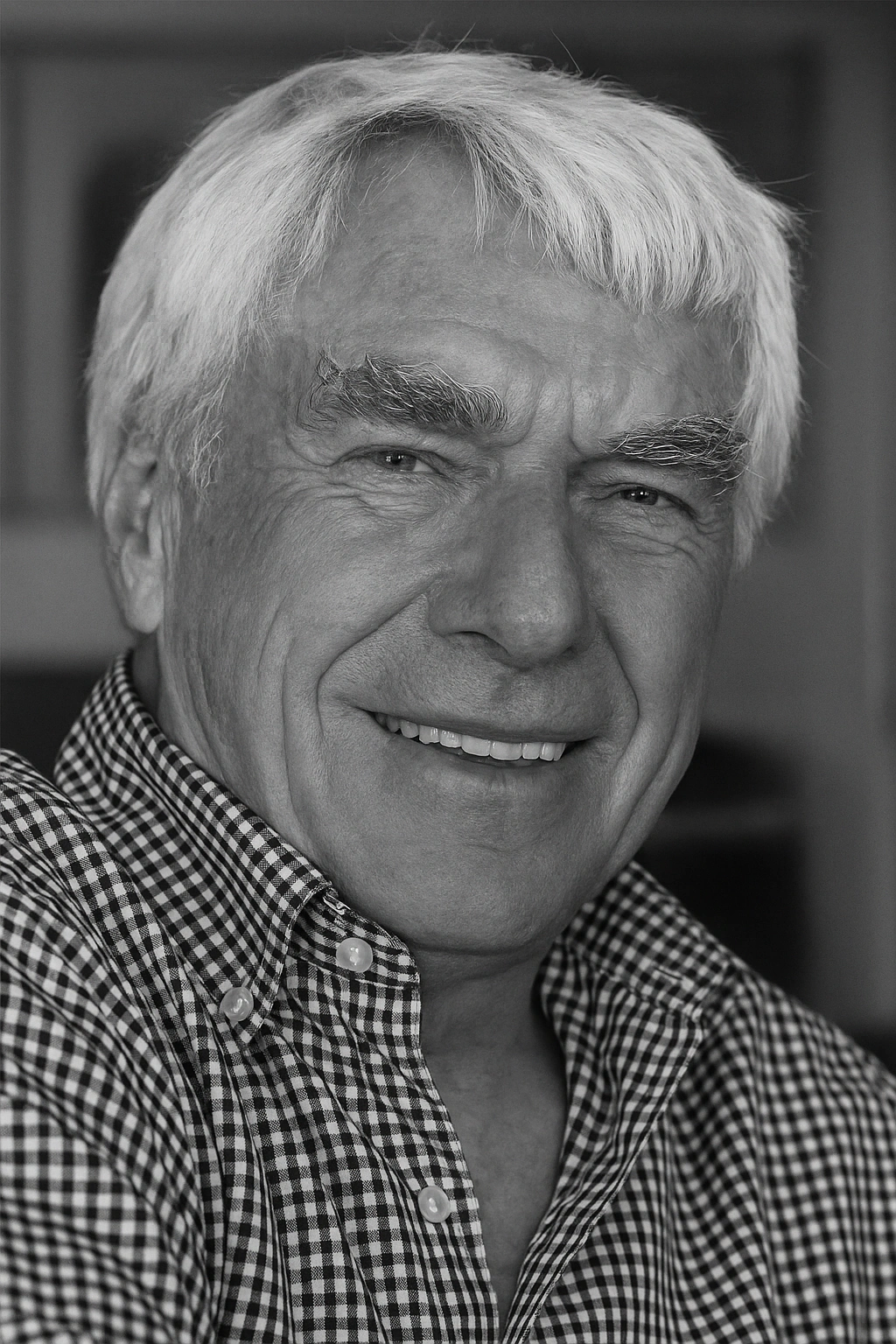
| 13 Quotes | |
| Born as | Edward Twitchell Hall Jr. |
| Occup. | Scientist |
| From | USA |
| Born | May 16, 1914 Webster Groves, Missouri, USA |
| Died | July 20, 2009 Santa Fe, New Mexico, USA |
| Aged | 95 years |
| Cite | |
Citation Formats
APA Style (7th ed.)
Edward t. hall biography, facts and quotes. (2026, February 11). FixQuotes. https://fixquotes.com/authors/edward-t-hall/
Chicago Style
"Edward T. Hall biography, facts and quotes." FixQuotes. February 11, 2026. https://fixquotes.com/authors/edward-t-hall/.
MLA Style (9th ed.)
"Edward T. Hall biography, facts and quotes." FixQuotes, 11 Feb. 2026, https://fixquotes.com/authors/edward-t-hall/. Accessed 26 Mar. 2026.
Early Life and Background
Edward Twitchell Hall Jr. was born on May 16, 1914, in the United States, into a century anxious about speed - trains, radios, wars, migration - and newly fascinated by what held societies together beneath politics and economics. That early atmosphere mattered: Hall would become a scientist of the unspoken, convinced that the decisive forces in human life often operate below the level of explicit belief. His later work reads like a long argument with modernity's faith in words, insisting that meaning is also carried by distance, timing, gesture, silence, and the built environment.He came of age between World War I and World War II, when the idea of "culture" was shifting from museum artifact to lived system. The period also trained him in ambiguity: Americans were learning, often painfully, that people who shared a planet did not share assumptions about personal space, authority, privacy, or time. Hall's biographical through-line is a temperament both empirical and impatient - the kind of mind that mistrusts abstractions until they can be observed in bodies, rooms, and everyday rituals.
Education and Formative Influences
Hall was trained as an anthropologist in the tradition shaped by Franz Boas and his students, in a discipline that valued fieldwork, close description, and cultural relativism over sweeping hierarchies. His formative influences included the mid-century turn toward applied social science - anthropology used not only to interpret distant communities but to solve problems of communication in government, education, and industry. That training gave him two lifelong habits: listening for pattern in ordinary behavior, and treating "normal" as local rather than universal.Career, Major Works, and Turning Points
After wartime-era service and postwar professional work that placed him near the practical needs of cross-cultural communication, Hall helped pioneer intercultural communication as a field. He taught, consulted, and wrote with unusual clarity for an anthropologist, translating research into tools that diplomats, business leaders, and educators could use. His key books - The Silent Language (1959), The Hidden Dimension (1966), and Beyond Culture (1976) - marked turning points in how nonverbal behavior, spatial norms (proxemics), and time systems (monochronic vs polychronic) were discussed in the mainstream. Across these works he argued that culture is not an accessory people put on, but a total environment that organizes perception itself.Philosophy, Style, and Themes
Hall's central claim was that culture is a covert grammar: it shapes what people notice, what they ignore, and what they think requires explanation. He resisted the idea of culture as costume or slogan, writing instead as a scientist of evolution and adaptation: “Culture is not made up but something that evolves which is human”. This was not sentimental pluralism; it was a hard-headed premise that made comparison possible without turning difference into deficiency. In Hall's psychology, curiosity functioned as a moral discipline - a refusal to treat one's own habits as the measure of reality.He also believed that self-knowledge is relational, earned only when another way of being is granted full legitimacy. “The reason man does not experience his true cultural self is that until he experiences another self as valid he has little basis for validating his own self”. That insight explains both the urgency and the occasional bluntness of his prose: he was trying to force readers to feel how deeply their assumptions run. His best-known distinctions - high-context vs low-context communication, monochronic vs polychronic time - were never meant as stereotypes so much as lenses for noticing. The ethical spine of the project is explicit in his injunction against cultural contempt: “We should never denigrate any other culture but rather help people to understand the relationship between their own culture and the dominant culture. When you understand another culture or language, it does not mean that you have to lose your own culture”. For Hall, the goal was not cultural tourism, but competence - the ability to live with difference without shrinking it into caricature.
Legacy and Influence
Hall died on July 20, 2009, after a long career that permanently widened the public vocabulary for discussing human interaction. His influence persists in anthropology, communication studies, organizational training, design, and international relations, where "proxemics", "high-context", and "polychronic time" remain working concepts. More enduring than any single term is the stance he modeled: treat everyday behavior as data, treat other peoples' worlds as coherent, and treat misunderstanding not as failure but as evidence that culture is doing its quiet work.Our collection contains 13 quotes written by Edward, under the main topics: Witty One-Liners - Truth - Wisdom - Art - Knowledge.
Frequently Asked Questions
- Edward T Hall personal space: A proxemics concept: culturally shaped zones of distance, intimate, personal, social, public.
- Edward T Hall communication theory: Meaning depends on context and nonverbal cues; cultures vary from high-context to low-context.
- Edward T Hall intercultural communication: Frameworks using context, time, and space to explain and improve cross-cultural interactions.
- Edward T Hall proxemics: Study of how people use space in communication, intimate, personal, social, and public distances.
- Edward T Hall Books: The Silent Language; The Hidden Dimension; Beyond Culture; The Dance of Life; Understanding Cultural Differences.
- Edward T Hall cultural dimensions: Context (high/low), time (mono/poly), and space (proxemics).
- Edward T Hall theory: Proxemics, high- vs low-context communication, and monochronic vs polychronic time.
- How old was Edward T. Hall? He became 95 years old
Edward T. Hall Famous Works
- 1990 Understanding Cultural Differences: Germans, French and Americans (Book)
- 1983 The Dance of Life: The Other Dimension of Time (Book)
- 1976 Beyond Culture (Book)
- 1966 The Hidden Dimension (Book)
- 1959 The Silent Language (Book)
Source / external links