
Edward Wilmot Blyden Biography Quotes 6 Report mistakes
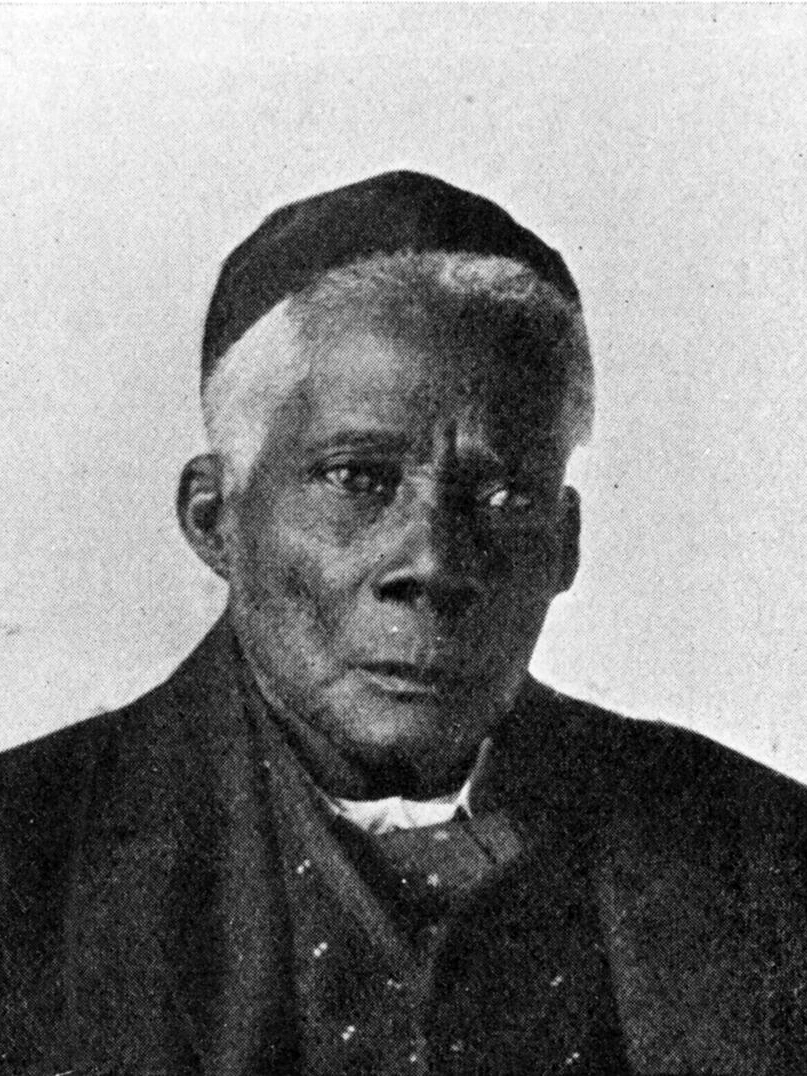
Attr: One More Voice
| 6 Quotes | |
| Occup. | Author |
| From | Liberia |
| Born | August 3, 1832 Saint Thomas, Danish West Indies |
| Died | February 7, 1912 Freetown, Sierra Leone |
| Aged | 79 years |
| Cite | |
Citation Formats
APA Style (7th ed.)
Edward wilmot blyden biography, facts and quotes. (2026, March 9). FixQuotes. https://fixquotes.com/authors/edward-wilmot-blyden/
Chicago Style
"Edward Wilmot Blyden biography, facts and quotes." FixQuotes. March 9, 2026. https://fixquotes.com/authors/edward-wilmot-blyden/.
MLA Style (9th ed.)
"Edward Wilmot Blyden biography, facts and quotes." FixQuotes, 9 Mar. 2026, https://fixquotes.com/authors/edward-wilmot-blyden/. Accessed 9 Mar. 2026.
Early Life and Background
Edward Wilmot Blyden was born in 1832 on St. Thomas in the Danish West Indies, into a free Black family shaped by the Atlantic world's violent traffic in slavery and by the equally powerful countercurrents of religion, literacy, and migration. His parents were of Igbo ancestry, and that fact mattered to him: throughout his life he treated Africa not as an abstraction but as an injured homeland recoverable through memory, language, and political effort. Raised in a Protestant environment, he showed unusual intellectual ambition early, absorbing scripture, public speaking, and the habits of self-discipline that would remain central to his character. In the Caribbean, where race fixed horizons with brutal efficiency, he learned both the humiliation imposed on Black aspiration and the psychological necessity of answering it with historical argument.A decisive blow came when, as a young man seeking further education in the United States, he was reportedly refused admission to a theological school on account of race. That rejection did not merely redirect his career; it clarified his life's problem. In 1851 he emigrated to Liberia, the Black republic founded by settlers from the United States, seeing in it both refuge and experiment. The move placed him at the hinge of several worlds - Caribbean, African American, settler Liberian, indigenous West African, and European imperial - and his writing would carry the tensions of all of them. From the start he was not simply a man of letters but a mind forged by displacement, affront, and the search for a civilizational role for African peoples.
Education and Formative Influences
Blyden's education was wide rather than conventionally institutional. In Liberia he worked as a journalist, teacher, and clergyman while pursuing languages, history, theology, and classics with formidable self-direction. He became associated with Liberia College, eventually serving as professor and later president, and he developed a rare command of Arabic and an informed respect for Islamic scholarship in West Africa. Mission Christianity shaped him deeply, yet so did his encounters with Muslim societies in Sierra Leone and beyond, which convinced him that African life could not be judged solely by European Christian measures. He read broadly in ethnology, scripture, political economy, and imperial debate, but his most formative influence was lived comparison: the contrast between Western claims of universal civilization and the actual denigration of Black peoples. Out of that contradiction he fashioned an intellectual method - historical, comparative, polemical, and prophetic.Career, Major Works, and Turning Points
Across six decades Blyden moved restlessly among scholarship, politics, diplomacy, journalism, and reform. He served the Liberian state in several capacities, including secretary of state and diplomatic representative in Britain and elsewhere, and he also worked in Sierra Leone, where his influence on public debate was immense. He edited newspapers, lectured across the Atlantic world, and wrote books that made him one of the 19th century's most important Black intellectuals: A Voice from Bleeding Africa, Christianity, Islam and the Negro Race, and numerous addresses later gathered in volumes such as African Life and Customs. A major turning point came through his sustained study of Islam, which led him to challenge missionary contempt and to argue that Islam had, in some regions, adapted more organically to African societies than European Christianity. Another came through the tightening grip of European imperialism in the late 19th century. As the Scramble for Africa accelerated, Blyden's thought grew more insistent on racial self-respect, African nationality, and the need for educated people of African descent in the diaspora to direct their talents toward the continent. Though never free of contradiction - especially on the place of Americo-Liberian elites and indigenous peoples - he remained a tireless architect of Pan-African possibility until his death in 1912 in Freetown.Philosophy, Style, and Themes
Blyden's central idea was that African peoples possessed a distinct historical vocation, not a derivative place in Europe's story. He rejected the premise that Black advancement meant mimicry. “The tropical blood that beats passionately in the veins of every Negro will manifest itself in a new social force, in new institutions, and a new literature”. That sentence reveals both his romantic essentialism and his strategic psychology: he answered racist pseudoscience with an affirmative racial metaphysic meant to heal humiliation and awaken collective ambition. He was one of the earliest major theorists of what would later be called African personality, insisting that climate, history, spirituality, and communal custom had formed values the modern world needed rather than outgrew.His prose combined sermon, ethnography, political brief, and civilizational prophecy. At its best it is urgent because it is diagnostic: he understood that domination worked by entering the mind. Hence his insistence, “Let us teach our children from their infancy... that we have as much right as any other people to strive to rise to the very zenith of national glory”. Education for Blyden was not mere instruction but psychic reconstruction. Yet his thought was not only defensive. He imagined Africa as a corrective to industrial modernity's spiritual exhaustion: “Africa may yet prove to be the spiritual conservatory of the world...” This was not naive pastoralism but a counterclaim about value - that the future might depend on civilizations Europe had dismissed. Even when overstated, the theme explains his enduring hold: he made Black dignity philosophically expansive, not merely reactive.
Legacy and Influence
Blyden's legacy is foundational to Pan-African and Black nationalist thought, even where later thinkers revised or rejected parts of his program. He helped establish the intellectual grammar later heard in Marcus Garvey, Henry Sylvester Williams, J.E. Casely Hayford, and many 20th century advocates of African self-determination: racial pride, historical recovery, diaspora responsibility, and skepticism toward European tutelage. He also influenced debates on Islam in Africa, African education, and the meaning of nationality in Liberia and Sierra Leone. Modern readers rightly note his limitations - his occasional cultural essentialism, elitist leanings, and uneven treatment of indigenous political realities - but those flaws belong to a mind wrestling with unprecedented pressures. What remains decisive is his audacity: long before decolonization, he argued that people of African descent were not remnants of a broken past but authors of a different future.Our collection contains 6 quotes written by Edward.
Source / external links