
Edward Young Biography Quotes 41 Report mistakes
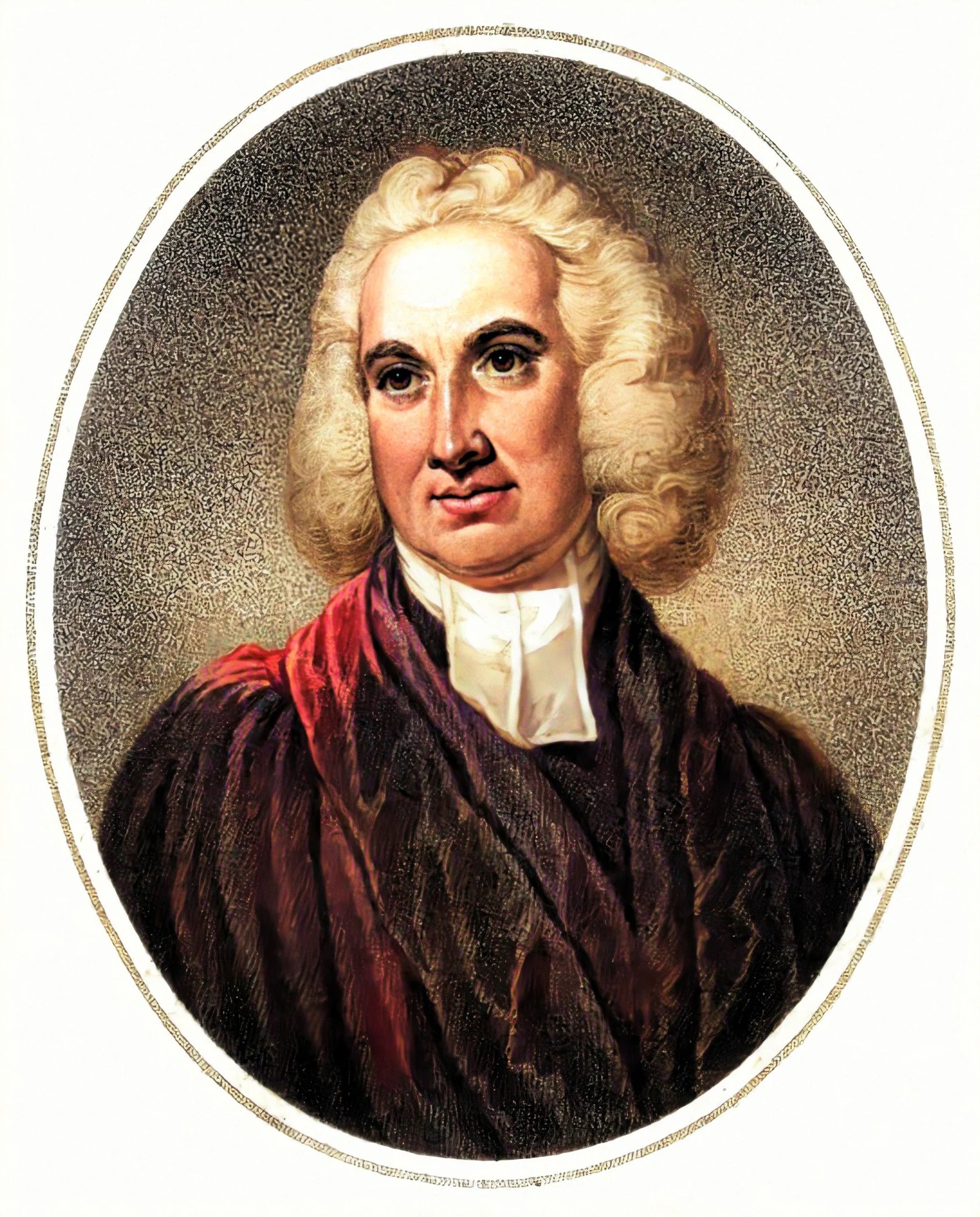
| 41 Quotes | |
| Occup. | Poet |
| From | England |
| Born | June 1, 1681 England |
| Died | April 5, 1765 England |
| Aged | 83 years |
| Cite | |
Citation Formats
APA Style (7th ed.)
Edward young biography, facts and quotes. (2026, February 2). FixQuotes. https://fixquotes.com/authors/edward-young/
Chicago Style
"Edward Young biography, facts and quotes." FixQuotes. February 2, 2026. https://fixquotes.com/authors/edward-young/.
MLA Style (9th ed.)
"Edward Young biography, facts and quotes." FixQuotes, 2 Feb. 2026, https://fixquotes.com/authors/edward-young/. Accessed 5 Mar. 2026.
Early Life and Background
Edward Young was born on June 1, 1681, in Upham, Hampshire, into the clerical and educated stratum of late Stuart England. His father, Edward Young Sr., was an Anglican rector who later became Dean of Salisbury, placing the household inside the Church of England's patronage networks and the moral-emotional atmosphere of the pulpit. Young grew up as the country still bore the marks of civil war memory, while the "Glorious Revolution" settlement stabilized monarchy and church - conditions that rewarded a talented writer who could speak in both public and devotional registers.From early on, Young absorbed a double vision: the social ambition of a son positioned near power, and the spiritual pressure of a world read as providential text. That tension - between courtly advancement and the soul's ledger - never left him. Even when he would later write in the language of the cosmos, the emotional engine remained personal: status, gratitude, injury, fear of loss, and the longing to make suffering signify.
Education and Formative Influences
Young was educated at Winchester College and entered Oxford, studying at New College before moving to All Souls; he took degrees that prepared him for public life and ecclesiastical preferment, and he learned the Augustan art of couplet balance while also steeping himself in classical moralists and Anglican apologetics. The early eighteenth century was an age of reasoned faith, satire, and party allegiance; Young formed amid that mix, admiring the polish of Pope and Dryden while keeping one eye on the sermon, the other on the minister's staircase. His earliest verse and dedications show the period's economy of letters: poetry as both art and petition.Career, Major Works, and Turning Points
Young sought advancement through patrons and public verse, gaining notice with works such as "The Love of Fame, the Universal Passion" (1725-1728), a sharp, generalized anatomy of ambition and reputation in Walpole-era Britain. He took holy orders relatively late, becoming chaplain to George II in 1730 and later receiving the rectory of Welwyn, Hertfordshire, where he would spend much of his remaining life. His defining turning point was bereavement: the deaths of close family members, including his stepdaughter Elizabeth Lee and his wife, Mary Lee, darkened his inner weather and redirected his voice. Out of that grief came "The Complaint, or Night Thoughts on Life, Death, and Immortality" (1742-1745), a long, meditative poem that made mortality, conscience, and eternity his public subject and his private argument.Philosophy, Style, and Themes
Young's psychology was built around urgency - the sense that time is not neutral but prosecutorial. In "Night Thoughts", the speaker repeatedly watches the mind dodge its own finitude, then lashes it back to attention: “All men think all men mortal, but themselves”. The line is less a cynical observation than a self-indictment, revealing how Young understood denial as a universal reflex and a personal temptation, especially for those cushioned by rank, learning, or routine. Grief becomes his proof-text: when the familiar world fractures, the intellect can no longer treat death as abstraction.His style bridges Augustan wit and pre-Romantic sublimity: epigram turns into vast night-sky canvases, and moral argument arrives as image, apostrophe, and sudden aphorism. He distrusted slow reform of the self, warning that character hardens into fate: “Be wise with speed; a fool at forty is a fool indeed”. Yet he was not merely severe; his religious imagination insisted that even pain could yield instruction, that nature itself could be read as pedagogy: “On every thorn, delightful wisdom grows, In every rill a sweet instruction flows”. Together these sentences map a mind trying to convert suffering into meaning without sentimentalizing it - a preacher-poet translating private losses into a general ethics of attention, haste, and humility.
Legacy and Influence
Young died on April 5, 1765, at Welwyn, having become one of the eighteenth century's most widely read moral poets. "Night Thoughts" circulated across Europe, helped shape the English "graveyard" tradition, and fed later sensibilities that prized introspection, nocturnal imagery, and the rhetoric of the sublime; it also left a durable vocabulary for confronting death as a psychological event rather than a mere doctrine. If his earlier satires anatomized society's hunger for esteem, his later masterpiece made him a poet of inner weather - the conscience under pressure - and his enduring influence lies in that pivot: the transformation of personal bereavement into a public, still-quotable meditation on how humans evade, then finally face, the fact of their own ending.Our collection contains 41 quotes written by Edward, under the main topics: Witty One-Liners - Ethics & Morality - Wisdom - Truth - Friendship.
Other people related to Edward: Robert Blair (Poet)
Frequently Asked Questions
- Edward Young Director: There is no prominent record of Edward Young working as a director. He was primarily known as a graphic designer.
- Edward Young Designer: Edward Young was a British graphic designer famous for his work on the original Penguin paperback book covers and their iconic design.
- Edward Young Queen: Edward Young hasn't designed a queen, but he is most known for his design of the iconic British Penguin paperback book covers.
- How old was Edward Young? He became 83 years old
Edward Young Famous Works
- 1755 The Centaur not Fabulous: In Six Letters to a Friend; on the Life in Vogue (Letter)
- 1742 The Complaint, or Night Thoughts (Poem)
- 1728 Ocean: An Ode (Poem)
- 1725 The Love of Fame, the Universal Passion (Poem)
- 1714 The Force of Religion or Vanquished Love (Tragedy)
- 1713 The Last Day (Poem)
Source / external links