
Edwin Edwards Biography Quotes 4 Report mistakes
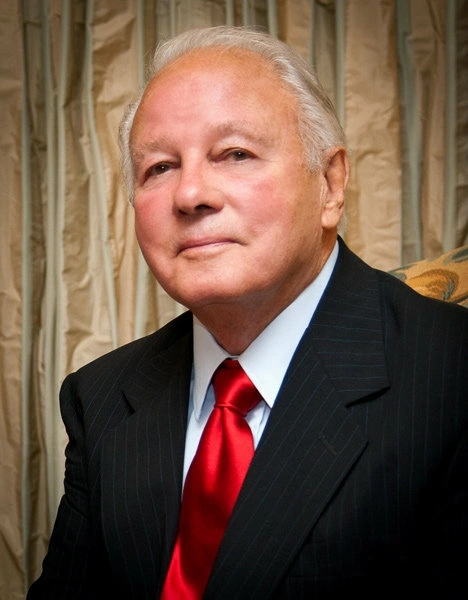
| 4 Quotes | |
| Born as | Edwin Washington Edwards |
| Occup. | Politician |
| From | USA |
| Born | August 7, 1927 Marksville, Louisiana |
| Age | 98 years |
| Cite | |
Citation Formats
APA Style (7th ed.)
Edwin edwards biography, facts and quotes. (2026, February 11). FixQuotes. https://fixquotes.com/authors/edwin-edwards/
Chicago Style
"Edwin Edwards biography, facts and quotes." FixQuotes. February 11, 2026. https://fixquotes.com/authors/edwin-edwards/.
MLA Style (9th ed.)
"Edwin Edwards biography, facts and quotes." FixQuotes, 11 Feb. 2026, https://fixquotes.com/authors/edwin-edwards/. Accessed 12 Feb. 2026.
Early Life and Background
Edwin Washington Edwards was born on August 7, 1927, in Marksville, Louisiana, a small Cajun-country town shaped by courthouse politics, river commerce, and the long aftershadow of Huey Long-style populism. His father was a sharecropper-turned-law officer, and the household mixed Catholic discipline with a practical understanding that status in Louisiana could be earned through grit, charm, and proximity to power. The Great Depression and World War II years hardened the state into a place where patronage and public works were not abstractions but lifelines, and Edwards absorbed early the vernacular of deal-making as a kind of local language.He served briefly in the U.S. Navy at the end of World War II, then returned to a Louisiana that was modernizing unevenly - oil money and petrochemicals rising alongside entrenched segregation and machine politics. Those tensions would become the stage of his adult life: a politician selling efficiency and growth while navigating, and often embodying, the moral ambiguities of a one-party Democratic South in transition.
Education and Formative Influences
Edwards studied at Louisiana State University (LSU) and earned a law degree, entering a profession that in mid-century Louisiana doubled as an apprenticeship in politics. The bar, the legislature, and the courthouse were interconnected arenas; mentors and rivals were often the same people, and ambition required fluency in both policy and personality. He married Elaine Schwartzenburg in 1949, building a public image of family stability even as he cultivated the social presence that would later define him - quick with jokes, attentive to crowds, and instinctively aware that voters often judged leaders by confidence as much as by ledger sheets.Career, Major Works, and Turning Points
Edwards moved from the Louisiana House of Representatives to the state Senate, then to the U.S. House (1965-1972), before winning the governorship in 1971. He served four terms as governor of Louisiana (1972-1980, 1984-1988, 1992-1996), an unusually long reign marked by expansive spending during boom years, heavy capital projects, and a close association with the growth of legalized gambling and a permissive regulatory climate. His 1991 comeback campaign against former Ku Klux Klan leader David Duke - the election distilled into the slogan "Vote for the Crook. Its Important". - became his most fateful turning point: he returned to power as a bulwark against extremism, but also as a symbol of the state's habit of choosing the familiar operator over the unknown alternative. In 2000 he was convicted in federal court on racketeering and extortion-related charges tied to riverboat casino licensing, served time in federal prison, and later re-entered public life as a commentator and, briefly, a local candidate.Philosophy, Style, and Themes
Edwards governed as a showman-technocrat hybrid: rhetorically populist, privately transactional, and always attentive to the optics of command. His instincts were those of a courtroom advocate - control the room, define the frame, never concede the premise. The persona was built on bravado and calculated humor, a philosophy of politics as performance that treated scandal not as disqualification but as a contest of narratives. "The only way I can lose is if I'm caught in bed with either a dead girl or a live boy". The line was crude, but psychologically revealing: he understood that voters were weighing him not against ideals but against thresholds of disgust, and he implied he knew exactly where that line sat in Louisiana's political culture.His inner logic depended on compartmentalization - policy successes on one shelf, ethical scrutiny on another - and he defended legitimacy by narrowing the definition of wrongdoing to what could be proved, not what could be suspected. "I did not do anything wrong as a governor, even if you accept the verdict as it is, it doesn't indicate that". That sentence captures a mind skilled at legalistic self-exoneration and at preserving self-regard under pressure; it also reflects an era when federal prosecutors increasingly targeted statehouse corruption, shifting the battlefield from election day to the courtroom. Even his wry restraint toward institutions suggested strategic survival: "I never speak ill of dead people or live judges". In Edwards's world, power was personal, and the smartest fighter chose his targets carefully.
Legacy and Influence
Edwin Edwards died in 2021, leaving a legacy inseparable from Louisiana itself: charismatic governance entwined with the normalization of patronage, a champion of pragmatic moderation at moments of racial and ideological stress, and a cautionary emblem of how easily spectacle can eclipse accountability. His long career helped cement the modern template of the Southern "retail" politician - intimate with crowds, fluent in humor, and adept at turning moral controversy into a referendum on personality. Yet the same gifts that made him durable also made him dangerous to institutions: he taught successors that survival could be engineered through narrative control, coalition-building, and the art of making voters feel they were in on the joke, even as the bill for that joke was paid in public trust.Our collection contains 4 quotes written by Edwin, under the main topics: Witty One-Liners - Justice.
Other people related to Edwin: John Breaux (Politician)
Source / external links