
Edwin Land Biography Quotes 10 Report mistakes
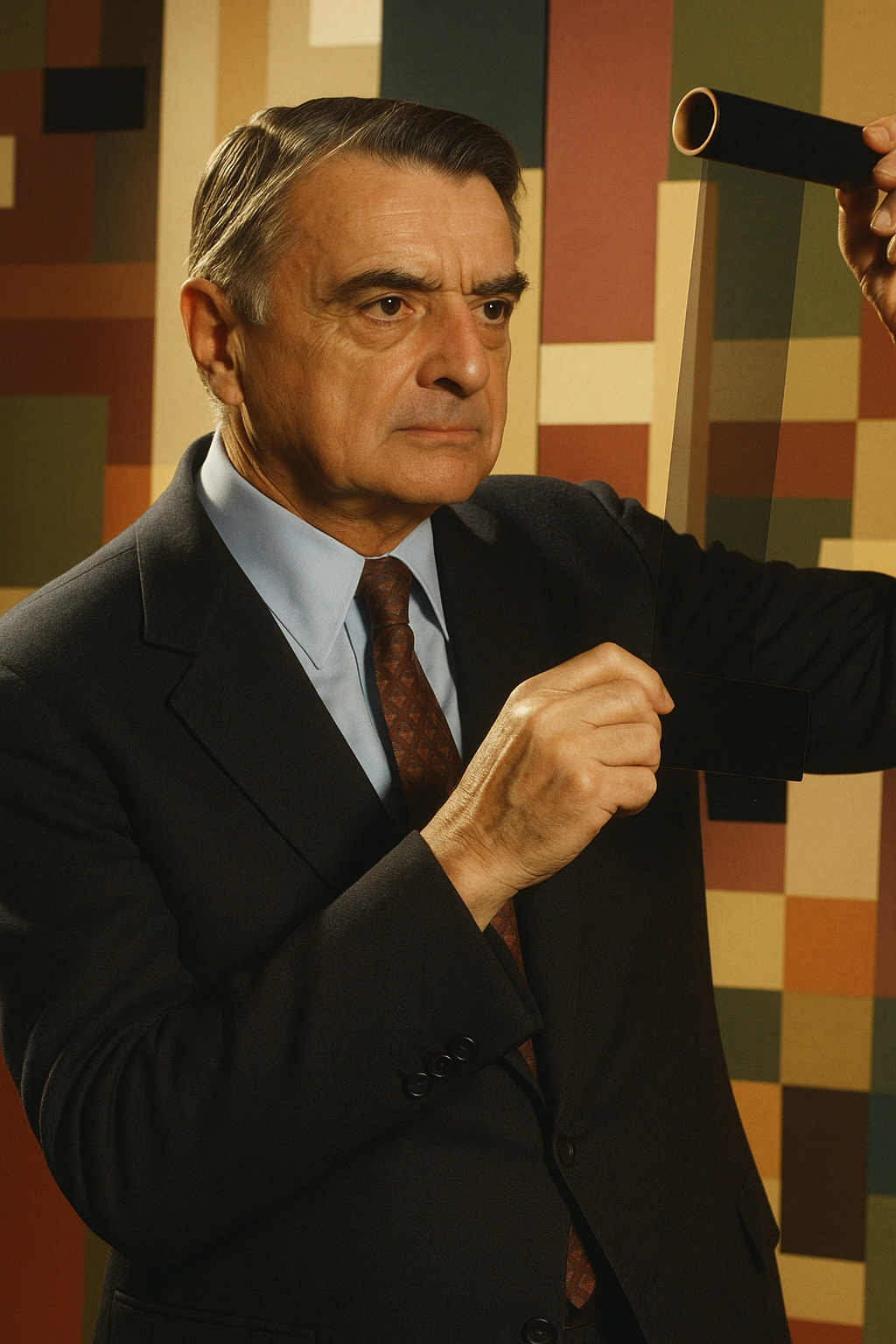
| 10 Quotes | |
| Born as | Edwin Herbert Land |
| Known as | Edwin H. Land |
| Occup. | Inventor |
| From | USA |
| Born | May 7, 1909 Bridgeport, Connecticut, United States |
| Died | March 1, 1991 Cambridge, Massachusetts, United States |
| Aged | 81 years |
| Cite | |
Citation Formats
APA Style (7th ed.)
Edwin land biography, facts and quotes. (2026, February 17). FixQuotes. https://fixquotes.com/authors/edwin-land/
Chicago Style
"Edwin Land biography, facts and quotes." FixQuotes. February 17, 2026. https://fixquotes.com/authors/edwin-land/.
MLA Style (9th ed.)
"Edwin Land biography, facts and quotes." FixQuotes, 17 Feb. 2026, https://fixquotes.com/authors/edwin-land/. Accessed 26 Mar. 2026.
Early Life and Background
Edwin Herbert Land was born on May 7, 1909, in Bridgeport, Connecticut, to Jewish immigrant parents who had come to the United States with the practical urgency of shopkeepers and the long view of strivers. He grew up in a country intoxicated by electricity, radio, and the idea that a lone tinkerer could become an industrialist. That cultural permission mattered: Land absorbed early the American faith that invention was not merely cleverness but a kind of moral work, a way to reorganize the world so it behaved.
As a boy he fixated on light itself, less as poetry than as an engineering problem with human stakes. Friends and family later recalled the intensity - a mind that did not drift so much as lock on. The era between World War I and the Great Depression formed his temperament: impatient with ceremony, hungry for results, and convinced that the future belonged to those who could make abstract science turn into objects people would hold in their hands.
Education and Formative Influences
Land entered Harvard but found the university tempo too slow for his particular obsession - creating a practical polarizer that could control glare and shape illumination. He left to pursue independent experiments, spending long hours in New York Public Library reading scientific literature and then returning to improvised lab work. That self-directed training, halfway between physics seminar and machine shop, became his lifelong method: learn just enough theory to aim, then iterate ruthlessly until matter complied.
Career, Major Works, and Turning Points
In 1932 he developed an inexpensive polarizing material (later branded as Polaroid), and in 1937 he founded the Polaroid Corporation in Cambridge, Massachusetts, turning a laboratory breakthrough into an industrial platform. The initial triumph was optical: polarized sunglasses and glare-reducing filters, wartime instruments, and a stream of patents that welded his name to a new way of seeing. The defining pivot came after a family moment - his young daughter famously asking why she could not see a photograph right away - which catalyzed Land's drive toward instant photography. In 1947 he demonstrated the first instant camera system, and in 1948 Polaroid sold the Model 95, an integrated camera-and-film process that produced a finished print in minutes. Later systems refined color (notably the 1963 color instant film), lowered friction for users, and culminated in the 1972 SX-70, a folding single-lens reflex camera with integral film that developed in daylight. Land led as inventor-executive, amassing hundreds of patents, shaping a research culture, and eventually clashing with the changing economics of imaging; he stepped down as CEO in the early 1980s, and died on March 1, 1991, in Cambridge.
Philosophy, Style, and Themes
Land's inner life reads like a disciplined kind of romanticism: he believed wonder should be manufactured, not merely admired. His standard for work was extremity - not incremental improvement, but the sort of leap that reorganizes a whole category. “Don't undertake a project unless it is manifestly important and nearly impossible”. The line is not a slogan so much as a psychological self-portrait: he needed problems large enough to justify his intensity and to quiet the ordinary doubts that accompany any long campaign of trial, error, and embarrassment.
His creativity also carried a moral edge against self-deception and social lubrication. “Science is a method to keep yourself from kidding yourself”. That insistence helps explain Polaroid's culture at its best - instrumented, argumentative, empirical - and Land's personal impatience with objections that were not testable. Yet his drive was not cold; it was directed toward human immediacy, the compression of time between desire and result. “If you dream of something worth doing and then simply go to work on it... it is amazing how quickly you get through those 5, 000 steps”. In Land's hands, that became a management style: set an audacious destination, then make the organization behave like a mind - focused, restless, and allergic to distraction.
Legacy and Influence
Land's enduring influence is visible in modern product culture: the idea that deep research can coexist with consumer elegance, and that a company can be built around a single, relentless technical vision. Instant photography shaped 20th-century visual life by making images immediate, intimate, and social long before digital screens - and it trained generations to expect technology to collapse waiting time. Even after Polaroid's later business upheavals, Land remains a template for the inventor-entrepreneur: a figure who treated optics and chemistry as instruments for emotion, and who proved that a hard scientific method can be harnessed to something as human as the desire to hold a moment in your hand.
Our collection contains 10 quotes written by Edwin, under the main topics: Witty One-Liners - Motivational - Work Ethic - Science - Servant Leadership.
Frequently Asked Questions
- Edwin Land inventions: Instant photography (Polaroid), sheet polarizer, polarized sunglasses, Vectograph 3D imaging
- Edwin Land family: Married Helen Maislen; two daughters (incl. Jennifer)
- Edwin Land book: Insisting on the Impossible: The Life of Edwin Land (Victor K. McElheny)
- Edwin Land daughter: Jennifer Land
- Edwin Land cause of death: Reportedly after a long illness
- How old was Edwin Land? He became 81 years old
Source / external links