
Edwin Louis Cole Biography Quotes 52 Report mistakes
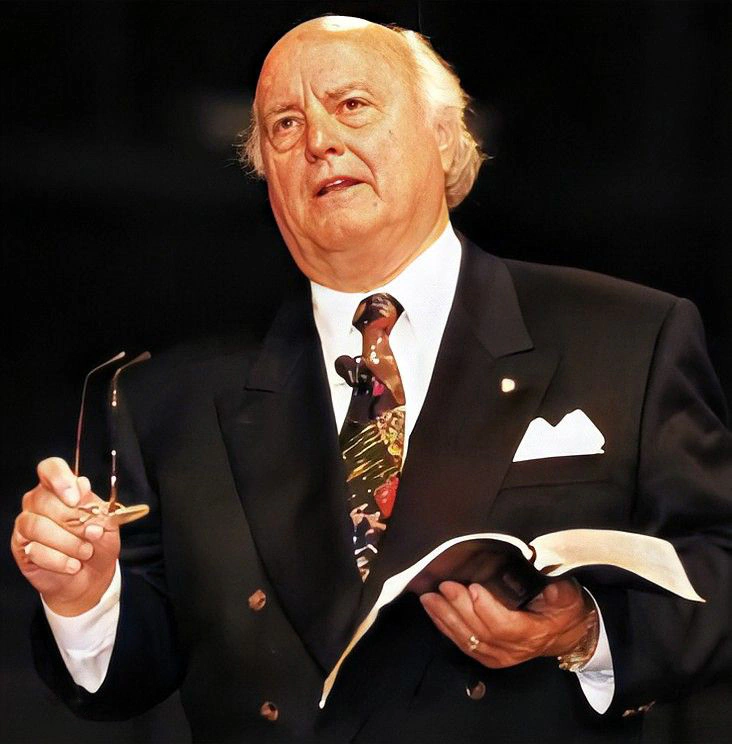
| 52 Quotes | |
| Known as | Ed Cole |
| Occup. | Author |
| From | USA |
| Born | September 10, 1922 Dallas, Texas, USA |
| Died | August 27, 2002 Dallas, Texas, USA |
| Aged | 79 years |
| Cite | |
Citation Formats
APA Style (7th ed.)
Edwin louis cole biography, facts and quotes. (2026, February 11). FixQuotes. https://fixquotes.com/authors/edwin-louis-cole/
Chicago Style
"Edwin Louis Cole biography, facts and quotes." FixQuotes. February 11, 2026. https://fixquotes.com/authors/edwin-louis-cole/.
MLA Style (9th ed.)
"Edwin Louis Cole biography, facts and quotes." FixQuotes, 11 Feb. 2026, https://fixquotes.com/authors/edwin-louis-cole/. Accessed 4 Mar. 2026.
Early Life and Background
Edwin Louis Cole was born on September 10, 1922, in the United States, coming of age in a nation reshaped by the Great Depression and then mobilized by World War II. Those twin shocks - economic austerity followed by global conflict - formed a generation that distrusted sentimentality and respected grit. Cole absorbed that mood: practical, direct, and oriented toward responsibility, especially the kind that begins at home and radiates outward.He later spoke and wrote with the cadence of a man who believed character was forged under pressure, not discovered in comfort. Long before he became known as a Christian author and teacher, his inner life appears to have been governed by a simple anxiety that many postwar leaders carried: that material prosperity could soften moral fiber. His work would repeatedly return to the costs of compromise and the possibility of renewal, offering a road back for men who felt they had drifted.
Education and Formative Influences
Cole did not build his reputation through elite literary credentialing so much as through ministry apprenticeship, Scripture-saturated study, and years of speaking to working adults rather than academic audiences. He was shaped by mid-20th-century American evangelicalism and the expanding world of Christian conferences, radio, and publishing, where ideas traveled quickly if they were memorable and actionable. The formative influences most visible in his later writing were revival preaching, the psychology of habits, and a pastoral concern for marriage and fatherhood as anchors of social stability.Career, Major Works, and Turning Points
Cole became widely known as the founder of the Christian Men's Network (CMN), an organization that promoted men's discipleship, integrity, and family leadership through events, teaching series, and partnerships with churches. As an author and conference speaker, he focused on the moral formation of men - not as a niche concern, but as a lever for cultural change. His books and curricula circulated broadly in evangelical circles, and his public role grew alongside late-20th-century "men's movement" currents that sought to answer rising divorce rates, sexual revolution aftershocks, and the felt absence of fathers. Across decades of teaching, a turning point in his public impact was the realization that men responded less to abstract theology than to clear patterns, memorable aphorisms, and practical steps that framed repentance as a forward march rather than a lifelong shame sentence.Philosophy, Style, and Themes
Cole's philosophy was built around stages: spiritual growth, relational maturity, and disciplined habits, all pursued with the urgency of a coach who believed the stakes were eternal and domestic at once. He spoke to the quiet interior world of temptation and discouragement, insisting that private decisions eventually surface as public outcomes. That is why his counsel often began where no one is watching: “Prayer in private results in boldness in public”. The line is less a slogan than a psychological map - he assumed courage is not manufactured by willpower alone, but by a hidden life that steadies the conscience.His style favored compressed moral logic and repeatable patterns, as if he were giving men handles to carry heavy truths. The theme of recovery after failure runs through his best-known maxims and teachings, crystallized in his insistence that collapse is not the end unless one refuses to rise: “You don't drown by falling in the water; you drown by staying there”. In that frame, shame is dangerous not because it hurts, but because it persuades a person to remain submerged. He applied similar pattern-thinking to family and marriage, portraying domestic life as the primary theater where virtue is proved: “Marriage may be the closest thing to Heaven or Hell any of us will know on this earth”. The extremity is intentional - Cole wanted readers to feel that covenant is not a hobby but a crucible, capable of revealing selfishness and producing holiness when met with responsibility.
Legacy and Influence
Cole died on August 27, 2002, leaving behind a body of teaching that helped define late-20th-century evangelical men's ministry in the United States and beyond. His legacy persists less through literary acclaim than through durable language and institutional reach: churches and men's groups continue to recycle his axioms because they compress moral clarity into sentences people remember under stress. Admirers credit him with challenging passive spirituality and calling men to husbandry, fatherhood, and disciplined inner life; critics sometimes note that such movements can oversimplify complex social problems. Yet the enduring influence is clear: Cole offered a vocabulary of responsibility and restoration that met his era's wounds head-on, and his work continues to function as a field manual for those who believe private holiness and public courage are inseparable.Our collection contains 52 quotes written by Edwin, under the main topics: Motivational - Ethics & Morality - Wisdom - Never Give Up - Love.
Edwin Louis Cole Famous Works
- 2001 Irresistible Husband (Book)
- 1995 Communication, Sex, and Money (Book)
- 1993 Sexual Integrity (Book)
- 1993 Strong Men in Tough Times (Book)
- 1982 Maximized Manhood (Book)
Source / external links