
Edwin Markham Biography Quotes 12 Report mistakes
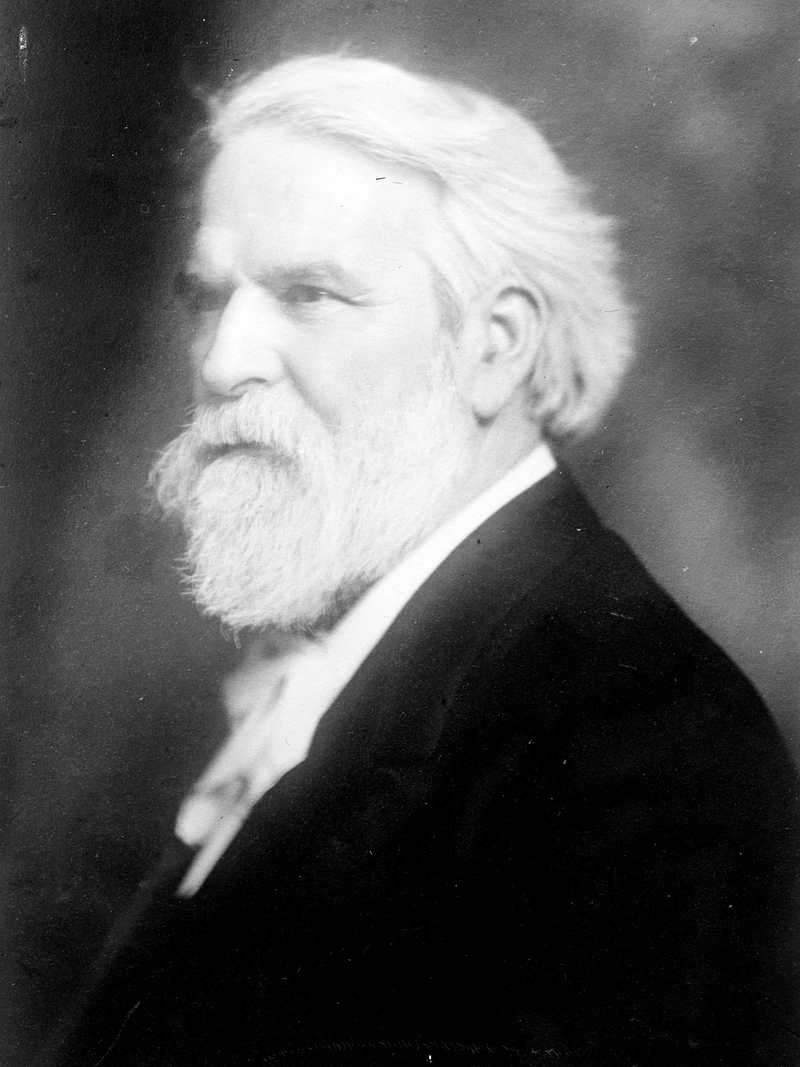
| 12 Quotes | |
| Occup. | Poet |
| From | USA |
| Born | April 23, 1852 |
| Died | March 7, 1940 |
| Aged | 87 years |
| Cite | |
Citation Formats
APA Style (7th ed.)
Edwin markham biography, facts and quotes. (2026, February 11). FixQuotes. https://fixquotes.com/authors/edwin-markham/
Chicago Style
"Edwin Markham biography, facts and quotes." FixQuotes. February 11, 2026. https://fixquotes.com/authors/edwin-markham/.
MLA Style (9th ed.)
"Edwin Markham biography, facts and quotes." FixQuotes, 11 Feb. 2026, https://fixquotes.com/authors/edwin-markham/. Accessed 12 Feb. 2026.
Early Life and Background
Edwin Markham was born April 23, 1852, in Oregon City in the Oregon Territory, an American borderland still being argued into statehood and identity. His parents were working-class pioneers, and his childhood was marked by displacement and scarcity as the family moved through the Pacific Northwest in search of steadier footing. The hardships were not abstract to him - they were daily weather, teaching him early how labor, land, and luck decide the boundaries of a life.Those early years put him close to the people who would later populate his moral imagination: farmers, mill hands, migrant families, and the aging poor. Markham carried forward a frontier sense that character is tested by conditions, not declared by pedigree. That background also gave him his lifelong double vision - wonder at the American promise, and anger at how easily that promise could be withheld from the exhausted and the unseen.
Education and Formative Influences
Largely self-made as a writer, Markham trained as a teacher and principal in California, reading widely while holding jobs that kept him among ordinary families rather than literary salons. He absorbed the era's moral earnestness and reform impulses, and he drew strength from the public lecture circuit and the culture of recitation - poetry as something spoken aloud to a crowd, meant to move consciences rather than merely ornament pages. By the 1890s he was living in the Bay Area, increasingly committed to a kind of civic poetry shaped by social Christianity, democratic idealism, and the new national debate over industrial labor.Career, Major Works, and Turning Points
Markham's national breakthrough came with "The Man with the Hoe" (first published in 1899), a scorching response to Jean-Francois Millet's famous painting that turned a mute peasant into an indictment of dehumanizing work and the civilization that profits from it. The poem was rapidly anthologized, recited, and argued over - praised by reformers and read as an attack on complacency in the Gilded Age. He followed it with volumes such as Lincoln and Other Poems (1901) and continued producing poetry, essays, and lectures while cultivating a reputation as a public conscience. Over time, as modernist tastes displaced Victorian oratory, his status shifted from headline-maker to emblem of an older prophetic mode, but he remained active in reform-minded cultural life into the early 20th century, dying March 7, 1940.Philosophy, Style, and Themes
Markham wrote as a moral witness. His most famous lines from "The Man with the Hoe" do not describe poverty politely; they force the reader to look at what an exploitative century manufactures: "Bowed by the weight of centuries he leans upon his hoe and gazes on the ground, the emptiness of ages in his face, and on his back the burden of the world". That sentence captures his psychology: empathy sharpened into accusation, a temperament that could not separate aesthetics from ethics. Even at his most lyrical, he wanted beauty to carry responsibility, to make the comfortable feel implicated.His guiding ethic was relational rather than purely individualistic. "There is a destiny which makes us brothers; none goes his way alone. All that we send into the lives of others comes back into our own". In Markham's inner life, this was not sentimental doctrine but a demand - a way to discipline pride and justify reform. His public voice repeatedly urged practice over piety: "We have committed the Golden Rule to memory; let us now commit it to life". Stylistically he favored clear rhetoric, biblical cadence, and the architecture of the platform speech - a poetry designed to be heard, to persuade, and to align private feeling with civic duty, even when that meant risking preachiness for the sake of urgency.
Legacy and Influence
Markham endures as a defining example of American social-protest verse at the turn of the 20th century, when poetry still competed with sermons and editorials as a mass moral instrument. "The Man with the Hoe" became a cultural shorthand for the costs of industrial civilization, influencing how reformers, teachers, and speakers framed the dignity of labor and the violence of neglect. Though later literary movements often dismissed his oratorical manner, his best work remains a record of an era's conscience - and a reminder that poetry can be not only lyric and private, but public, argumentative, and willing to stare at suffering until the reader feels compelled to respond.Our collection contains 12 quotes written by Edwin, under the main topics: Ethics & Morality - Justice - Meaning of Life - Kindness - Resilience.
Edwin Markham Famous Works
- 1899 The Man with the Hoe and Other Poems (Collection)
- 1898 The Man with the Hoe (Poetry)