
Edwin Moses Biography Quotes 20 Report mistakes
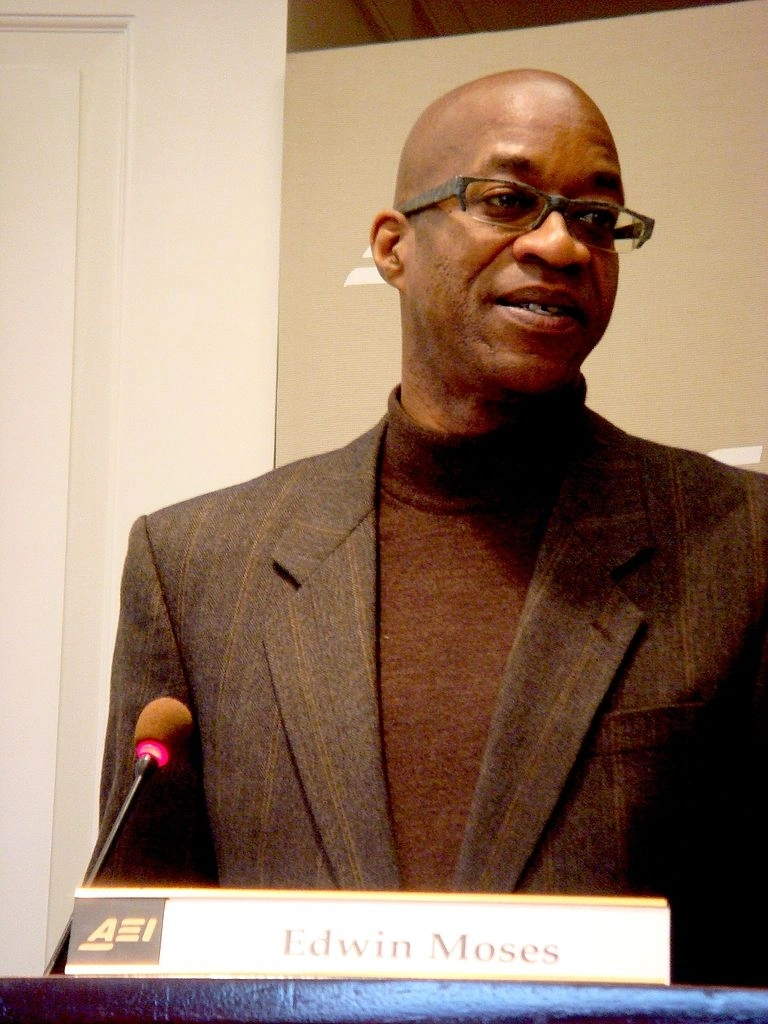
| 20 Quotes | |
| Occup. | Athlete |
| From | USA |
| Born | August 31, 1955 |
| Age | 70 years |
| Cite | |
Citation Formats
APA Style (7th ed.)
Edwin moses biography, facts and quotes. (2026, February 11). FixQuotes. https://fixquotes.com/authors/edwin-moses/
Chicago Style
"Edwin Moses biography, facts and quotes." FixQuotes. February 11, 2026. https://fixquotes.com/authors/edwin-moses/.
MLA Style (9th ed.)
"Edwin Moses biography, facts and quotes." FixQuotes, 11 Feb. 2026, https://fixquotes.com/authors/edwin-moses/. Accessed 6 Mar. 2026.
Early Life and Background
Edwin Corley Moses was born on August 31, 1955, in Dayton, Ohio, into a Black middle-class household shaped by postwar American optimism and the hard edges of segregation-era institutions still lingering in the Midwest. His early world was practical and orderly - a place where school, church, and neighborhood expectations placed a premium on discipline. Track was not initially destiny. Moses was a tall, cerebral kid with a methodical temperament, more drawn to understanding systems than to chasing applause, and he grew up during a period when American sport was becoming both a pathway to mobility and a stage for national identity.Family stability mattered. He has emphasized that “Both parents supported my becoming a world class athlete”. , a detail that helps explain the unusual steadiness of his later career: Moses did not need to invent belonging through sport; he could treat sport as an arena for mastery. That emotional baseline - support without indulgence - fed the self-contained, almost laboratory-like focus that would become his trademark as he entered an era when many athletes were beginning to see themselves as brands and political symbols as well as competitors.
Education and Formative Influences
Moses attended Morehouse College in Atlanta, arriving without the privileged pipeline that carried many elite athletes to national prominence; as he put it, “I didn't get an athletics scholarship at a major school”. At Morehouse he studied physics and engineering, and the campus environment - historically Black, intellectually ambitious, and socially demanding - reinforced his conviction that athletic excellence could be built, not merely discovered. The 1970s were also a moment when sport science, film analysis, and global training methods were accelerating, and Moses absorbed this wider technological turn, marrying it to an internal drive that was more curious than needy.Career, Major Works, and Turning Points
Moses emerged rapidly in the 400-meter hurdles, an event requiring not only speed but exact rhythm, stride length, and nerve under fatigue. After a key early lesson in accountability - “One of my major competitors was Harold Smith. Smith beat me in 1977. I was loafing during that competition”. - he became famously unsentimental about effort. He won Olympic gold in Montreal in 1976 and, over the next decade, dominated with a near-unbroken string of victories and repeated world records, his reign often summarized by the 122-race winning streak from 1977 to 1987. The Cold War context sharpened the meaning of each championship: the US boycott of the 1980 Moscow Games denied him an expected Olympic defense, but he returned to win again in Los Angeles in 1984 and later claimed a third Olympic gold in Seoul in 1988, solidifying a career that bridged the amateur-professional transition in global track and field.Philosophy, Style, and Themes
Moses approached hurdling as an engineering problem with psychological stakes. He described his edge in terms that reveal both temperament and method: “I used biomechanics to save time when I was competing”. That sentence is not just about technique; it exposes a personality that trusted measurement over myth and sought emotional safety in precision. In an event where panic can fracture stride pattern, Moses used quantified preparation to make pressure feel familiar, turning the lane into a controlled environment. His interest extended beyond American coaching orthodoxies - “In particular, I studied German and Russian biomechanics”. - a quietly radical openness during a period when Cold War rivalries often discouraged learning from the other side.His training ethic was equally psychological, centered on concentration as a trainable skill rather than a gift: “My concentration level blocks out everything. Concentration is why some athletes are better than others. You develop that concentration in training and concentrate in a meet”. The tone is revealing: not romantic, not confessional, but absolute. Moses did not merely endure pressure; he rehearsed it, building a mental tunnel where distractions could not enter. The effect was a racing style that looked calm even when brutal - a smooth cadence, minimal wasted motion, and a late-race authority that suggested he was executing a plan rather than improvising survival.
Legacy and Influence
Moses endures as a template for modern elite sport: the athlete as strategist, scientist, and advocate. His dominance changed expectations for the 400-meter hurdles, normalizing faster times and more rigorous technical modeling, while his public life helped push track and field toward stronger athlete representation and more professional standards. In the long view, his influence is less about any single record than about a philosophy made flesh - that excellence can be engineered through study, honesty about effort, and a mind trained to stay unshakeable when the race demands everything.Our collection contains 20 quotes written by Edwin, under the main topics: Never Give Up - Learning - Sports - Parenting - Work Ethic.
Source / external links