
Eileen Gu Biography Quotes 6 Report mistakes
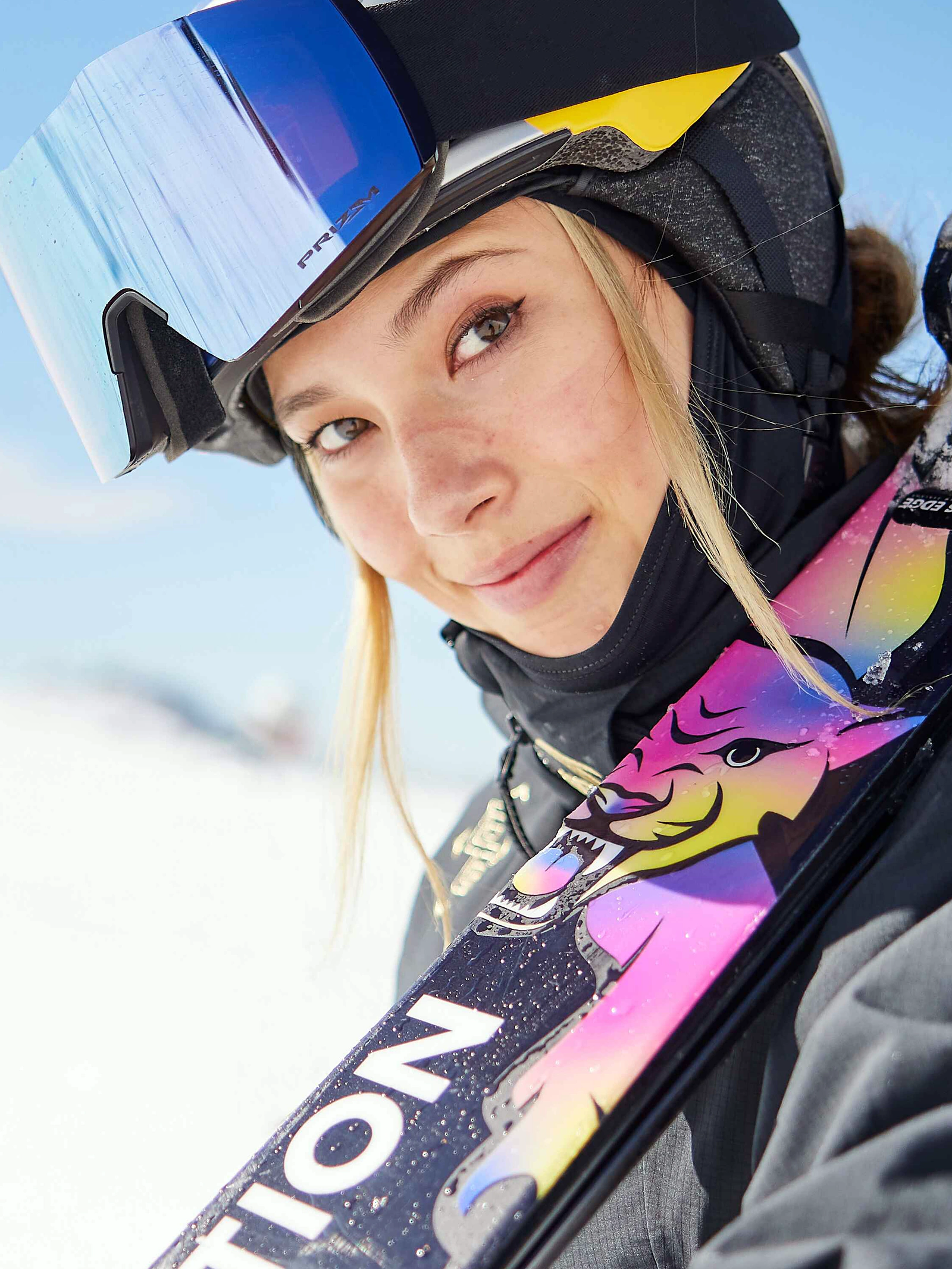
Attr: Eileen Gu – Faction Skis
| 6 Quotes | |
| Born as | Ailing Eileen Gu |
| Known as | Eileen Feng Gu |
| Native name | 谷爱凌 |
| Occup. | Athlete |
| From | China |
| Born | September 3, 2003 San Francisco, California, USA |
| Age | 22 years |
| Cite | |
Citation Formats
APA Style (7th ed.)
Eileen gu biography, facts and quotes. (2026, February 27). FixQuotes. https://fixquotes.com/authors/eileen-gu/
Chicago Style
"Eileen Gu biography, facts and quotes." FixQuotes. February 27, 2026. https://fixquotes.com/authors/eileen-gu/.
MLA Style (9th ed.)
"Eileen Gu biography, facts and quotes." FixQuotes, 27 Feb. 2026, https://fixquotes.com/authors/eileen-gu/. Accessed 20 Mar. 2026.
Early Life and Background
Eileen Gu, also known by her Chinese name Gu Ailing (Ailing Eileen Gu), was born in 2003 and raised in San Francisco, California, by her mother, Yan Gu, a Chinese immigrant. Her father, an American, was largely absent from public accounts, and Gu has tended to protect that part of her story, a choice that hints at an early instinct for privacy amid attention. She grew up in a bilingual, bicultural household that treated identity as practice rather than slogan: Mandarin at home, American schoolyard life outside it, and long summers in Beijing that kept family ties vivid and concrete.Skiing entered her life almost as a family ritual. From childhood, she traveled to Tahoe for winter training while returning to China during school breaks, inhabiting two national narratives at once. This back-and-forth shaped her temperament: unusually comfortable with scrutiny, quick to translate herself across audiences, and disciplined in managing time and expectation. Even before global fame, she carried the poise of someone used to being watched - and judged - from multiple angles.
Education and Formative Influences
Gu attended San Francisco University High School, where she paired elite athletics with a high academic load, later earning admission to Stanford University (planning to enroll after her initial Olympic cycle). Alongside formal schooling, her real education was logistical and psychological: balancing travel, sponsors, and training blocks; learning how elite sport monetizes personality; and absorbing the media environments of both the United States and China. Coaches and peers in freeskiing - a discipline where innovation is currency - reinforced a growth mindset, while her mother was widely described as the central strategist and stabilizing force behind her schedule, priorities, and long-term planning.Career, Major Works, and Turning Points
Gu rose quickly in freestyle skiing, especially in halfpipe, slopestyle, and big air, winning World Cup events and the overall park-and-pipe crystal globe in 2021. Her defining pivot came in 2019, when she announced she would represent China in international competition, a decision that placed her at the intersection of sport and geopolitics as the Beijing 2022 Winter Olympics approached. In Beijing, she became one of the Games' signature athletes, winning gold in big air and halfpipe and a silver in slopestyle, her high-difficulty, high-commitment runs becoming instant reference points for the sport. Off the snow, major endorsement campaigns and fashion work amplified her reach, while also intensifying debates about nationality, authenticity, and the burdens placed on a young woman who had become, in effect, a cultural symbol.Philosophy, Style, and Themes
Gu competes like a modern freeskiing polymath: not only executing tricks but curating risk, timing, and narrative. Her public mindset is built around asymmetrical effort - endless work in private, unflinching presence in public - summed up in her own line, “I train like I've never won, and I compete like I've never lost”. Psychologically, it is a protective formula: it keeps confidence from hardening into complacency, and it keeps past victories from becoming a fragile identity she must defend. The stance also helps explain her comfort in high-stakes moments, where she often appears to treat pressure as material to be shaped rather than a threat to be avoided.Her style is equally mental and sensory, rooted in visualization and rhythm, as when she describes, “That's a really big thing to me, visualizing tricks by the rhythm of the wind in my ears”. This is not poetic decoration so much as a map of attention: she turns fear into signal, and signal into choreography. Underneath the confidence is an unusually analytical relationship to emotion, made explicit in her claim that “'Fear' is really an umbrella term for three distinct sensations: excitement, uncertainty, and pressure”. By naming fear, she reduces its mystique; by splitting it into parts, she can train each part. The same approach appears in her public advocacy, where sport becomes a platform for permission and voice rather than mere victory.
Legacy and Influence
Gu's early legacy is already double-edged and durable: as an athlete, she expanded expectations for what a versatile freeski competitor could accomplish in a single Olympic Games; as a public figure, she became a case study in globalization, branding, and the scrutiny attached to a young woman navigating two superpowers' cultural gravity. Her influence shows up in the pipeline of girls entering freeskiing, in the normalization of multilingual, cross-border athletic identities, and in the idea that excellence can be both performance and proposal - a way of arguing for broader possibilities while still landing, quite literally, on the edge of what is known to be possible.Our collection contains 6 quotes written by Eileen, under the main topics: Sports - Training & Practice - Confidence - Fear.
Source / external links