
El Lissitzky Biography Quotes 10 Report mistakes
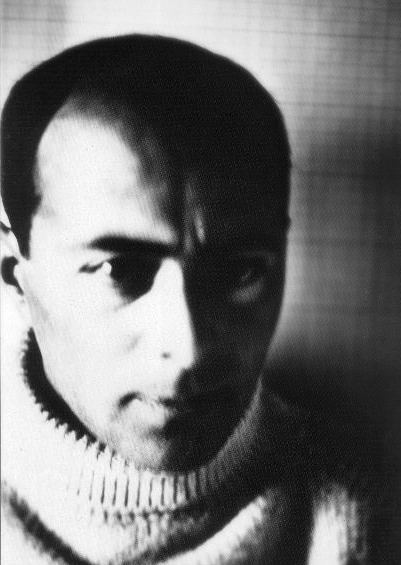
| 10 Quotes | |
| Born as | Lazar Markovich Lissitzky |
| Occup. | Artist |
| From | Russia |
| Spouse | Sophie Lissitzky-Küppers |
| Born | November 23, 1890 Pochinok, Russian Empire |
| Died | December 30, 1941 Moscow, USSR |
| Cause | Heart Attack |
| Aged | 51 years |
| Cite | |
Citation Formats
APA Style (7th ed.)
El lissitzky biography, facts and quotes. (2026, February 11). FixQuotes. https://fixquotes.com/authors/el-lissitzky/
Chicago Style
"El Lissitzky biography, facts and quotes." FixQuotes. February 11, 2026. https://fixquotes.com/authors/el-lissitzky/.
MLA Style (9th ed.)
"El Lissitzky biography, facts and quotes." FixQuotes, 11 Feb. 2026, https://fixquotes.com/authors/el-lissitzky/. Accessed 6 Mar. 2026.
Early Life and Background
Lazar Markovich Lissitzky was born on 23 November 1890 in Pochinok, Smolensk Governorate, in the Russian Empire, into a Jewish family shaped by the restrictions and improvisations of late-tsarist life. Like many Jews in the Pale of Settlement, he learned early that talent and ambition had to navigate quotas, permits, and the everyday pressure to justify one`s place. That sense of being both inside and outside society became an engine in his art: he would spend his career designing languages - visual, typographic, architectural - meant to remake belonging itself.In the years before World War I, he gravitated toward drawing and technical study with equal seriousness. The era offered few stable identities to a young Jewish artist-engineer: modern cities promised mobility, while politics threatened rupture. The Revolution of 1917 did not simply alter his circumstances; it intensified a conviction already forming in him, that images could be instruments of collective transformation, not private decoration.
Education and Formative Influences
After initial art studies in Russia, Lissitzky went to Germany and studied architecture at the Technische Hochschule in Darmstadt (1910-1914), absorbing engineering discipline, structural thinking, and the European avant-garde ferment that Russian students carried home. Returning to Russia during the war, he moved through artistic circles that would become Suprematist and Constructivist, and he worked closely with Marc Chagall at the Vitebsk Art School before aligning himself more decisively with Kazimir Malevich and UNOVIS (Champions of the New Art). From Jewish book illustration and folk sources to abstract geometry and spatial experiments, he learned to treat culture as a toolkit for building modernity.Career, Major Works, and Turning Points
Lissitzky emerged after 1919 as one of the Revolution`s most inventive visual strategists, bridging painting, graphic design, exhibition design, photography, and architecture. His "Proun" works (from around 1919-1924) - hovering constructions between canvas and building - became laboratories for translating Suprematist planes into inhabitable space. In 1919-1920 he produced the iconic propaganda poster "Beat the Whites with the Red Wedge", compressing Civil War politics into a kinetic diagram. In the 1920s he worked in Germany and Switzerland, collaborating with figures such as Kurt Schwitters and aligning with international Constructivism; his design and typography helped define modernist publishing, notably through daring layouts and photomontage. Later, back in the Soviet sphere, he designed exhibitions and pavilions that turned ideology into immersive choreography (including the Soviet room at the 1928 Pressa exhibition in Cologne), while illness (tuberculosis) shadowed his productivity. He died on 30 December 1941 in Moscow, as the USSR fought for survival in World War II.Philosophy, Style, and Themes
Lissitzky`s inner life reads as a battle between lyric imagination and engineer`s austerity. He distrusted art as a sealed-off sanctuary, insisting that the modern artist had obligations to materials, technology, and social organization. “The task of the artist is to construct a new order of life”. In him, that sentence was less a slogan than a psychological necessity: a way to convert the volatility of his time - revolution, scarcity, propaganda, mass education - into forms that felt stable, legible, and forward-moving. His recurring move was to replace depiction with construction: diagonals that act like forces, type that behaves like architecture, and spaces designed to direct bodies as much as eyes.His style fused Suprematist abstraction with Constructivist utility, but he kept a poet`s sensitivity to how meaning arises from placement, scale, and rhythm. Nowhere is that clearer than in his theory of print: “The book is a piece of architecture. The text forms the columns; the pages are the walls”. He treated typography as structural load, not ornament, and exhibitions as sequenced experiences where perception is engineered. Even when his work served the state, he sought an art beyond sentimentality, defined by making and organizing: “We consider the triumph of art to be not in the emotional or the psychological spheres, but rather in the constructive”. Yet the paradox is that his very refusal of "mere emotion" reveals a deeper emotion - anxiety about disorder - sublimated into grids, wedges, axes, and systems.
Legacy and Influence
El Lissitzky became a key transmitter of the Russian avant-garde to Europe and a defining architect of modern visual communication. His Prouns anticipated installation art and spatial abstraction; his posters and photomontage helped set the vocabulary for political graphics; his typography and book design shaped the modern page as a designed environment rather than a neutral container. Designers, architects, and artists continue to study him not only for formal breakthroughs but for the intensity of his wager: that the artist can think like an engineer without losing the power to imagine a world that does not yet exist.Our collection contains 10 quotes written by El, under the main topics: Art - Equality - Book - Technology.
Other people related to El: Kurt Schwitters (Artist)
Source / external links