
Eldridge Cleaver Biography Quotes 14 Report mistakes
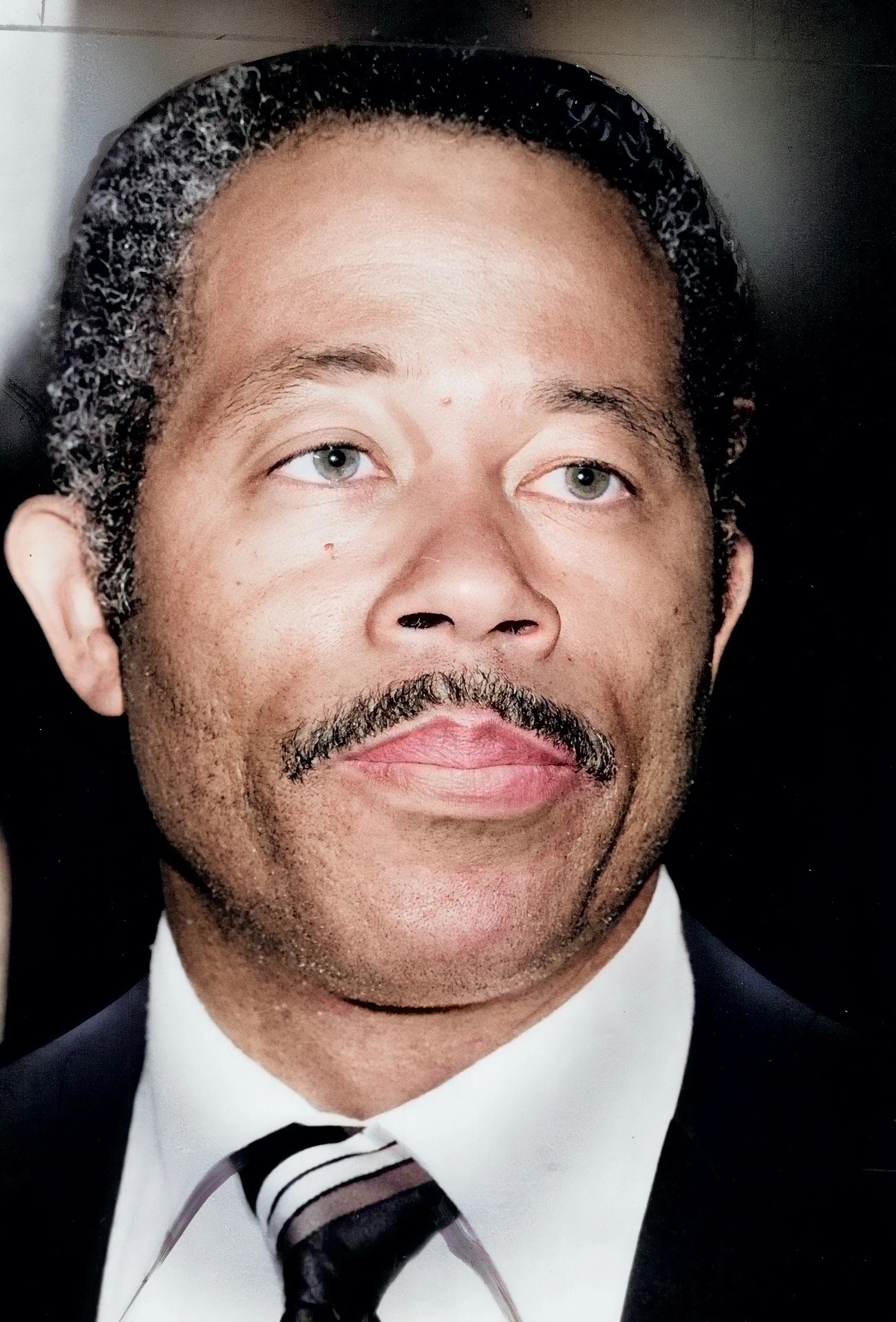
| 14 Quotes | |
| Born as | Leroy Eldridge Cleaver |
| Occup. | Activist |
| From | USA |
| Born | August 31, 1935 Wabbaseka, Arkansas, USA |
| Died | May 1, 1998 Pomona, California, USA |
| Aged | 62 years |
| Cite | |
Citation Formats
APA Style (7th ed.)
Eldridge cleaver biography, facts and quotes. (2026, February 14). FixQuotes. https://fixquotes.com/authors/eldridge-cleaver/
Chicago Style
"Eldridge Cleaver biography, facts and quotes." FixQuotes. February 14, 2026. https://fixquotes.com/authors/eldridge-cleaver/.
MLA Style (9th ed.)
"Eldridge Cleaver biography, facts and quotes." FixQuotes, 14 Feb. 2026, https://fixquotes.com/authors/eldridge-cleaver/. Accessed 4 Apr. 2026.
Early Life and Background
Leroy Eldridge Cleaver was born on August 31, 1935, in Wabbaseka, Arkansas, and came of age in the crosscurrents of Jim Crow violence, postwar migration, and the hardening color line of mid-century America. His family moved west during his childhood, part of the broader Black migration that sought industrial wages and a measure of safety, but found in cities like Los Angeles a different architecture of segregation - policing, housing covenants, and limited work that narrowed horizons while promising freedom. Cleaver later wrote with the intensity of someone who had watched the country sell ideals it could not deliver, and his adult politics never lost that early sense that American life was organized by coercion as much as by consent.
His adolescence tipped early into delinquency and repeated incarceration, a spiral he later described as both personal failure and social design: a young man trained to read danger before he learned to read books. The brutality and boredom of confinement, and the constant negotiation of status, sexuality, and survival behind bars, would become not just material for memoir but the forge for his thinking about power. In that world, he discovered that identity could be weaponized - by the state, by gangs, and by oneself - and that anger without structure is easily turned inward.
Education and Formative Influences
Cleaver's most consequential education took place in prison in California, where he read voraciously and argued his way into intellectual seriousness, absorbing Marx, Freud, Du Bois, and the insurgent canon of anti-colonial revolt. He was influenced by the Nation of Islam during the era when Malcolm X's rhetoric electrified disaffected Black men, and he learned to convert personal history into political indictment. The discipline of study amid deprivation sharpened his prose into a mix of confession and polemic, and he began to see writing as an instrument to seize moral authority from institutions that had defined him as disposable.
Career, Major Works, and Turning Points
Released in the mid-1960s, Cleaver emerged as a powerful voice at the meeting point of Black Power, antiwar radicalism, and a new literary willingness to treat prison as a central American experience. His essay collection "Soul on Ice" (1968) made him nationally famous - and notorious - for its fusion of autobiography, sexuality, race analysis, and revolutionary exhortation, written with a blistering candor that forced readers to confront both the violence of white supremacy and the violence inside the author himself. He became the Black Panther Party's Minister of Information, a role that turned his sentences into ammunition during the Panthers' rapid ascent and the state's equally rapid counterassault. After a 1968 Oakland shootout with police, he fled the United States, living in exile in Cuba, then Algeria and elsewhere, where revolutionary romance collided with factional strain, surveillance, and disillusion. Returning to the United States in the mid-1970s, he publicly broke with the Panthers, embraced Christianity and electoral conservatism for a time, and spent later years struggling with addiction and health problems, dying on May 1, 1998, in Pomona, California - a life that traced the era's full arc from insurgency to aftermath.
Philosophy, Style, and Themes
Cleaver's writing is driven by a single pressure: to convert inner chaos into political meaning without sanitizing either. He refused the respectable pose and instead performed the mind of a man split by desire, guilt, rage, and yearning for redemption, insisting that America itself produced such splits and then punished the people it had fractured. His style is rhetorical close-combat - aphorism, indictment, confession, and sudden lyricism - shaped by the prison's constant moral accounting and by the movement's need for clear enemies. When he warned, “What America demands in her black champions is a brilliant, powerful body and a dull, bestial mind”. he was diagnosing a national appetite for Black performance without Black intellect, a psychology of domination that rewards the spectacle while fearing the thinker.
Yet Cleaver also insisted on human change as the only serious revolutionary premise, and his most persuasive pages are those where political transformation requires moral transformation. “You don't have to teach people how to be human. You have to teach them how to stop being inhuman”. reads like a credo forged in the contradiction of his life: he had done harm, had been harmed, and sought a language in which both truths could stand without canceling each other. Even his later ideological reversals can be read less as simple opportunism than as a restless search for a framework that could hold violence, responsibility, and hope together - a man trying to keep faith with his own capacity to change and with the country's. “If a man like Malcolm X could change and repudiate racism, if I myself and other former Muslims can change, if young whites can change, then there is hope for America”.
Legacy and Influence
Cleaver remains one of the most controversial American activists of the 20th century, remembered as both a leading theorist-propagandist of the Black Panther era and as a writer whose self-exposure widened what political literature could admit. "Soul on Ice" endures in classrooms and debates because it captures, in the heat of the late 1960s, the collision of liberation politics with the unresolved injuries of gender, sexuality, and carceral power - and because Cleaver's later turns force readers to confront how movements and individuals fracture under pressure. His life is a cautionary tale about charisma, state repression, and the seductions of certainty, but also a record of intellectual intensity: a man who tried, repeatedly, to wrest a coherent ethics from a nation - and a self - at war with its own claims.
Our collection contains 14 quotes written by Eldridge, under the main topics: Witty One-Liners - Ethics & Morality - Justice - Freedom - Equality.
Source / external links