
Eleanor Roosevelt Biography Quotes 60 Report mistakes
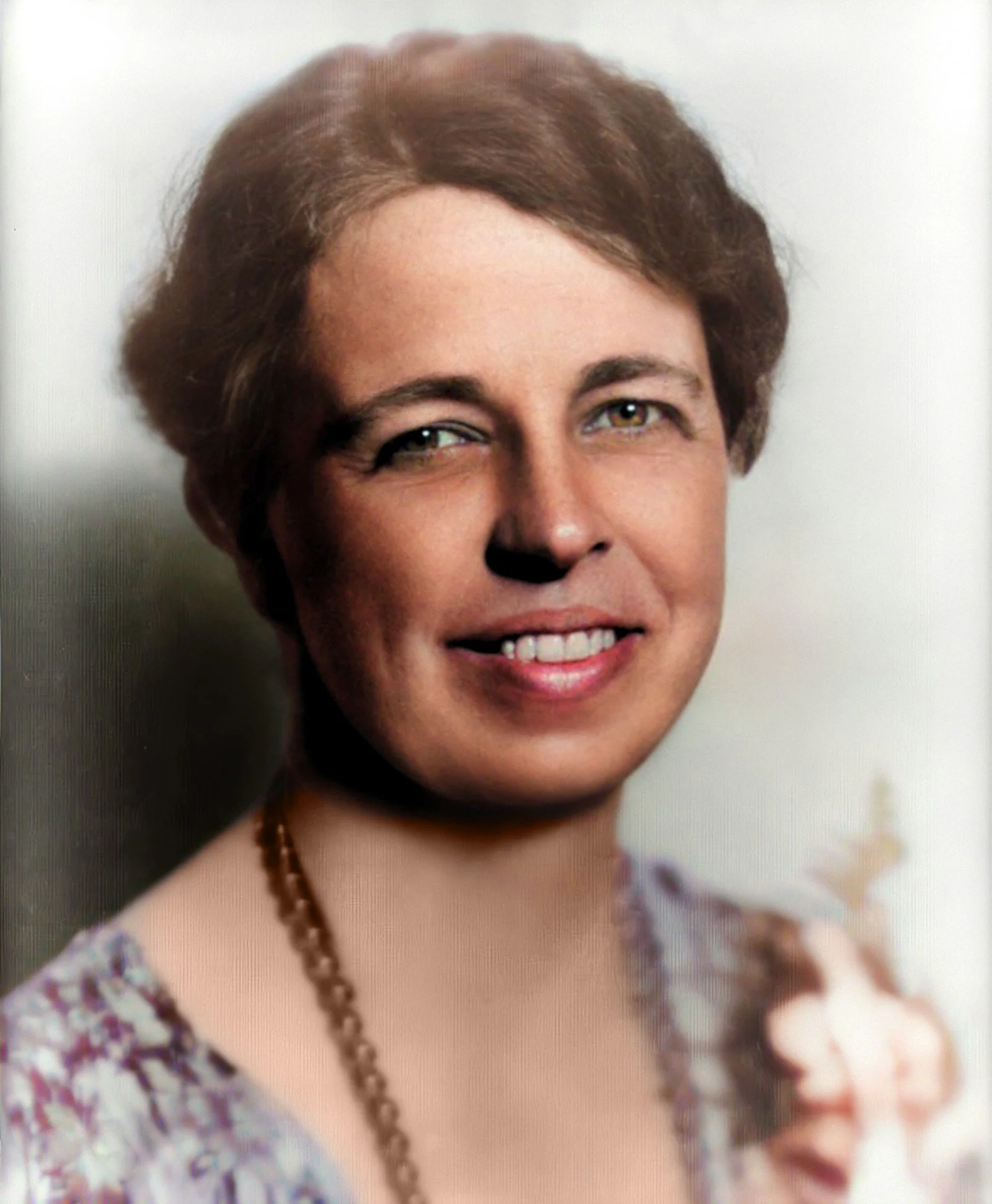
| 60 Quotes | |
| Born as | Anna Eleanor Roosevelt |
| Occup. | First Lady |
| From | USA |
| Born | October 11, 1884 New York City, New York, USA |
| Died | November 7, 1962 New York City, New York, USA |
| Cause | Hypertensive Heart Disease |
| Aged | 78 years |
| Cite | |
Citation Formats
APA Style (7th ed.)
Eleanor roosevelt biography, facts and quotes. (2026, February 1). FixQuotes. https://fixquotes.com/authors/eleanor-roosevelt/
Chicago Style
"Eleanor Roosevelt biography, facts and quotes." FixQuotes. February 1, 2026. https://fixquotes.com/authors/eleanor-roosevelt/.
MLA Style (9th ed.)
"Eleanor Roosevelt biography, facts and quotes." FixQuotes, 1 Feb. 2026, https://fixquotes.com/authors/eleanor-roosevelt/. Accessed 26 Mar. 2026.
Early Life and Background
Anna Eleanor Roosevelt was born on October 11, 1884, in New York City, into the patrician Hyde Park Roosevelts and the socially prominent Halls. The privileges of Gilded Age Manhattan came with a strict code of appearance and reserve that never suited her shy, earnest temperament. Nicknamed "Granny" for her seriousness, she grew up sensing herself as an observer rather than a glittering participant in the world her family expected her to inhabit.Her inner life was shaped early by loss. Her mother, Anna Hall Roosevelt, died in 1892; her father, Elliott Roosevelt - Theodore Roosevelt's younger brother, charming and troubled by alcoholism - died in 1894. Orphaned at ten, Eleanor was raised largely by her grandmother Mary Ludlow Hall in Tivoli, New York, in a household that emphasized propriety over consolation. The combination of social rank and emotional scarcity seeded two lifelong traits: a craving for purposeful work and an empathy for those shut out of power.
Education and Formative Influences
In 1899 she was sent to Allenswood Academy outside London, where headmistress Marie Souvestre provided the intellectual and moral awakening Eleanor later called the turning point of her youth. Souvestre pushed her to read widely, argue clearly, and see politics as a field of conscience - not just status - while travel on the Continent expanded her sense of social obligation beyond American drawing rooms. Returning to New York in 1902, she entered a society determined to place her securely, yet she carried back an independent discipline that would reappear in her reform work and public courage.Career, Major Works, and Turning Points
Eleanor married her distant cousin Franklin Delano Roosevelt on March 17, 1905, and over the next decade balanced motherhood with a growing pull toward public service. Settlement work with the Junior League and the Consumers League, wartime volunteering, and friendships with reformers drew her into progressive politics; FDR's 1921 polio left him physically impaired and pushed her into a more autonomous public role, including teaching at the Todhunter School and working with the Women's Trade Union League. As First Lady from 1933 to 1945, she transformed the position into a platform: constant travel, public press conferences for women reporters, advocacy for New Deal relief, youth programs, and civil rights - from resigning from the Daughters of the American Revolution after Marian Anderson was barred from Constitution Hall, to insisting on integrated federal programs when possible. After FDR's death in 1945, President Harry Truman appointed her to the United Nations; as a driving force on the Commission on Human Rights, she helped shepherd the Universal Declaration of Human Rights (1948), then remained a national voice through books, lectures, and her long-running syndicated column "My Day" (1935-1962).Philosophy, Style, and Themes
Roosevelt's public philosophy was forged from private insecurity into practiced bravery. She distrusted moral theatricality and preferred incremental work - visits, reports, letters, committees - that turned sympathy into policy. Her writing and speech style was plain, intimate, and persistent, as if she were speaking to one citizen at a time rather than courting applause. She embraced criticism as the cost of action, and her steady willingness to be disliked became a kind of armor: “Do what you feel in your heart to be right- for you'll be criticized anyway. You'll be damned if you do, and damned if you don't”. The line reads less like bravado than like a rule for survival learned in rooms where she was underestimated.Her themes recur: courage as a habit, democracy as daily responsibility, and dignity as a universal claim rather than a national gift. The hardships that unsettled her early life became a template for resilience, which she translated into encouragement for others: “You must do the things you think you cannot do”. Even her optimism was practical, directed toward repair rather than cheerfulness - the ethics of acting in imperfect conditions: “It is better to light a candle than curse the darkness”. In this way her inner life - anxious, disciplined, morally alert - became a political instrument, turning personal trial into a language of democratic stamina.
Legacy and Influence
Eleanor Roosevelt died in New York City on November 7, 1962, having helped redefine both the modern First Lady and the public intellectual as a working advocate. Her influence endures in the expectation that presidential spouses engage policy, in the infrastructure of human rights language that still frames global debates, and in the example of a woman who converted elite access into accountability. If her era asked women to soften power, she did something harder: she insisted power answer to the vulnerable, and she made that insistence sound like common sense.Our collection contains 60 quotes written by Eleanor, under the main topics: Witty One-Liners - Motivational - Ethics & Morality - Truth - Wisdom.
Other people related to Eleanor: Franklin D. Roosevelt (President), Lillian Smith (Author), Rose Schneiderman (Activist), Bess Truman (First Lady), Doris Kearns Goodwin (Historian), James Roosevelt (Politician), Jean Houston (Author), Hendrik Willem Van Loon (Journalist), Helen Gahagan (Actress), Jean Stapleton (Actress)