
Elias Canetti Biography Quotes 31 Report mistakes
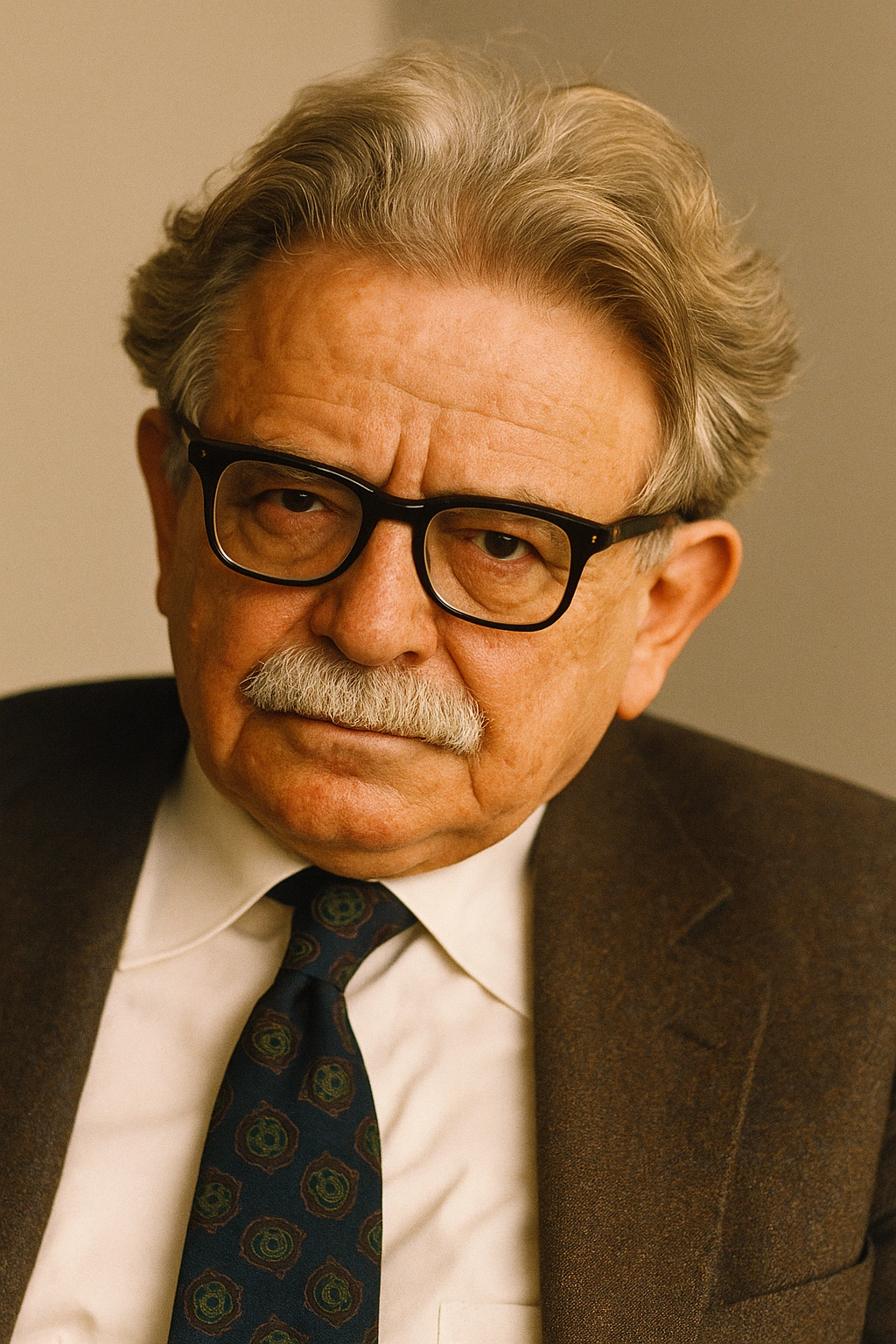
| 31 Quotes | |
| Occup. | Author |
| From | Switzerland |
| Spouses | Veza Taubner-Calderon (1934-1963) Hera Buschor (1971) |
| Born | July 25, 1905 Ruse, Bulgaria |
| Died | August 13, 1994 Zurich, Switzerland |
| Aged | 89 years |
| Cite | |
Citation Formats
APA Style (7th ed.)
Elias canetti biography, facts and quotes. (2026, February 11). FixQuotes. https://fixquotes.com/authors/elias-canetti/
Chicago Style
"Elias Canetti biography, facts and quotes." FixQuotes. February 11, 2026. https://fixquotes.com/authors/elias-canetti/.
MLA Style (9th ed.)
"Elias Canetti biography, facts and quotes." FixQuotes, 11 Feb. 2026, https://fixquotes.com/authors/elias-canetti/. Accessed 5 Mar. 2026.
Early Life and Background
Elias Canetti was born on July 25, 1905, in Ruse (then Rustchuk), Bulgaria, into a Sephardi Jewish family whose everyday language was Ladino. The port city on the Danube was a crossroads of Turks, Bulgarians, Greeks, Romanians, and Jews, and the polyglot hum of commerce and rumor became his first education in how crowds form, how fear spreads, and how identity can be worn like clothing. His early sense of being both inside and outside any single community hardened into a lifelong stance: the observer who is never fully assimilated, yet never fully detached.His father, Jacques Canetti, a merchant, moved the family to Manchester in 1911, placing the child amid industrial England and a new language. In 1912 his father died suddenly, an event Canetti later rendered as a psychic rupture that rearranged the household around absence and urgency. His mother, Mathilde, fiercely ambitious for him, drove the family onward-to Vienna during World War I and later to Zurich-and required from him linguistic mastery as a form of survival. That maternal pressure, braided with exile, gave Canetti an inward life marked by vigilance: an insistence that language could both shelter and wound.
Education and Formative Influences
In Zurich he trained in chemistry at the University of Zurich, earning a doctorate in 1929, but the laboratory was a scaffold for something else: the discipline of exact observation and the impatience with vague claims. In parallel he fed on Karl Kraus, whose Viennese satire and moral ferocity taught him to treat public speech as a battlefield; he absorbed the aftershocks of World War I, the inflation years, and the rise of mass politics as evidence that modernity was a crowd phenomenon before it was an idea. Vienna in the 1920s and early 1930s also gave him models of total art and total critique, even as antisemitism and authoritarian longings tightened around cultural life.Career, Major Works, and Turning Points
Canetti settled into the German language as his instrument and chose literature over science, publishing the play "Hochzeit" ("The Wedding") in 1932 and later "Komodie der Eitelkeit" ("Comedy of Vanity"). His sole novel, "Die Blendung" ("Auto-da-Fe", completed 1935), anatomized intellectual isolation and social predation through the scholar Peter Kien, a book that reads like a prophecy of minds trapped in systems they cannot feel. After the Anschluss in 1938, Canetti fled Vienna for London with his wife, the writer Veza Canetti, joining the long refugee corridor of Central European Jews. In wartime and after, he turned to the project that would define him: decades of notes toward a grand morphology of collective behavior, culminating in "Masse und Macht" ("Crowds and Power", 1960). Late recognition gathered: the memoir trilogy ("Die gerettete Zunge", "Die Fackel im Ohr", "Das Augenspiel") revisited his formation with pitiless clarity, and in 1981 he received the Nobel Prize in Literature for work that fused anthropological reach with moral urgency.Philosophy, Style, and Themes
At the center of Canetti's inner life is a struggle with fear as a social force. He believed the crowd is born from the wish to annul separateness, yet it feeds on the very dread it promises to dissolve: “There is nothing that man fears more than the touch of the unknown. He wants to see what is reaching towards him, and to be able to recognize or at least classify it. Man always tends to avoid physical contact with anything strange”. This is not merely sociology; it is confession. His characters and case studies alike seek classification as a shield, but classification becomes coercion, turning living beings into types, enemies, or usable masses.His style answers that danger with compression. He wrote as an anatomist of motives, favoring aphorism, parable, and ruthless close-up over plot comfort, because memory itself was for him an insurgent archive: “All the things one has forgotten scream for help in dreams”. The memoirs show how forgetting is never neutral-it is a pressure system that returns in symbols, obsessions, and sudden revulsions. Even his mordant wit exposes how identity curdles into fate, how public labels simplify persons into destinies: “People's fates are simplified by their names”. Across genres he stalked the moment when language stops describing and starts commanding.
Legacy and Influence
Canetti endures as one of the 20th century's most penetrating witnesses of mass society, read alongside - and against - the century's political catastrophes. "Crowds and Power" remains a singular, hybrid classic: part anthropology, part psychology, part moral indictment, influencing scholars of collective behavior, writers of dystopia, and critics of propaganda. His memoirs preserve the texture of European Jewish exile without sentimentality, while "Auto-da-Fe" stands as a modernist monument to the lethal marriage of obsession and social cruelty. In an age still governed by mobilized fear and identity slogans, Canetti's work keeps insisting that the first duty of intelligence is to resist becoming a crowd within oneself.Our collection contains 31 quotes written by Elias, under the main topics: Witty One-Liners - Ethics & Morality - Wisdom - Justice - Mortality.
Other people related to Elias: Hermann Broch (Writer)
Frequently Asked Questions
- Johanna Canetti: His daughter, with Hera Buschor.
- Elias Canetti Deutsch: Schrieb auf Deutsch; bekannt für Die Blendung und Masse und Macht; Nobelpreis 1981.
- Elias Canetti young: Born 1905 in Ruse, Bulgaria; grew up in Manchester, Vienna, and Zürich.
- Elias Canetti Nobel Prize: Nobel Prize in Literature, 1981.
- Elias Canetti books: Auto-da-Fé (Die Blendung), Crowds and Power (Masse und Macht), The Tongue Set Free.
- How old was Elias Canetti? He became 89 years old
Elias Canetti Famous Works
- 1960 Crowds and Power (Non-fiction)
- 1935 Auto-da-Fé (Novel)
Source / external links